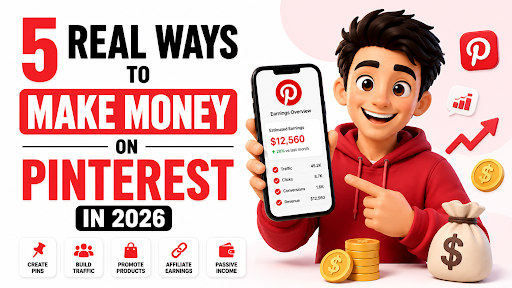
5 Real Ways to Make Money on Pinterest in 2026
A lot of Pinterest income advice boils down to “throw up a generic blog stacked with affiliate links and watch the money roll in.” That approach rarely works anymore, and Pinterest’s growing use of AI detection makes generic, low-effort content even easier for buyers and the platform itself to spot. In this blog, we will break down five legitimate ways to generate income through Pinterest and what actually separates content that converts from content that just sits there.
Why Generic Affiliate Content Falls Flat
The common shortcut is to pick a trending topic, write a quick post, and stack it with affiliate links; it doesn’t work the way it used to, because buyers can tell the difference between genuine product experience and a post assembled purely to capture clicks. People searching Pinterest for recommendations want feedback from someone who actually has relevant context, not a generic listicle assembled without any real connection to the product or the person buying it. That distinction matters across every income stream below.
Stream 1: Amazon’s Multiple Connection Points
Amazon connects to Pinterest in more ways than most people realize, and each one represents a different way to earn.
Amazon Associates is the standard affiliate link setup: grab a link from an existing Amazon Associates account and place it wherever relevant, earning a commission on resulting purchases.
Amazon Storefronts let a creator curate products into categorized collections such as books, travel gear, and accessories without needing a separate website. Sharing a storefront link directly with an audience functions as a simple, low-friction way to monetize curated recommendations.
Amazon Inspire is Amazon’s in-app shoppable content feed, where creators post short-form content earning a specific commission structure, often cross-posted from platforms like Pinterest, YouTube, or Instagram.
There’s also a growing Amazon storefront integration currently in limited beta, primarily on iOS, that allows a more direct in-app connection between a creator’s storefront and their audience, though access is invite-based while it’s being tested.
Finally, and separately from creator monetization, Pinterest itself connects individual user accounts directly to Amazon (with Target integration expanding as well), letting someone browsing a beach-wear collage tap through directly to a product listing with minimal friction. This isn’t a way creators earn directly, but it illustrates how deeply Pinterest and Amazon’s shopping experiences are already linked, which is part of why Amazon-based monetization performs as well as it does on the platform.
Stream 2: Affiliate Marketing Beyond Amazon
Affiliate programs extend well past Amazon. LTK (formerly RewardStyle) and similar platforms let creators partner with retailers like Nordstrom or REI, generating trackable affiliate links to share with an audience.
The principle that makes any affiliate program work is the same regardless of platform: genuine, specific feedback about a product outperforms a generic “top 5 picks” post assembled without real context. A post written by someone with no direct relevance to the product, no personal experience, and no specific insight into fit or use case converts poorly because it reads as exactly what it is: content built to capture a click rather than to actually help the buyer decide.
Stream 3: Selling Your Own Digital Products
Digital products remain one of the more accessible ways to monetize a Pinterest audience directly, since there’s no inventory or shipping involved. Templates, guides, mini-courses, meal plans, and spreadsheets are common formats, typically sold through a simple storefront like Shopify.
The detail that determines whether a digital product actually converts is context. A product listed with no explanation of what it solves or who it’s for tends to underperform, regardless of quality. A landing page or supporting content that walks a potential buyer through what the product includes and how it helps them gives the purchase decision something concrete to stand on, rather than asking someone to buy blind.
Stream 4: Selling Physical Products
Physical products are seeing meaningful growth on Pinterest specifically because of the platform’s role in purchase research. Roughly 80% of weekly Pinterest users report the platform has influenced a purchase decision, a notably higher purchase-intent signal than most other social platforms, where discovery and buying intent are less directly connected.
Selling physical goods effectively on Pinterest generally means avoiding a bare “here’s a product, go buy it” approach in favor of collections, supporting content, or a short write-up that builds context before the purchase decision. Setting up Pinterest’s verified merchant program and a properly configured product catalog also meaningfully improves visibility for physical product listings.
Pinterest advertising is also a genuinely underused channel here. While a lot of paid marketing budgets concentrate on Meta and Google, Pinterest ads have shown strong returns specifically for physical product sellers, making it worth testing as a dedicated channel rather than treating it as an afterthought.
Stream 5: The Long-Term Connection, Not a Single Post
The fifth income stream isn’t a specific product or program; it’s the relationship built through consistent content over time. Pinterest users tend to arrive cold, curious, and early in their decision process. Someone planning a trip six months out might save dozens of ideas to a board, only returning to actually purchase closer to the date.
This makes Pinterest’s buyer journey meaningfully longer than platforms built around immediate engagement. A single post with an affiliate link rarely captures this; consistent, curated content that builds trust over weeks or months is what eventually gets revisited when the buyer is ready to act. Understanding this extended timeline changes how content should be planned: less about immediate conversion and more about being present at the exact moment someone circles back to make a decision.