Inflation in Pakistan 2026: Why Prices Are Rising Again and What It Means for Your Money
Pakistan’s economy is once again seeing strong discussion around rising prices, household expenses, food costs, fuel prices, and purchasing power. Inflation in Pakistan 2026 has become an important financial topic because changes in prices can directly affect how families manage their monthly income.
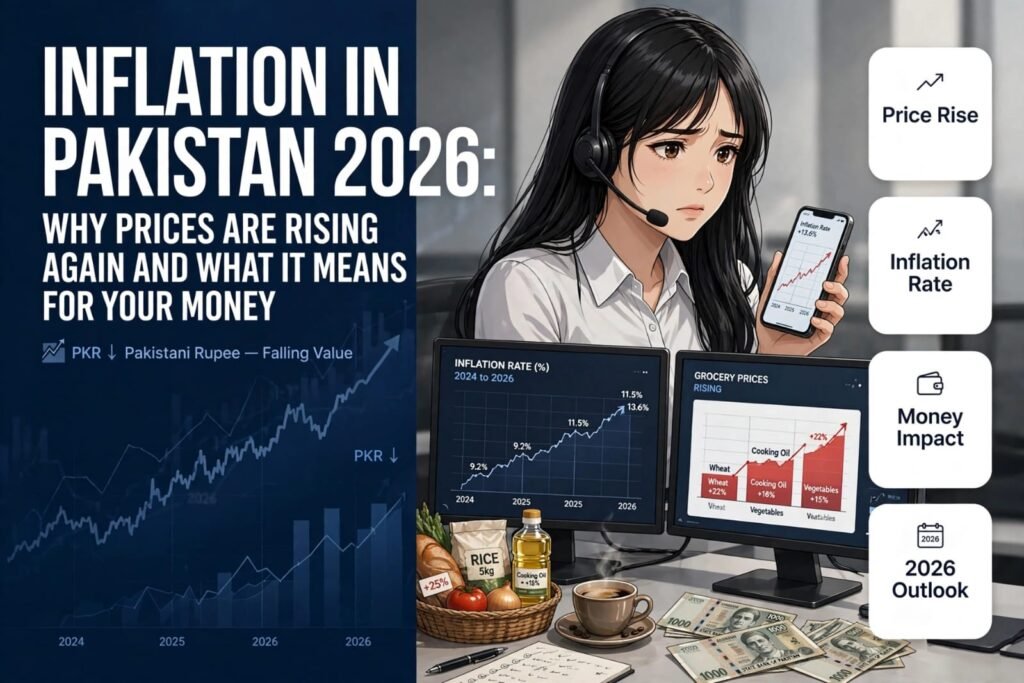
According to the Pakistan Bureau of Statistics, national Consumer Price Index inflation reached 11.1% year-on-year in August 2026, compared with 9.2% in July. Urban inflation stood at 10.4%, while rural inflation reached 12.2%.
What Is Inflation?
Inflation means a general increase in the prices of goods and services over time. When inflation rises, the same amount of money can buy fewer products than it could previously.
For example, if a family used to spend Rs. 20,000 on a group of regular household items but now needs more money to purchase similar products, its purchasing power has declined.
However, inflation does not mean that every product becomes more expensive at the same rate. Some prices can rise quickly, while others may remain stable or even decrease.
Why Are Prices Rising in Pakistan?
There is no single reason behind changes in Pakistan’s inflation rate. Several economic factors can influence prices at the same time.
Food Prices
Food is one of the biggest concerns for household budgets. According to the latest PBS data, prices of several food items increased during August, including onions, eggs, potatoes, fresh vegetables, wheat and pulses.
Because food is purchased frequently, even relatively small price increases can have a noticeable effect on a family’s monthly spending.
Fuel and Transportation Costs
Fuel prices can influence many parts of the economy. Businesses use transportation to move products from producers and suppliers to markets and shops.
When transportation costs increase, businesses can face higher operating expenses. These costs may eventually affect the prices consumers pay for certain products and services.
Imported Products and Exchange Rates
Pakistan imports various goods, raw materials, machinery and other products. Changes in the exchange rate can therefore influence the local cost of imported items.
When imported inputs become more expensive, businesses may face additional costs. The final effect on consumers depends on the product, market conditions and the ability of businesses to absorb those costs.
How Inflation Affects Household Budgets
The most obvious effect of inflation is usually seen in everyday spending.
Families may notice higher costs for:
– Groceries
– Electricity and gas
– Petrol and transportation
– Education
– Healthcare
– Household products
– Clothing
– Mobile and internet services
– Restaurants and other services
The impact is different for every household because spending patterns are different.
A family that spends a large portion of its income on food and transportation may feel price increases differently from a household with lower spending in those categories.
Inflation and Purchasing Power
One of the most important concepts in personal finance is purchasing power.
If income remains unchanged while the prices of essential products increase, a person may have less money available for other expenses.
For example, a salary that was sufficient for groceries, bills and transportation several years ago may not cover the same lifestyle if prices rise significantly.
This is why Inflation in Pakistan 2026 matters beyond the monthly inflation percentage. The real issue for households is how changing prices affect their ability to purchase necessities and maintain their financial plans.
What Does the 11.5% Policy Rate Mean?
The State Bank of Pakistan kept its policy rate at 11.5% on September 14, 2026. The policy rate is an important monetary-policy tool because interest rates can influence borrowing, saving and economic activity.
Higher interest rates can make some forms of borrowing more expensive. At the same time, returns on certain interest-bearing savings products may also be affected.
However, the policy rate does not directly determine the price of every product in Pakistan. Inflation is influenced by several domestic and international factors.
How Inflation Can Affect Savings
Inflation can reduce the purchasing power of money over time.
Imagine someone keeps Rs. 100,000 in cash for an extended period while prices continue increasing. The amount remains Rs. 100,000, but that money may purchase fewer goods and services in the future.
This does not mean that everyone should immediately move their savings into a particular investment. Financial products have different levels of risk, liquidity, returns and fees.
Instead, consumers should understand how inflation fits into their overall financial planning.
Practical Ways to Manage Rising Prices
During periods of higher inflation, careful budgeting can become more important.
Track Your Expenses
Keep a record of regular spending on groceries, bills, transportation and other necessities. This can help identify where most of your income is going.
Compare Prices
Before making larger purchases, compare prices between different shops, brands and sellers. A small saving on several purchases can make a difference over a month.
Separate Needs From
WantsCreate separate categories for essential and optional spending. This makes it easier to identify expenses that can potentially be reduced.
Plan Grocery Shopping
Making a shopping list before going to the market can help reduce unnecessary purchases. Comparing prices of different brands can also help manage grocery costs.
Maintain Emergency Savings
Unexpected medical bills, repairs or other urgent expenses can put pressure on a household budget. Building emergency savings gradually can provide a financial cushion when unexpected costs appear.
Inflation and Small Businesses
Inflation also affects small businesses across Pakistan.
Businesses may face higher expenses for electricity, transportation, rent, raw materials, packaging and other operating costs. When these expenses increase, businesses have to decide how to manage their costs.
Some businesses may increase prices, find alternative suppliers, reduce expenses or adjust their products and services.
Consumers may therefore notice inflation through direct price increases as well as changes in product sizes, discounts and service charges.
Why Official Inflation Data Matters
Inflation statistics help provide a broad picture of price movements across the economy.
The Pakistan Bureau of Statistics calculates the Consumer Price Index using a basket of goods and services and collects price information across different areas of the country.
However, the official inflation rate does not represent the exact experience of every individual.
For example, a household that spends most of its income on food and transport may experience price changes differently from someone whose largest expenses are rent, education or healthcare.
This is why personal budgeting is still important even when national inflation data is available.
What Should Consumers Watch?
People following Pakistan’s economy can keep an eye on several indicators:
– Monthly inflation data
– Food prices
– Petrol and energy costs
– Exchange-rate movements
– Interest-rate decisions
– Import costs
– Household income
– Utility bills
Looking at several indicators together can provide better context than focusing on one headline figure.
What Does Inflation Mean for 2026?
The latest figures show that price pressures remain an important issue for Pakistani households. Inflation in Pakistan 2026 can influence spending decisions, savings plans and the cost of running a household.
However, inflation rates can change from month to month. A single monthly figure should not be treated as a permanent measure of future prices.
Consumers can make their financial planning more practical by tracking their own expenses, reviewing their budgets and paying attention to updated economic data.
Inflation in Pakistan 2026 is important because rising prices can affect almost every part of personal finance, from grocery shopping and transportation to savings and household planning.
The latest official data reported 11.1% national CPI inflation for August 2026, while the State Bank maintained its policy rate at 11.5% in September.
For ordinary households, understanding inflation is not only about knowing the percentage. It is about understanding how changing prices affect monthly expenses and purchasing power.
Keeping track of spending, comparing prices, maintaining emergency savings and reviewing financial goals can help households stay more organized during periods of changing prices.
Because economic conditions can change quickly, readers should rely on updated official information when making important financial decisions.
Stay updated with everything happening in the finance world
https://corefoxes.com/easypaisa-vs-jazzcash-features-fees-payments-key-differences-in-pakistan-2026/