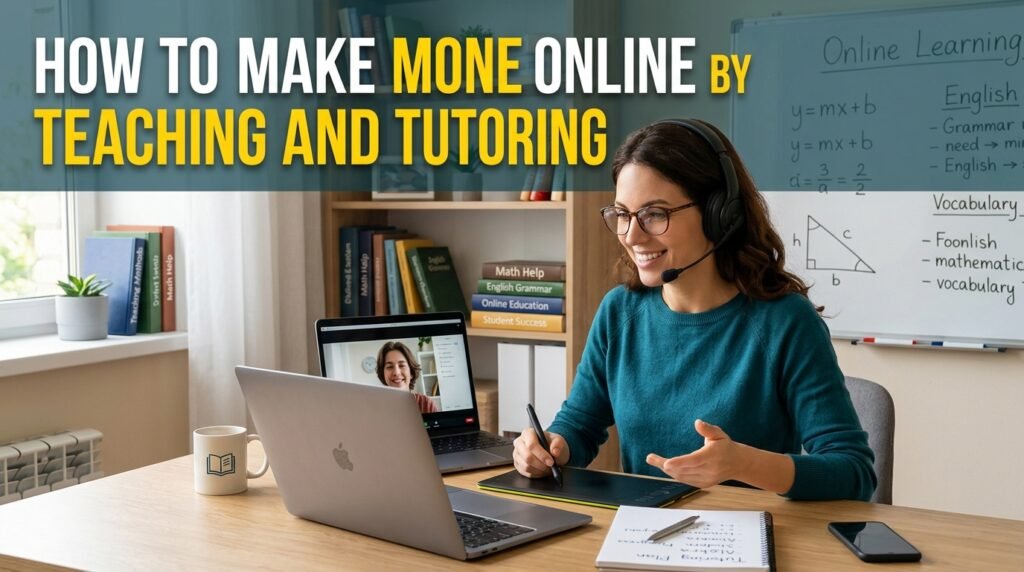
You can make money online by teaching and tutoring by offering lessons in subjects you know well, such as English, mathematics, science, languages, coding, or exam preparation. You can work through tutoring platforms such as Preply, Outschool, or Tutor.com, or find students directly through your own network. The amount you earn depends on your subject, experience, platform fees, lesson rates, student demand, and the number of hours you teach.
The good thing is that you don’t always need years of classroom experience to start. Some platforms accept tutors based mainly on subject knowledge and communication skills, while others have specific education or location requirements.
What Can You Teach Online?
Almost any useful skill can become an online tutoring service if there’s a clear group of learners who want help. Academic tutoring is one obvious option, but it isn’t the only one. Adults also pay for language lessons, professional skills, hobbies, and test preparation.
Think about something you already understand well rather than trying to teach everything. A focused subject makes it easier for students to understand what you offer and decide whether you’re the right tutor for them.
Common online teaching options include:
- English and other language lessons
- Mathematics, physics, chemistry, and biology
- School and university subjects
- IELTS and other exam preparation
- Coding and computer science
- Writing, reading, and communication
- Art, music, and other creative skills
Preply currently lists more than 100 subjects, including languages, academic subjects, hobbies, and art. Its tutor requirements also state that specific teaching certification or previous teaching experience isn’t required for every tutor.
How Much Can You Make From Online Tutoring?
Your income from online tutoring depends mainly on your hourly rate and the number of paid lessons you complete. For example, if you teach 10 hours per week at $15 per hour, your gross income would be about $600 per month before platform fees, taxes, refunds, or other costs.
At 20 hours per week at the same rate, the gross amount would be around $1,200 per month. A tutor with specialist knowledge, strong qualifications, or experience in a high-demand subject may be able to charge more, but rates vary widely by platform and subject.
Preply says English tutors on its platform charge an average of 15–25 per hour, although individual rates vary.
| Teaching schedule | Example rate | Approx. monthly gross income* |
| 5 hours/week | $15/hour | $300 |
| 10 hours/week | $15/hour | $600 |
| 20 hours/week | $20/hour | $1,600 |
| 30 hours/week | $25/hour | $3,000 |
*Based on four weeks of teaching and before fees, taxes, cancellations, and other expenses.
These figures are examples rather than guaranteed earnings. Your actual income can be lower or higher depending on your situation.
Where Can You Find Online Tutoring Jobs?
Tutoring platforms can be a practical starting point because they already have students searching for teachers. Instead of finding every client yourself, you create a profile, list your subjects, set your availability, and respond to students through the platform.
Preply allows tutors to choose their rates and availability, and its current application process asks for information such as education, certifications, a profile description, and an introduction video. Applications are reviewed before tutors can start receiving students.
Outschool is another option, particularly for educators who want to teach children and teenagers. It doesn’t require formal teaching credentials, but educators must meet its age, location, identity, background-check, and other requirements.
If you’re comparing different platforms before creating a profile, you can also look through relevant Earning Websites to see which services match your skills, location, payment options, and preferred type of work.
How to Start Teaching Online With No Experience
If you’ve never taught professionally, start with a subject you can explain clearly. You don’t need to present yourself as an expert in everything. Instead, choose one specific area where you can help a particular type of learner.
For example, rather than advertising yourself as a general English tutor, you could offer conversational English for beginners, English writing for university students, or IELTS speaking practice. A specific service tells potential students exactly what they can expect.
Students who are looking for flexible ways to earn while studying may also find tutoring useful alongside other forms of Online Earning for Students, particularly when they already have strong knowledge in a school, university, or language subject.
Before looking for students, prepare a simple lesson structure. Decide how you’ll introduce the topic, explain it, give the student practice, check their understanding, and end the session with a useful task or summary.
How to Create a Tutor Profile That Gets Attention
Your tutor profile is often the first thing a potential student sees, so keep it clear and honest. Explain what you teach, who you help, your qualifications, and what a typical lesson looks like.
Your introduction video doesn’t need expensive equipment. A quiet room, clear audio, good lighting, and a friendly explanation of your teaching style are usually enough. Preply asks applicants to provide a short introduction video as part of its registration process.
Outschool also reviews teacher applications and recommends that applicants explain their experience, expertise, class ideas, and teaching approach clearly.
How to Set Your Tutoring Rate
When you’re new, setting a reasonable starting rate can help you gain your first students and collect feedback. That doesn’t mean you should charge the lowest possible amount. Look at rates for tutors teaching a similar subject, level, and type of learner.
Your rate can change as you gain experience, reviews, qualifications, and repeat students. You can also create different lesson options, such as a standard one-hour class, a shorter practice session, or a package of several lessons.
Remember that the rate a student pays isn’t always the amount you receive. Tutoring platforms may charge commissions or have other payment rules, so read the current terms before deciding what price to list.
How to Get Your First Online Tutoring Students
Your first few students may come from people you already know rather than a large tutoring marketplace. Tell classmates, former colleagues, friends, parents, community groups, or professional contacts what you teach. A simple recommendation can sometimes lead to your first paid lesson.
You can also create useful educational content around your subject. For example, an English tutor could publish short grammar explanations, while a math tutor could explain common exam problems. This gives potential students a chance to see how clearly you teach before booking a lesson.
If you want to offer tutoring services independently, freelance marketplaces can also help you reach clients. Before choosing where to offer your services, it can be useful to understand Fiverr vs Upwork, since the two platforms have different approaches to finding clients, creating services, and managing freelance work.
Once you have students, ask for honest feedback after successful lessons. Positive reviews can help build trust, while constructive feedback can show you where your lessons need improvement.
What Equipment Do You Need for Online Tutoring?
You don’t need a large home studio to begin. A reliable computer, webcam, microphone or headset, stable internet connection, and a quiet teaching space are enough for many types of lessons.
Your equipment requirements may be higher on some platforms. For example, Tutor.com currently lists minimum computer, internet, webcam, and audio requirements for its tutors.
For subjects such as mathematics, science, languages, and writing, a shared screen, online whiteboard, digital worksheet, or document camera can also make lessons easier to follow.
How to Earn More From Online Teaching
Once you have regular students, don’t rely only on increasing your hourly rate. You can also increase your income by improving your schedule and offering services that solve a specific problem.
For example, an English tutor might offer conversation practice, IELTS preparation, and writing feedback. A mathematics tutor could provide weekly lessons plus exam revision sessions. This creates several ways for existing students to continue learning.
You can also reduce unpaid time by preparing reusable lesson materials, worksheets, exercises, and assessment templates. The goal is to spend more of your working time actually teaching rather than preparing the same material from scratch for every student.
How Do Online Tutors Receive Their Money?
Before accepting your first student, check how the tutoring platform handles withdrawals, transaction fees, currency conversion, and payment schedules. The available options can differ depending on the platform and your country.
Tutors may receive earnings through bank transfers, PayPal, Payoneer, or other supported services. If you’re new to online work, learning about different Online Payment Methods can help you choose an option that works with your location and the platform you’re using.
It’s also worth keeping records of your tutoring income and transaction fees. This makes it easier to understand your actual earnings rather than looking only at the amount shown on your tutoring profile.
Is Online Tutoring a Good Way to Make Money From Home?
Online tutoring can be a practical way to earn from home, especially if you have a subject that students regularly need help with. It offers flexible scheduling and can work as a part-time income source or, for some tutors, a larger teaching business.
However, it isn’t instant income. Finding students, preparing lessons, managing cancellations, building reviews, and maintaining a consistent schedule all take time. Your results will depend on your subject, teaching ability, availability, location, platform rules, and demand.
The simplest starting point is to choose one subject, define the type of student you want to help, prepare a clear lesson, create a strong tutor profile, and apply to a suitable platform. From there, focus on giving students a useful learning experience and building a record of satisfied learners.
FAQs About Making Money Online by Teaching and Tutoring
Can I make money tutoring online without a teaching degree?
Yes, depending on the platform and subject. Preply says no specific certification or teaching experience is required for its general tutor applications, while other services have stricter education requirements.
What subjects can I teach online?
You can teach academic subjects, languages, exam preparation, coding, writing, art, music, hobbies, and other skills. Your options depend on your knowledge and the requirements of the platform you choose.
How do online tutors find students?
Tutors can find students through platforms such as Preply and Outschool, personal referrals, social networks, educational communities, and their own websites or professional networks. Platform rules vary, so check each service before promoting your lessons.
Can online tutoring become a full-time income?
It can become a larger source of income when you have enough regular students and paid teaching hours. However, earnings aren’t guaranteed, and tutors need to account for platform fees, taxes, cancellations, preparation time, and periods when student demand is lower.