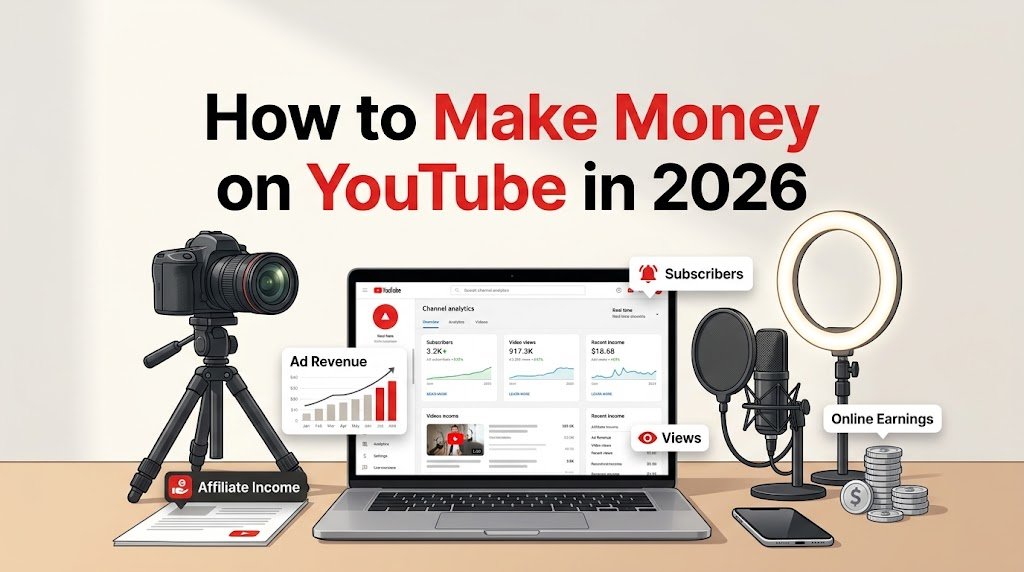
You can make money on YouTube in 2026 through ad revenue, YouTube Shorts, channel memberships, Super Chat, Super Thanks, YouTube Shopping, affiliate marketing, sponsorships, and your own products or services. You don’t have to depend on ads alone. YouTube’s Partner Program gives eligible creators several ways to earn, with different requirements for each feature.
For beginners, the practical approach is to choose a clear topic, publish useful videos consistently, build an audience, and then combine two or more income sources. If you’re also interested in creating videos with artificial intelligence, you can learn more about AI Videos and how AI-assisted content can fit into a wider content strategy.
How Does YouTube Monetization Work in 2026?
YouTube monetization starts with the YouTube Partner Program (YPP). Once your channel qualifies and is accepted, you can access eligible earning features through YouTube Studio. Not every monetization feature has the same requirements, and availability can depend on your country or region.
For ad revenue, YouTube currently requires 1,000 subscribers plus either 4,000 valid public watch hours from long-form videos during the past 12 months or 10 million valid public Shorts views during the past 90 days.
There is also an earlier YPP entry point in eligible countries. Creators can qualify with 500 subscribers, three valid public uploads within 90 days, and either 3,000 watch hours or 3 million Shorts views. This can provide access to features such as fan funding and Shopping before full ad-revenue eligibility.
| Monetization route | What you can earn from |
| Watch Page ads | Ads on long-form and live videos |
| Shorts ads | Revenue allocated from Shorts Feed ads |
| YouTube Premium | Share of subscription revenue when Premium members watch |
| Memberships | Monthly payments from channel members |
| Super Chat & Stickers | Viewer payments during eligible live streams |
| Super Thanks | One-time viewer payments |
| YouTube Shopping | Product sales and eligible affiliate commissions |
| Sponsorships | Payments from brands for promotional content |
| Affiliate marketing | Commission from referred purchases |
| Own products/services | Revenue from things you sell |
How Much Money Can You Make on YouTube?
There’s no fixed amount that YouTube pays per 1,000 views. Your earnings depend on factors such as audience location, content category, advertiser demand, video format, viewer behavior, and the type of monetization being used.
For eligible long-form Watch Page advertising, YouTube states that creators receive 55% of net ad revenue under the relevant monetization module. For Shorts, creators receive 45% of the revenue allocated to them from the Shorts Creator Pool.
That means 100,000 views don’t automatically equal a specific dollar amount. Two channels with the same number of views can earn very different amounts.
1. Earn Money From YouTube Ads
Advertising is one of the best-known ways to make money on YouTube. After reaching the required YPP threshold and being approved, eligible creators can earn from ads shown around their long-form videos and from eligible Shorts Feed advertising.
Your earnings can vary widely because advertisers don’t pay the same amount for every viewer or topic. A channel about software, business, education, finance, or professional services may attract different advertiser demand than a general entertainment channel.
YouTube ad revenue can also work alongside income from a website. If your videos send viewers to your site, understanding Website Monetization can help you build another source of revenue from the same audience.
2. Make Money With YouTube Shorts
YouTube Shorts can help newer creators reach viewers without producing long videos every time. Shorts monetization works differently from traditional Watch Page ads because advertising revenue from the Shorts Feed is pooled and then allocated according to the applicable system.
Shorts can also serve another purpose: bringing new viewers to your channel. You can then direct interested viewers toward longer videos, affiliate offers, products, memberships, or other relevant income sources.
For creators using AI-assisted production, Shorts can also be one format to experiment with, provided the content follows YouTube’s policies and offers genuine value rather than relying on repetitive or low-quality material.
3. Use Affiliate Marketing on YouTube
Affiliate marketing allows you to earn a commission when viewers purchase products through your qualifying links or shopping features. This can work particularly well for channels that review, compare, explain, or demonstrate products.
For example, a home-office channel could review microphones, keyboards, webcams, and desk equipment. A cooking channel might recommend kitchen tools. The key is to recommend products that genuinely fit the video rather than adding unrelated links just to earn commissions.
If you’re planning to use affiliate links across several channels, websites, or content types, see our guide to Affiliate Marketing for more ways to structure this income source.
4. Get Paid by Brands for Sponsorships
You don’t necessarily need millions of subscribers to work with brands. A smaller channel can be attractive to a company when it reaches a specific audience that matches the company’s customers.
Sponsorships can involve product demonstrations, dedicated videos, mentions, tutorials, reviews, or integrations. Your audience’s interests, engagement, location, and trust can matter as much as raw subscriber numbers.
YouTube also has a Creator Partnerships program in certain countries that allows eligible YPP creators to be discoverable by brands and manage some brand-deal opportunities through YouTube Studio.
5. Turn on YouTube Channel Memberships
Channel memberships let viewers make recurring monthly payments in exchange for perks you provide, such as members-only content, badges, emojis, or other benefits. Memberships are available only to eligible creators and have their own requirements.
This model can work well when your viewers regularly return for your content. A creator might offer behind-the-scenes videos, private live streams, extra tutorials, downloadable resources, or early access to selected content.
6. Earn From Super Chat and Super Thanks
If you host live streams, Super Chat and Super Stickers allow viewers to pay to highlight messages or animated images in eligible live chats. Super Thanks lets viewers make one-time payments on eligible videos and Shorts.
These features are especially useful for creators who have an active community rather than relying only on passive video views. However, eligibility depends on YouTube’s requirements and feature availability in your region.
7. Sell Your Own Products or Services
YouTube can also send customers to something you own rather than making your entire income from YouTube itself. Depending on your skills, that might include an ebook, course, template, coaching service, design service, membership, physical product, or other legitimate offering.
For example, a freelance writing channel could teach writing techniques and direct viewers to a writing course or portfolio service. A cooking creator could sell recipe collections.
You can also connect a YouTube audience with a blog or niche website. If you’re interested in building income from written content alongside videos, Blogging can give you another way to reach people through search and evergreen content.
How to Start Making Money on YouTube as a Beginner
Don’t wait until you have thousands of subscribers before thinking about income. Start by choosing one clear subject and understanding what your target viewers actually want to learn, compare, solve, or watch.
Then create videos around specific questions rather than posting random topics. A beginner could start with tutorials, product comparisons, explanations, reviews, case studies, or entertaining content within one consistent niche.
A simple starting plan looks like this:
- Choose one clear niche and audience.
- Create useful long-form videos and shorts.
- Improve titles and thumbnails based on viewer response.
- Track watch time, retention, clicks, and returning viewers.
- Add relevant affiliate links or products when appropriate.
- Apply for YPP when your channel meets the relevant requirements.
Can You Make Money on YouTube Without 1,000 Subscribers?
Yes, but not through full ad-revenue sharing before meeting the higher YPP threshold. In eligible countries, the expanded YPP can give qualifying creators with 500 subscribers access to features such as memberships, Super Chat, Super Thanks, and Shopping, provided they meet the additional requirements for those features.
You can also earn outside YouTube’s advertising system through sponsorships, affiliate marketing, or your own products and services. These income sources don’t necessarily require you to wait until your channel reaches 1,000 subscribers, although brands and affiliate programs can set their own requirements.
What You Need to Avoid Losing YouTube Monetization
Getting accepted into YPP isn’t the end of the process. YouTube continues to review channels and requires creators to follow its monetization policies, Community Guidelines, copyright rules, and advertiser-friendly content requirements.
Reused content, copyright problems, misleading material, and content that doesn’t meet applicable monetization policies can create problems. It’s also important to have the necessary rights to the music, video clips, images, and other material used in your videos.
How Do You Get Paid From YouTube?
Once you’re eligible and have completed the required payment setup, YouTube earnings are generally handled through your associated Google AdSense for YouTube account. The amount and timing of payments depend on your finalized earnings and the applicable payment requirements.
Creators should also keep their tax information, payment details, and account information up to date. For a broader look at receiving online earnings and managing different income sources, see our guide to Payments.
Final Thoughts
Learning how to make money on YouTube in 2026 is less about finding one income source and more about building a channel that people want to return to. Ads can become one part of the business, while affiliate marketing, sponsorships, Shopping, memberships, fan funding, and your own products can provide additional options.
Start with useful content and a specific audience. Once people consistently watch your videos, choose monetization methods that naturally fit what you’re already creating. YouTube’s current YPP structure gives eligible creators several ways to earn, but requirements and feature availability can change, so check YouTube Studio and the official YouTube Help pages before applying.
FAQs
How many subscribers do you need to make money on YouTube in 2026?
For full ad-revenue sharing, YouTube currently requires 1,000 subscribers plus either 4,000 valid public watch hours in 12 months or 10 million valid public Shorts views in 90 days.
Can I make money on YouTube with 500 subscribers?
In eligible countries, creators with 500 subscribers, three valid public uploads in 90 days, and either 3,000 watch hours or 3 million Shorts views can qualify for the expanded YPP and certain fan-funding and Shopping features.
How much does YouTube pay for 1,000 views?
There is no fixed payment for 1,000 views. Earnings vary according to factors such as advertising demand, audience, content, viewer behavior, and the type of video.
Is YouTube Shorts a way to make money?
Yes. Eligible YPP creators can earn from Shorts Feed ads, and Shorts can also support other income sources such as Shopping, affiliate marketing, sponsorships, and fan funding where available.