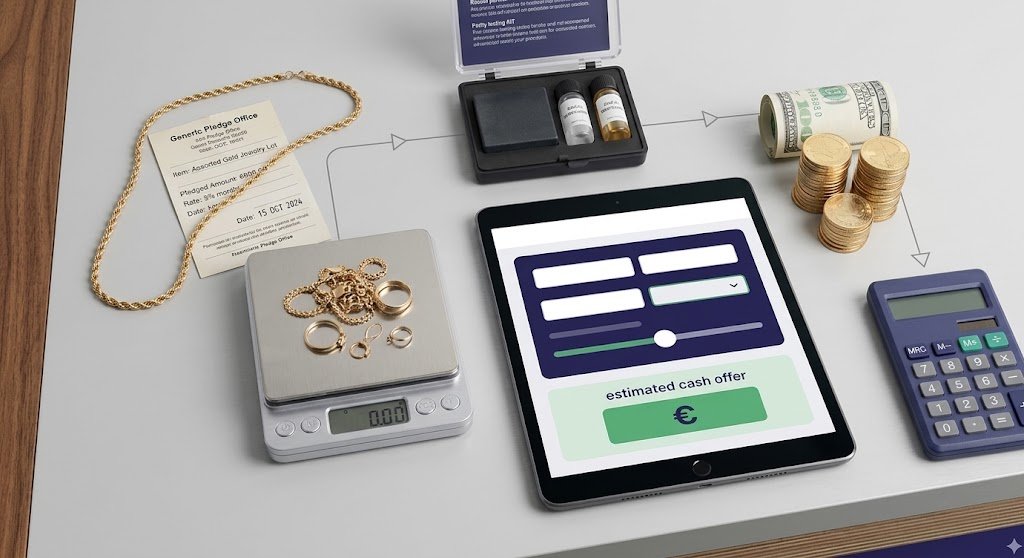
Gold Loan Explained: How to Borrow Against Jewelry Without Losing It
You have a gold necklace that belonged to your grandmother, a car repair bill you didn’t plan for, and a question that keeps circling: could you borrow against that jewelry without actually giving it up? That is the basic idea behind a gold loan. You hand over a valuable item as collateral, get cash, and get the item back when you repay. The catch is that if you don’t repay on time, you can lose it.
In the United States, this kind of borrowing usually happens through pawnbrokers, and some banks, credit unions or online lenders offer secured loans against valuables. This guide explains how it works, what it really costs, and how to lower the chance of losing a piece you care about. It is educational only, not personal financial advice.
Gold Loan Basics: What You’re Actually Borrowing Against
The term “gold loan” is used differently around the world. In some countries, banks and finance companies offer formal gold loans with standardized terms. In the U.S., the most common equivalent is a pawn loan, where a licensed pawnbroker holds your jewelry while you repay.
The structure is simple:
- You bring in an item, such as a gold chain, ring or watch.
- The pawnbroker appraises it and offers a loan based on a portion of what it could resell for.
- If you accept, you leave with cash and a pawn ticket.
- To get the item back, you repay the loan plus the agreed fees before the deadline.
The loan amount is usually only a fraction of the item’s resale value. The exact ratio varies by shop and item. Some pawnbrokers describe a typical loan as roughly half of resale value, but treat that as a rough guide, not a promise.
How Borrowing Against Jewelry Works
A few features make a gold loan different from most other loans:
- The item is the security. Because the pawnbroker holds your jewelry, the decision usually depends on the item’s value, not your credit profile.
- The loan is short. Terms commonly run from about 30 days to a few months, depending on the state and the shop.
- Repayment happens in one lump sum. You typically pay the principal plus fees to redeem the item. Some shops allow you to renew by paying the accrued fees.
- Your right to redeem is on the ticket. The pawn ticket lists the loan amount, due date, a description of your item and the cost of the loan.
One important legal detail: most pawn loans are non-recourse. The federal rule text describes this as credit where the lender’s only recourse if you don’t redeem is keeping the property securing the loan. The Federal Register’s discussion of non-recourse pawn loans explains that the borrower can either repay or let the pawnbroker retain and sell the property, without any additional financial obligation. In plain English, the main risk is losing the item, not owing a debt on top of it.
That still matters, especially for jewelry with sentimental value. A gold loan can cost you the piece itself.
What a Gold Loan Really Costs
Pawn shops usually quote the price of a gold loan as a monthly charge, which can make it look small. The annual percentage rate (APR) shows the real picture. For example, a 10% monthly charge works out to about 120% APR (10% × 12 months). Always check the APR on your ticket, not just the monthly number.
The charges can also come in several forms. In announcing action against Virginia pawnbrokers, the CFPB noted that finance charges can be made up of several fees, with names like “appraisal,” “interest,” “storage” or “setup” charges. The same CFPB announcement described allegations that the companies misstated the actual annual cost of their loans, and stressed that consumers are entitled to know it. You can read more in the CFPB’s action against pawn companies over loan cost disclosures.
What to look for on your ticket:
- The amount financed (what you actually receive)
- The finance charge in dollars
- The APR
- The total you must pay to get your item back
- The due date and any grace period
If any of these are missing or unclear, ask before you sign. Rules vary by state, including limits on rates and fees, so check your state’s requirements.
Will You Lose the Jewelry?
Whether you keep your jewelry depends mostly on repaying your gold loan by the due date, or renewing if the shop allows it. If you don’t, the shop can keep the item and sell it. Some states have notice requirements or short extra redemption windows, so ask what applies where you live.
Factors that raise the risk of losing your piece:
- Borrowing the maximum. A bigger loan means a bigger repayment.
- Short deadlines with no plan. If you don’t know where the repayment will come from, forfeiture becomes likely.
- Repeated renewals. Each renewal adds fees without reducing what you owe.
- Losing the ticket. You generally need the ticket and a valid ID to redeem, so keep it somewhere safe.
Think of the loan as a bet on your future cash flow. If you’re not confident about it, selling the item outright may be a cleaner choice, since it avoids the fees entirely. Selling usually brings more cash than pawning, but you give up ownership.
Steps to Borrow Without Losing Your Jewelry
If you decide to take out a gold loan, these habits can protect you:
- Get more than one appraisal or offer. Different shops value the same item differently.
- Borrow only what you need. A smaller gold loan is easier to repay.
- Ask for the full cost in writing. Request the APR, finance charge and total payoff amount before you agree.
- Confirm the shop is licensed. Check your state’s requirements and be careful with anyone asking you to mail valuables to an unfamiliar company.
- Write down the due date and any grace period. Set calendar reminders a week ahead.
- Plan the repayment source. Decide now where the money will come from, not on the last day.
- Take photos and keep records. Document the item’s condition and keep copies of everything you sign.
- Ask about extra protections if they apply. Active-duty servicemembers and certain dependents have additional protections under the Military Lending Act, so mention it if it applies to you.
Before choosing any secured option, it helps to understand the trade-offs in secured vs. unsecured personal loans.
A Hypothetical Example
This is an illustration, not a real case. Imagine Elena, who is considering a gold loan against a bracelet that a shop appraises at $1,000 in resale value. She needs $500 to cover a medical bill.
- The shop offers her $500, with a hypothetical 10% monthly finance charge ($50 per month).
- She plans to repay in two months, so she expects to pay back about $600.
- If her paycheck is delayed and she renews once, she pays the $50 charge and still owes the $500 principal.
- If she can’t repay by the deadline, the shop keeps the bracelet worth about $1,000.
The cost of the loan was not just the fees. It was also the risk of losing something worth twice the loan amount. That is why checking the total payoff amount and having a repayment plan matters.
Safer Alternatives to a Gold Loan
Before pledging a family piece, consider whether another option fits:
- Credit union Payday Alternative Loans (PALs). According to the NCUA, federal credit unions can offer small-dollar loans with amounts from $200 to $1,000, terms of 1 to 6 months, and an application fee capped at $20. The agency’s page on Payday Alternative Loans also lists other options such as negotiating more time with creditors, asking an employer for an advance, or checking for emergency assistance programs.
- A small personal loan. Even with limited credit, compare offers from bad credit personal loans and current personal loan interest rates.
- Payment plans. Asking a provider or landlord for extra time can cost nothing.
- Selling an item you no longer need. If you don’t attach sentimental value to a piece, selling may be simpler than borrowing against it.
If you’re trying to figure out whether borrowing is right at all, this guide on when emergency personal loans make sense walks through the decision.
For the longer term, a modest cushion in a high-yield savings account can reduce the chance you’ll need to pledge valuables, and a plan like a debt-free journey can help if borrowing has become a pattern.
Common Mistakes to Avoid
These slip-ups can turn a gold loan into a loss:
- Focusing on the monthly rate only. The APR shows the real annual cost.
- Accepting the first offer. Appraisals and fees vary from shop to shop.
- Pawning an irreplaceable piece for a small need. Consider whether another option exists first.
- Borrowing the maximum offered. A larger loan is harder to repay.
- Ignoring the due date. Missing it can mean forfeiture.
- Skipping the fine print. Storage, insurance and renewal terms can change the total cost.
- Dealing with unverified online buyers or lenders. Be careful about mailing jewelry to anyone you haven’t checked out.
Practical Takeaways
- A gold loan in the U.S. usually means a pawn loan secured by your jewelry.
- The offer is typically only a portion of the item’s resale value.
- Most pawn loans are non-recourse, so the main risk is losing the item.
- Costs may be quoted monthly but should be compared using APR.
- Get the total payoff amount in writing and keep your pawn ticket safe.
- Compare offers, borrow only what you need and plan your repayment before you sign.
- Consider credit union options and other alternatives first.
Final Thoughts on Borrowing With a Gold Loan
A gold loan can be a useful short-term bridge when you need cash quickly and don’t want to sell a piece outright. It can also be a fast way to lose something you’d rather keep. The difference usually comes down to preparation: knowing the full cost, borrowing a modest amount, and having a realistic plan to redeem your jewelry before the deadline.
This article is for educational purposes only and is not financial, legal or credit advice. Pawn regulations, fees and terms vary by state and lender, so confirm current details with the lender and official sources before making decisions.