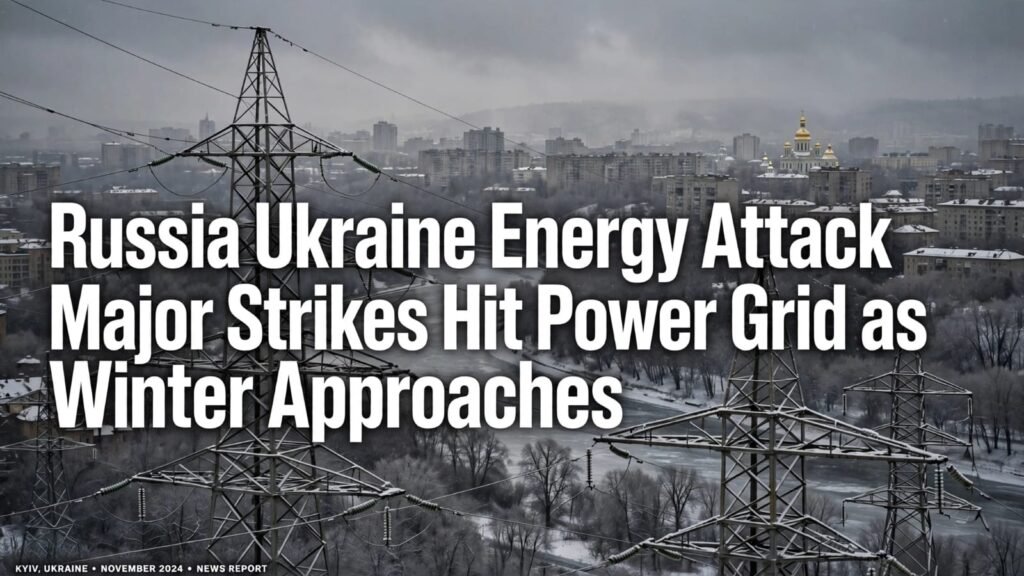
Russia Ukraine Energy Attack: Major Strikes Hit Power Grid as Winter Approaches
The Russia Ukraine energy attack on September 30, 2026, became one of the most significant recent developments in the ongoing war after Russian missiles and drones struck energy facilities and other infrastructure across Ukraine. The attacks were concentrated around Kyiv and several other regions, causing emergency power cuts and disrupting parts of the capital’s transport and water services. Ukrainian officials said seven people were killed, including a child.
The latest Russia Ukraine energy attack comes as Ukraine prepares for another winter during the continuing war. Energy infrastructure has repeatedly been affected by Russian attacks, making electricity, heating and water supplies major concerns for Ukrainian communities as temperatures fall.
Reuters reported that the September 30 assault was the heaviest combined attack on Ukrainian energy sites in months. Ukraine’s state grid operator, Ukrenergo, imposed emergency electricity restrictions in Kyiv and three surrounding regions after the strikes.
What Happened in the Latest Russia Ukraine Energy Attack?
The latest Russia Ukraine energy attack involved a large-scale combination of drones and missiles. Ukrainian authorities reported strikes against energy infrastructure in several parts of the country.
According to Ukraine’s air force, air defenses intercepted 254 of 285 drones launched during the attack period, while Russian forces also launched a ballistic missile.
The attack damaged power facilities and other critical infrastructure around Kyiv. Officials also reported damage in additional regions.
The scale of the assault immediately raised concerns about the condition of Ukraine’s energy network ahead of winter.
How Many People Were Killed?
Ukrainian officials said seven people were killed, including a child, during the attacks.
The casualties were reported as the strikes affected multiple areas rather than a single location. Emergency services responded to damaged buildings and fires while authorities worked to restore essential services.
The reported deaths added to the humanitarian impact of the latest escalation.
Which Areas Were Affected?
Kyiv and areas surrounding the capital were among the main locations affected.
Ukraine’s President Volodymyr Zelenskyy said critical infrastructure was hit in five regions, while additional damage was reported in another five regions.
The strikes were not limited to electricity facilities. Reports also described impacts on transport and water services in Kyiv.
The broad geographical impact made the attack particularly significant for Ukraine’s preparations for the coming winter.
Power Cuts Reported in Kyiv
One of the most immediate consequences of the Russia Ukraine energy attack was the introduction of emergency electricity restrictions.
Ukrenergo said emergency power cuts were imposed in Kyiv and three surrounding regions. Reuters reported that this was the first time such emergency measures had been introduced in the capital since the spring.
On October 1, Ukrenergo also scheduled hourly power restrictions in some regions, warning that the condition of the electricity system could change.
For residents, this means electricity availability can vary depending on location and the condition of the grid.
How Were Transport Services Affected?
The Russia Ukraine energy attack also disrupted public transportation in Kyiv.
Some trams and trolleybuses stopped operating because of electricity problems. This affected people travelling across the capital during the aftermath of the overnight strikes.
When electricity supplies are interrupted, the consequences can extend far beyond homes. Public transport, businesses, water systems, communications and other services can all face difficulties.
The transportation disruption therefore became one of the visible effects of the damaged energy infrastructure.
What Happened to Kyiv’s Water Supply?
The attacks also affected Kyiv’s water system.
Reuters reported that the city’s water utility experienced reduced water pressure following the strikes.
Electricity is essential for many water facilities, including pumping and distribution systems. When power infrastructure is damaged, other public services can therefore experience secondary effects.
This is one reason energy infrastructure is considered particularly important during wartime.
Why Is Ukraine Worried About Winter?
The timing of the Russia Ukraine energy attack is particularly important because winter is approaching.
Ukraine has experienced repeated attacks against electricity and heating infrastructure during previous winters. Damage to power facilities can make it harder for households and businesses to maintain heating, lighting and other essential services during periods of very cold weather.
Reuters reported that previous winter attacks severely damaged power and heating systems, forcing Ukrainians to adapt to difficult conditions.
Ukrainian officials have therefore been warning about the possibility of renewed pressure on the energy network during the colder months.
Is This the Start of Another Winter Energy Campaign?
Ukrainian officials and international reports have linked the latest strikes to concerns about another winter campaign against energy infrastructure.
Reuters described the September 30 attack as a widely anticipated air campaign against Ukraine’s energy grid.
However, the precise future scale and frequency of attacks cannot be known from this single incident.
The latest strikes do show that energy facilities remain a major part of the conflict and that Ukraine’s electricity system remains vulnerable.
What Did Russia Say About the Strikes?
Russia’s Defense Ministry said its forces had targeted Ukrainian infrastructure.
According to Reuters, Russia said it struck a communications center in Kyiv, energy facilities in the Kyiv region that it described as supporting military production, and port infrastructure in Izmail.
The Russian government has repeatedly said its attacks focus on military or strategic targets.
Ukraine, meanwhile, has highlighted the damage to energy infrastructure and the effect on civilian services.
These competing descriptions are part of the broader information environment surrounding the war, so individual claims should be attributed to the side making them.
What Has Ukraine Said About the Attack?
Ukrainian officials described the strikes as a major assault on the country’s energy system.
Prime Minister Sergii Koretskyi said the scale of the combined attack was significantly greater than previous attacks since the end of the last heating season.
President Zelenskyy said critical infrastructure in multiple regions had been affected.
The Ukrainian government has also been preparing backup power arrangements as the country approaches the winter season.
How Did Ukraine Respond?
Ukraine has continued operating its air-defense systems against Russian missile and drone attacks.
Ukraine’s air force said it intercepted 254 of 285 drones during the September 30 attack period.
The large number of intercepted drones demonstrates the scale of the incoming attack, while the damage that still occurred shows the difficulty of protecting a nationwide infrastructure network against large combined attacks.
Ukraine has also continued carrying out attacks against Russian infrastructure during the broader conflict.
What Does the Attack Mean for Ukrainian Energy Security?
The Russia Ukraine energy attack highlights the continuing vulnerability of Ukraine’s power network.
Electricity infrastructure is spread across the country and includes power plants, substations, transmission networks and distribution facilities. Damage to one part of the system can create pressure elsewhere, particularly when several facilities are hit at the same time.
Ukraine has spent years repairing damaged infrastructure and developing backup systems.
However, repeated attacks can make it difficult to maintain reliable electricity supplies, especially when winter demand increases.
How Are Ukrainian Authorities Preparing?
Following the latest strikes, Ukrainian officials have been checking backup power systems and preparing for further pressure on the electricity network.
The government has also relied on emergency restrictions to balance electricity supply and demand when infrastructure is damaged.
The October 1 schedule announced by Ukrenergo shows that electricity restrictions can continue after a major attack rather than ending immediately once the missiles and drones stop.
Residents are therefore being asked to remain prepared for changes in electricity availability.
What Does This Mean for Ordinary People?
For ordinary Ukrainians, the Russia Ukraine energy attack can have effects that go beyond temporary darkness.
Power outages can affect:
– Home heating
– Water pressure
– Public transportation
– Mobile communications
– Businesses
– Schools and offices
– Hospitals and emergency services
– Household appliances
– Internet services
The severity depends on the location and the extent of infrastructure damage.
In major cities such as Kyiv, even a limited interruption can affect thousands of people because transport and utility systems depend heavily on electricity.
Why Is Kyiv Particularly Important?
Kyiv is Ukraine’s capital and one of its largest urban centers.
The latest strikes affected infrastructure around the capital, including a key power facility and other energy installations.
Because Kyiv contains large numbers of residents, businesses, government offices and public services, disruptions there can have a significant impact.
The city’s infrastructure is also interconnected, meaning an electricity problem can create secondary effects for transportation and water services.
Could the Power Cuts Continue?
Power restrictions can continue when the electricity system is unable to meet demand or when repairs are still underway.
Ukrenergo warned on October 1 that the situation could change and announced scheduled restrictions in some areas.
This means the electricity schedule may be different from one region to another.
Residents are therefore advised to follow announcements from local authorities and the national grid operator rather than assuming that a single timetable applies across the country.
What Happened to Energy Workers?
Energy workers have continued repairing damaged infrastructure after attacks.
Reuters reported that Ukraine’s private energy company DTEK restored electricity to around 8,000 households after damage to infrastructure in Kyiv.
Repairing power infrastructure after an attack can be difficult because workers may need to operate around damaged facilities and possible security risks.
Rapid restoration is nevertheless essential because electricity supports many other critical services.
How Large Was the Drone Attack?
The number of drones reported during the Russia Ukraine energy attack was significant.
Ukraine’s air force said it intercepted 254 of 285 drones during the attack period. It also reported a ballistic missile launch.
The figures demonstrate how large the aerial assault was.
Air-defense interception does not necessarily mean that all infrastructure remains unaffected. Debris, missiles that penetrate defenses and direct strikes can still cause damage.
Could the Attack Affect Ukraine’s Economy?
Yes, prolonged damage to energy infrastructure can affect economic activity.
Factories may have to reduce operations during electricity restrictions. Shops and offices can face interruptions, while transport systems may operate less efficiently.
Businesses may need backup generators or alternative energy sources to continue operating.
The economic effect becomes more serious if outages are prolonged or occur repeatedly.
This is why Ukraine’s energy infrastructure remains an important issue not only for civilians but also for the country’s economy.
What Does the Attack Mean for Europe’s Energy Situation?
Ukraine’s energy problems can also have wider regional implications.
Ukraine’s electricity network is connected to the European power system, allowing electricity to be exchanged across borders.
However, the immediate impact of the latest Russia Ukraine energy attack has primarily been felt inside Ukraine, particularly in areas affected by damaged infrastructure and emergency restrictions.
European countries have also continued discussing support for Ukraine’s energy resilience and air-defense capabilities.
Is the Russia Ukraine War Getting Worse?
The latest energy attack is another major escalation in aerial strikes, but one incident alone does not establish the overall future direction of the war.
Russia and Ukraine continue to conduct missile and drone attacks while fighting continues on the ground.
At the same time, diplomatic efforts and discussions about the war have continued.
The latest attacks show that military pressure remains significant even while political and diplomatic discussions take place.
What Happens Next?
The immediate priority for Ukraine is restoring damaged infrastructure and maintaining electricity supplies.
Energy workers will continue repairs while authorities manage electricity demand through emergency or scheduled restrictions.
The coming weeks will also be closely watched because winter increases demand for heating and electricity.
Whether further large-scale attacks occur, and how Ukraine’s defenses and energy network respond, will shape the situation.
Visit the Website for the Latest News
For the latest updates, breaking news
The Russia Ukraine energy attack on September 30, 2026, caused widespread concern after Russian drones and missiles struck energy facilities and other infrastructure in Kyiv and several Ukrainian regions.
Ukrainian officials said seven people were killed, including a child, while emergency power cuts were introduced in Kyiv and nearby areas. Public transportation and water pressure were also affected.
The attack came as Ukraine prepares for another winter during the ongoing war. Previous winters have seen major damage to electricity and heating infrastructure, making energy security a central concern for the country.
Russia said it targeted strategic infrastructure, while Ukrainian officials emphasized the damage to energy facilities and civilian services.
For now, Ukraine is focused on repairing damaged facilities, managing electricity supplies and preparing backup systems. The latest incident also demonstrates why the country’s energy network remains one of the most important issues in the continuing Russia-Ukraine war.
FAQs
1. What happened in the latest Russia Ukraine energy attack?
Russia launched a large drone and missile attack on Ukrainian energy infrastructure on September 30, 2026. Kyiv and several other regions were affected.
2. How many people were killed?
Ukrainian officials reported seven deaths, including a child.
3. Were power cuts reported in Kyiv?
Yes. Ukraine’s grid operator introduced emergency power cuts in Kyiv and three surrounding regions after the attack.
4. Why is the attack important before winter?
Ukraine has previously experienced major attacks on energy and heating infrastructure during winter, so damage to the power system before colder weather raises concerns about electricity and heating supplies.
5. How many drones were reportedly intercepted?
Ukraine’s air force said it intercepted 254 of 285 drones during the reported attack period.
6. Were public transport services affected?
Yes. Some trams and trolleybuses in Kyiv stopped operating because of electricity disruptions.
7. Was Kyiv’s water supply affected?
Reports said water pressure in Kyiv was reduced after the attacks affected electricity and infrastructure.
8. What did Russia say it targeted?
Russia’s Defense Ministry said its strikes targeted a communications center in Kyiv, energy facilities in the Kyiv region and port infrastructure in Izmail.
9. Are electricity restrictions continuing?
Ukrenergo announced scheduled restrictions for some areas on October 1 and warned that the situation could change.
10. What happens next?
Authorities are expected to continue repairing damaged infrastructure, managing electricity supplies and preparing the energy network for the winter period.