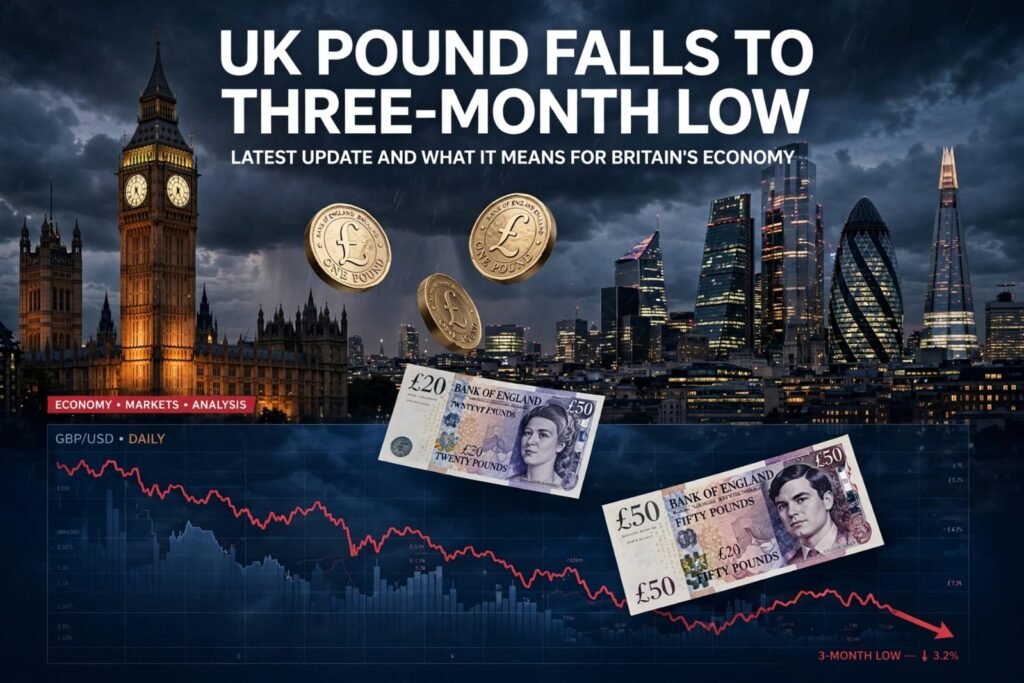
UK Pound Falls to Three-Month Low: Latest Update and What It Means for Britain’s Economy
The UK pound falls to three-month low has become one of the latest major economic stories in Britain, with sterling dropping against the US dollar amid concerns about oil prices, inflation, interest rates, and government borrowing costs. On October 1, 2026, the pound fell to around $1.3193, its lowest level in three months.
The latest movement has attracted attention because it comes at a time when financial markets are already dealing with higher energy prices and renewed concerns about inflation. The situation could also affect borrowing costs, mortgages, businesses, and household finances across the UK.
Why Did the UK Pound Fall?
Several factors have contributed to the recent decline in sterling. One major concern is the sharp increase in oil prices. Brent crude rose above $100 per barrel as geopolitical tensions created worries about energy supplies. Higher oil prices can increase transportation and production costs, adding pressure to inflation.
Investors are also watching interest-rate expectations closely. When markets expect interest rates to remain high for longer, borrowing becomes more expensive and financial conditions can become tighter.
The UK pound falls to three-month low story is therefore connected to a wider global market movement rather than being caused by one single event.
UK Bond Yields Reach a Major Milestone
Another important development occurred in Britain’s government bond market. The yield on 30-year UK government bonds reached 6% on October 1, the highest level since 1998. Higher government borrowing costs can increase pressure on public finances.
The rise in yields also matters for financial markets because government bond rates influence borrowing costs elsewhere in the economy.
Reuters reported that UK bank shares also fell sharply during Thursday’s trading session. NatWest, HSBC, Barclays, and Lloyds were among the major banks affected, while the FTSE 350 banking index recorded a significant decline.
What Is Happening With the FTSE 100?
The UK stock market also came under pressure as investors reacted to the rise in bond yields and concerns about inflation.
The FTSE 100 fell during the session, reflecting broader weakness across European markets. Investors were reassessing the outlook for interest rates, energy prices, and economic growth.
Market movements can change quickly, so a single day’s decline does not necessarily indicate what will happen over the coming weeks.
How Could Higher Oil Prices Affect the UK?
Oil prices are important for the British economy because energy costs influence many areas of everyday life.
When oil becomes more expensive, transportation, manufacturing, logistics, and other business costs can rise. Companies may then face higher operating expenses.
If these costs remain elevated, they can contribute to inflationary pressure. That is one reason investors are closely watching the relationship between oil prices and future interest-rate decisions.
On October 1, Brent crude settled at about $102.31 per barrel after a sharp daily increase, according to Reuters.
What Does the Pound’s Decline Mean for Consumers?
A weaker pound can have different effects on consumers and businesses.
The UK imports many products and raw materials from overseas. If sterling loses value against other currencies, imported goods can become more expensive when measured in pounds.
However, the actual effect on consumers depends on several factors, including global commodity prices, business costs, retailer pricing, and the duration of the currency movement.
For people travelling abroad, a weaker pound can also mean that pounds buy fewer units of another currency than before.
What About UK Mortgages?
The rise in government bond yields is particularly important for the borrowing environment.
Mortgage rates can be influenced by wider financial-market conditions. Recent UK housing data showed that annual house-price growth slowed to 0.8% in September, while average two-year and five-year fixed mortgage rates were above 5.9%, according to reporting based on Nationwide data.
This means homeowners and potential buyers are paying close attention to developments in interest rates and borrowing costs.
What Could Happen Next?
The outlook remains uncertain because several factors are moving at the same time.
Oil prices, inflation expectations, government borrowing costs, global bond markets, and central-bank decisions could all influence sterling.
The UK’s upcoming Autumn Budget is another important event for financial markets. Investors will be watching government plans for taxation, spending, borrowing, and public finances.
The UK pound falls to three-month low development therefore comes at an important point for Britain’s economy and financial markets.
Why Are Investors Watching the Bank of England?
The Bank of England plays an important role in determining the UK’s interest-rate environment.
When inflation remains high, policymakers can face pressure to keep monetary policy tighter. Higher rates can help reduce demand but can also increase borrowing costs for households and businesses.
Recent market movements have increased attention on future Bank of England decisions. Reuters reported that investors were concerned about persistent inflation and the possibility that interest rates could remain elevated.
Is the UK Pound Crisis a Long-Term Problem?
It is too early to describe the latest movement as a permanent currency crisis.
Currencies move constantly in response to economic data, interest-rate expectations, commodity prices, geopolitical developments, and investor sentiment.
The pound’s latest decline is significant because it coincides with higher UK bond yields and increased oil prices, but future movements will depend on how these factors develop.
The UK pound falls to three-month low story highlights the pressure currently facing Britain’s financial markets. Sterling reached around $1.3193 on October 1, while UK 30-year government bond yields reached 6%, their highest level since 1998.
Higher oil prices and inflation concerns are adding to uncertainty, while investors are also watching the UK’s borrowing costs and upcoming budget.
For consumers, the most important areas to watch are the pound’s exchange rate, energy prices, mortgage rates, and inflation. The situation can change quickly as new economic data and policy decisions emerge.
FAQs
Why did the UK pound fall to a three-month low?
The decline was linked to concerns about higher oil prices, inflation, interest rates, and rising government borrowing costs.
What was the UK pound exchange rate on October 1, 2026?
The pound fell to around $1.3193 against the US dollar, marking a three-month low.
Why are UK bond yields important?
Higher government bond yields can increase the cost of government borrowing and influence wider borrowing conditions across the economy.
Could a weaker pound increase prices in the UK?
A weaker pound can make imported goods and materials more expensive, although the final effect depends on global prices, businesses, and market conditions.
What happened to UK bank stocks?
Major UK bank shares fell on October 1 as government borrowing costs rose and investors became more concerned about inflation and financial conditions.
What should investors watch next?
Key factors include oil prices, UK inflation data, Bank of England policy, government borrowing costs, and the upcoming Autumn Budget.
Explore More Latest News
Visit the website to read more latest news, updates, and detailed stories from around the world.https://corefoxes.com/