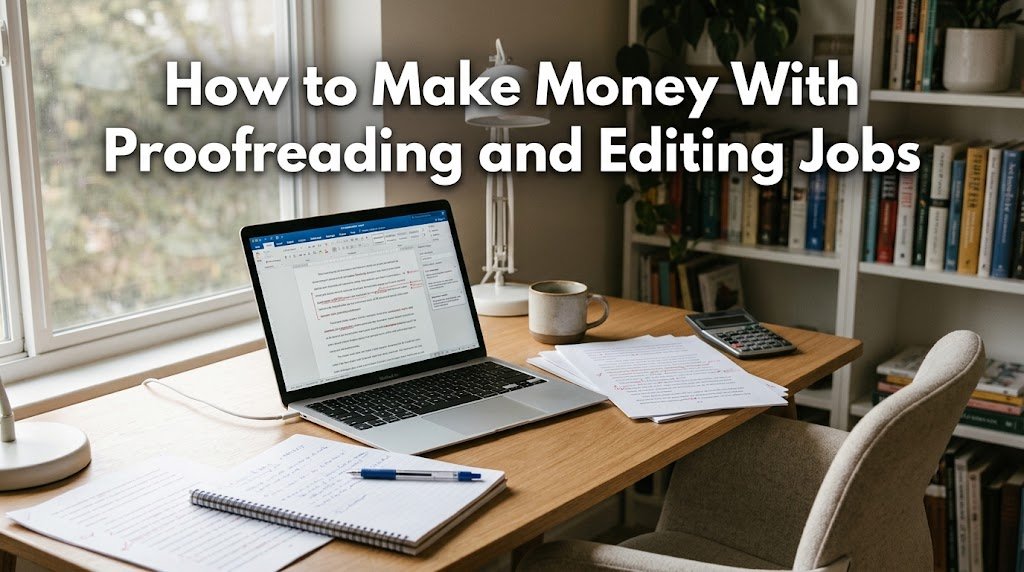
If you have strong English skills, notice small mistakes easily, and enjoy improving written content, proofreading and editing jobs can be a practical way to make money online. You can work from home on blog posts, websites, books, business documents, resumes, academic papers, and marketing content. Beginners can start with simple proofreading projects, build a portfolio, collect client reviews, and gradually take on more specialized editing work.
What Are Proofreading and Editing Jobs?
Proofreading and editing are related, but they aren’t exactly the same. Proofreading is usually the final check for spelling, grammar, punctuation, capitalization, formatting mistakes, and typos. Editing goes further by improving sentence structure, clarity, word choice, tone, organization, and overall readability.
For example, a proofreader might change “Their going to the store” to “They’re going to the store.” An editor may also notice that the entire paragraph is unclear and suggest rewriting it. Understanding this difference is important because clients may expect very different levels of work when they advertise editing or proofreading jobs.
If you already have an interest in Freelance Writing, proofreading can be a useful service to offer alongside writing. Many clients need someone who can both create content and check it before publication.
How Can You Make Money With Proofreading and Editing Jobs?
The most common way to make money is to offer proofreading or editing as a freelance service. You can work directly with authors, bloggers, businesses, website owners, agencies, students, publishers, and other professionals who regularly produce written material.
You don’t have to offer every type of editing when you’re starting. Pick one or two services that match your skills, create relevant samples, and look for clients who need exactly that kind of work.
Some services you can offer include:
- Proofreading: Correct spelling, grammar, punctuation, typos, and formatting.
- Copy editing: Improve wording, consistency, sentence structure, and readability.
- Line editing: Refine sentences, tone, word choice, and flow.
- Manuscript editing: Edit novels, nonfiction books, and longer manuscripts.
- Academic proofreading: Check grammar, punctuation, formatting, and citations without completing the student’s academic work.
Starting with a narrow service can make it easier to explain what you do and find suitable clients.
What Skills Do You Need to Become a Proofreader?
You don’t necessarily need a degree in English to start proofreading, but you do need a strong understanding of written English. A professional proofreader should be able to spot mistakes that automated grammar checkers may overlook.
Grammar, punctuation, spelling, sentence structure, consistency, and attention to detail are all important. You also need patience because proofreading requires careful reading rather than simply scanning a document.
Communication matters, too. Clients need someone who can explain suggested changes clearly and respect the writer’s original meaning.
Microsoft Word and Google Docs are particularly useful because both allow editors to make comments and track changes. Familiarity with style guides such as APA, MLA, and Chicago can also help if you want to work with academic or publishing clients.
Can AI Writing Tools Replace Proofreaders?
AI can identify many basic grammar and spelling issues, but that doesn’t mean human proofreading has become unnecessary. AI Writing Tools can suggest corrections, improve wording, or identify repetitive sentences, but they don’t always understand the writer’s intended meaning or the context of a passage.
A human editor can notice when a grammatically correct sentence sounds unnatural, when a statement contradicts another part of the document, or when a change made by an automated tool has altered the intended meaning.
You can use AI as part of your workflow, but the final decision should remain yours. For professional work, read the entire document yourself rather than accepting every automated suggestion.
Where Can You Find Proofreading Jobs Online?
Once you’ve developed your skills, you need to find people willing to pay for them. Freelance marketplaces such as Upwork and Fiverr are common starting points because clients use these platforms to hire freelancers for proofreading, copy editing, content editing, and related services.
You can also find clients outside freelance marketplaces. Bloggers, authors, marketing agencies, small businesses, coaches, publishers, and website owners may all need regular editing support.
When applying for a project, avoid sending the same generic proposal to everyone. Read the job description carefully and explain how your specific skills match the client’s needs. A relevant sample can also make your application much stronger.
How Do You Start Proofreading With No Experience?
You can build experience before receiving your first paid assignment. Start by finding three or four pieces of publicly available writing and edit them as practice. Choose different types of content, such as a blog article, business document, product description, or short story.
Keep the original and edited versions so you can demonstrate what you changed. Then place your best examples in a simple Portfolio. You can create one using Google Docs, a basic website, or a freelance marketplace profile.
Don’t claim that practice samples were paid client work. Instead, label them clearly as sample edits. A potential client is mainly looking for evidence that you understand grammar, clarity, consistency, and professional editing.
If you already provide writing services, include selected writing samples as well. Showing both writing and editing ability can make your service more useful to clients who need help with content from start to finish.
How Much Can You Earn From Proofreading and Editing?
Freelance proofreading income varies considerably. Your earnings depend on your experience, location, niche, speed, type of editing, client budget, and pricing method.
As an employment benchmark, the U.S. Bureau of Labor Statistics reported a median annual wage of $51,120 for proofreaders and copy markers in May 2025. For editors, the median annual wage was $77,920 in May 2025. These figures describe U.S. employee wages rather than freelance earnings, so they shouldn’t be treated as a guaranteed freelance income.
Freelancers can charge by the hour, word, page, or complete project. For beginners, project-based or per-word pricing can make the total cost easier for clients to understand.
Before agreeing to a price, check the word count, level of editing required, deadline, formatting requirements, and number of revisions. A 2,000-word document that needs basic proofreading requires much less work than a 2,000-word document that needs extensive rewriting.
Should You Charge by the Hour or by the Word?
Both methods can work. Hourly pricing is useful when you can’t accurately predict how much editing a document will require. Per-word pricing is often easier for straightforward proofreading because the scope of the assignment is clear.
For example, a client with a 5,000-word article may want basic proofreading only. Another client with the same word count may expect substantial rewriting and restructuring. Charging both clients the same amount would not necessarily make sense.
Ask for a sample or review the full document before giving a final quote whenever possible. This helps you understand the actual workload and prevents you from accepting a project at a price that doesn’t match the effort involved.
How Can You Get Better-Paying Editing Clients?
One of the best ways to improve your earning potential is to develop a niche. Instead of presenting yourself as someone who edits “anything,” you can become known for a specific type of content.
For example, you could specialize in:
- Blog and website content
- Business documents
- Books and ebooks
- Academic documents
- Resumes and cover letters
- Marketing copy
- Technical content
Specialization makes your portfolio more relevant and can help clients understand why you’re a good fit for their project.
Your Freelancing profile should also clearly explain what you edit, who you work with, and what the client receives. Avoid vague descriptions such as “I will make your writing better.” Be specific about the problems you solve.
How Can You Build a Strong Proofreading Portfolio?
A good portfolio doesn’t need dozens of samples. Three to five relevant examples can be enough when you’re starting. Each sample should demonstrate a different skill or content type.
Show the original version alongside your edited version when possible. You can also briefly explain the problems you found, such as grammar errors, inconsistent formatting, awkward wording, or unclear sentences.
As you complete paid projects, replace weaker practice samples with real work when the client gives you permission to display it. Keep confidential documents private and never publish a client’s material without approval.
Your portfolio should make one thing clear within a few seconds: what type of editing you provide and whether you can handle the kind of work the client needs.
What Mistakes Should Beginner Proofreaders Avoid?
New proofreaders often make the mistake of accepting every project they can find. That can lead to work outside their skill level, unrealistic deadlines, and low-paying assignments that take much longer than expected.
Another common mistake is changing a client’s writing unnecessarily. Your job isn’t always to rewrite everything in your preferred style. Good editing improves the document while preserving its purpose, voice, and intended meaning.
Before accepting a project, confirm the deadline, word count, editing level, payment, revision policy, and file format. If something isn’t clear, ask before starting rather than making assumptions.
It’s also worth keeping client communication professional and maintaining copies of your agreed scope and delivered work.
Is Proofreading a Good Online Job for Beginners?
Yes, proofreading can be a good entry point for people who have strong English skills and enjoy detail-oriented work. However, it isn’t an effortless way to make money. You need to practice, build samples, find clients, meet deadlines, and continue improving your editing ability.
Proofreading can also become the starting point for a broader freelance service. You might eventually add copy editing, content editing, writing, fact-checking, or a specialist subject area. This gives you more options when client demand changes.
The U.S. Bureau of Labor Statistics projects employment for proofreaders and copy markers to decline by 1% from 2025 to 2035, while editor employment is projected to decline by 2% over the same period. For freelancers, developing several related skills can therefore be a sensible way to find more types of work.
Final Thoughts
Proofreading and editing jobs can provide a legitimate way to earn money from home, especially if you have strong English skills and a good eye for detail. The key is to treat proofreading as a professional service rather than an easy-money opportunity.
Start with one clear service, practice on real examples, create a small portfolio, and apply for suitable projects. As your experience grows, consider specializing in a particular type of content and adding related services such as copy editing or writing.
You don’t need a huge client list to get started. A few strong samples, reliable communication, accurate work, and realistic pricing can give you a solid foundation for finding your first proofreading clients.
FAQs
Can I make money proofreading from home?
Yes. Freelancers can proofread blog posts, websites, books, business documents, resumes, and other written material remotely. Your income depends on your rates, workload, experience, and ability to find regular clients.
How do I get proofreading jobs with no experience?
Create three to five practice samples, put your strongest work in a portfolio, and apply for suitable beginner-level projects. You can also contact bloggers, authors, agencies, and small businesses directly.
How much should a beginner proofreader charge?
There is no single correct beginner rate. Consider the word count, type of editing, deadline, complexity, and your experience before setting a price. As you gain reviews and specialist knowledge, you can adjust your rates.
Is proofreading different from editing?
Yes. Proofreading mainly checks for final errors such as spelling, grammar, punctuation, and formatting. Editing can involve larger changes to wording, structure, clarity, tone, and readability.