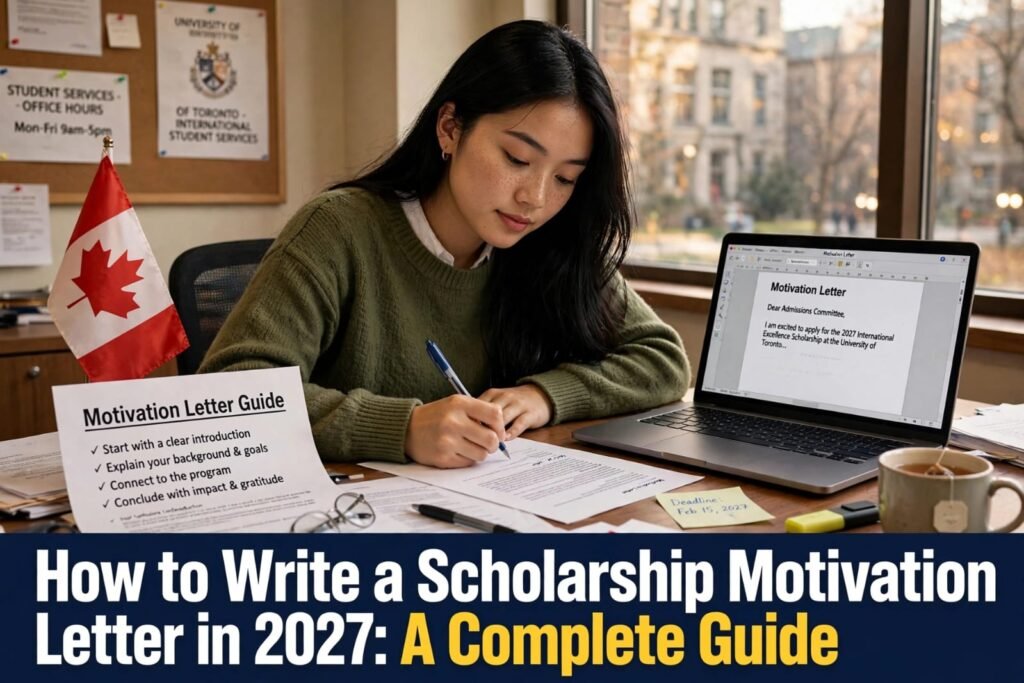
How to Write a Scholarship Personal Statement That Stands Out
Writing a strong scholarship personal statement can help students present their goals, achievements, and personal experiences in a meaningful way. Learning how to write a scholarship personal statement that stands out is important for students who want to make a positive impression on a scholarship selection committee. A well-written statement explains who you are, what motivates you, and why you are a suitable candidate.
A personal statement is more than a summary of academic results. It gives you an opportunity to explain your ambitions, describe the challenges you have faced, and show how a scholarship could support your future plans. With thoughtful preparation and an honest approach, you can create a statement that reflects your personality and potential.
1. Understand the Purpose of a Scholarship Personal Statement
Before you start writing, understand what the scholarship committee expects from applicants. Some scholarships focus on academic excellence, while others consider leadership, community involvement, personal development, or future career goals.
Read the application instructions carefully. Identify the main qualities the scholarship provider wants to see and consider how your own experiences relate to those qualities.
For example, if a scholarship values community service, discuss a meaningful activity in which you helped others. If it focuses on academic achievement, explain your interest in your chosen subject and how you have developed your knowledge.
Understanding the purpose of the statement helps you write with direction instead of including unrelated information.
2. Start With a Strong and Personal Introduction
The opening paragraph is your opportunity to capture the reader’s attention. Avoid beginning with general statements that could apply to almost any student. Instead, introduce a specific experience, an important motivation, or a moment that influenced your educational journey.
For example, you might describe how a school project inspired your interest in environmental science or how volunteering helped you understand the importance of public health.
Your introduction should quickly communicate three things:
– What motivates you academically or personally.
– Which experience influenced your ambitions.
– What you hope to achieve in the future.
When learning how to write a scholarship personal statement that stands out, remember that a memorable opening does not need dramatic language. A genuine experience explained clearly can be more effective than an exaggerated story.
3. Explain Your Academic Background
Your academic background helps the committee understand your preparation for further study. Mention relevant subjects, projects, research, academic improvements, or achievements that demonstrate your interest in your chosen field.
You do not need to list every grade or certificate. Select examples that support your application and explain why they matter.
For instance, a student applying for a computer science scholarship might discuss a programming project that improved their problem-solving skills. A student interested in education could explain how tutoring younger learners strengthened their commitment to teaching.
If your grades are not perfect, do not assume that your application has no chance. Where appropriate, explain how you have improved, what you learned from difficulties, and how you are preparing for future academic responsibilities.
The purpose is to demonstrate your readiness, curiosity, and willingness to learn.
4. Share Personal Experiences That Shaped You
A strong personal statement helps the committee understand the person behind the application. Consider experiences that influenced your character, values, or educational decisions.
These experiences may include overcoming an academic challenge, balancing responsibilities, adapting to a new environment, supporting your community, or learning an important lesson from failure.
Choose experiences that are relevant to your goals. Describe the situation briefly, explain the action you took, and discuss what you learned.
For example, instead of simply saying that you are hardworking, explain how you managed your studies while fulfilling other responsibilities. A specific example gives the committee a clearer understanding of your determination.
You should also maintain honesty. Never invent hardships, achievements, volunteer work, or leadership roles to make your application appear stronger. Authentic experiences are the foundation of a credible personal statement.
5. Connect Your Goals With the Scholarship
One of the most important parts of your statement is explaining why you are applying for that particular scholarship.
Avoid saying only that you need financial assistance or want to study abroad. Although financial support may be important, explain how the opportunity connects with your education and long-term ambitions.
Consider these questions:
– Why have you chosen this subject?
– What skills or knowledge do you want to develop?
– How does the scholarship support your educational plans?
– What contribution do you hope to make after completing your studies?
For example, a student pursuing public health might explain how advanced training could prepare them to contribute to community health programmes.
Make sure your reasons match the scholarship’s actual purpose. A personalised explanation demonstrates that you have researched the opportunity and understand its value.
6. Demonstrate Your Achievements With Examples
Achievements can strengthen your statement, but they are more meaningful when you explain their significance.
You can mention academic awards, competitions, research projects, volunteer activities, internships, employment, or responsibilities that developed useful skills.
If you have limited formal experience, focus on what you have learned through school projects, independent study, family responsibilities, or community participation where relevant.
For every important achievement, explain your contribution and the skills you developed. For example, organising a student event may demonstrate communication, teamwork, planning, and problem-solving.
Do not exaggerate your role or claim credit for work completed by others. The committee wants to understand your actual abilities and potential.
7. Show Leadership and Community Involvement
Many scholarship providers value students who want to make a positive contribution to society. Leadership does not always mean holding an official position.
You might have helped classmates prepare for examinations, organised a local activity, participated in a community initiative, or supported a group project.
Describe what you did, why it mattered, and what you learned from the experience. If possible, explain the outcome without making unsupported claims.
If you have not participated in formal volunteering, do not create a false example. Instead, identify genuine experiences that demonstrate responsibility, cooperation, initiative, or a willingness to help others.
Your statement should show how your values and future plans could benefit people beyond yourself.
8. Keep Your Writing Clear and Well Organised
Clear writing makes it easier for the committee to understand your story. Use a logical structure, with each paragraph focusing on one main idea.
A practical structure includes:
1. Introduction and motivation.
2. Academic background and relevant experiences.
3. Personal qualities and achievements.
4. Reasons for choosing the scholarship.
5. Future goals and conclusion.
Use straightforward language rather than complicated vocabulary. You do not need to sound overly formal to appear capable. Focus on communicating your ideas accurately and confidently.
Keep your paragraphs focused, remove unnecessary repetition, and follow the required word limit. If the application provides specific questions, make sure your statement answers them directly.
9. Avoid Common Personal Statement Mistakes
Even a promising application can become less effective if the statement contains avoidable errors.
Common mistakes include:
– Using generic sentences that could describe any applicant.
– Repeating information already included in the application form.
– Making unsupported claims about achievements.
– Focusing entirely on financial need without explaining academic goals.
– Using complicated words that make the message unclear.
– Ignoring the scholarship’s specific requirements.
– Submitting the statement without proofreading.
– Copying examples from the internet instead of developing an original account.
To make your scholarship personal statement more convincing, replace broad claims with real examples. Instead of saying that you are passionate about learning, describe a project, experience, or subject that demonstrates your curiosity.
Originality comes from your own perspective and experiences, not from using unusual words.
10. Explain Your Future Career Goals
Scholarship committees often want to understand how applicants intend to use their education. Your future goals should be realistic, relevant to your chosen subject, and connected to the opportunities offered by the programme.
Explain what you hope to do after graduation and how your studies will prepare you for that path.
For example, an aspiring teacher might aim to improve learning opportunities for students in underserved communities. A future engineer might want to develop practical solutions to infrastructure or energy challenges.
You do not need to predict every detail of your career. It is enough to present a clear direction and explain why your chosen education is an important step.
If possible, connect your personal ambitions with a broader contribution to your profession or community.
11. Make Your Statement Specific to Each Scholarship
One personal statement may not be suitable for every application. Different scholarship programmes have different priorities, eligibility conditions, and selection criteria.
You can maintain a basic draft containing your background, achievements, motivations, and career goals. However, revise it for each opportunity.
Check the scholarship’s mission, programme details, essay questions, and word limit. Highlight the experiences most relevant to that particular application.
For example, a scholarship focused on research may require more discussion of your academic interests, while a leadership scholarship may place greater emphasis on initiative and community impact.
Personalisation helps your application feel purposeful rather than copied or mass-produced.
12. Proofread and Improve Your Final Draft
Once you have written your statement, take a break before reviewing it. Returning with fresh eyes can help you identify unclear sentences and unnecessary details.
Read the statement slowly and check grammar, spelling, punctuation, paragraph structure, and word count.
Ask yourself whether the introduction explains your motivation, whether your examples support your claims, and whether your goals are easy to understand.
If possible, ask a teacher, mentor, or trusted reader to review the draft. They may notice weaknesses you overlooked.
You can also use writing tools to identify grammar problems, but review every suggested change carefully. Your final statement should retain your own voice and accurately represent your experiences.
Before submitting, confirm that the document follows the application instructions and that all personal details are correct.
Frequently Asked Questions
1. What is a scholarship personal statement?
A scholarship personal statement is a written explanation of your background, interests, achievements, motivations, and future goals. It helps the selection committee understand why you are a suitable candidate.
2. How do I write a scholarship personal statement that stands out?
Use a personal introduction, provide genuine examples, explain your academic interests, connect your goals with the scholarship, and proofread your work. Keep the statement specific, clear, and honest.
3. How long should a scholarship personal statement be?
The required length depends on the scholarship programme. Some applications request a short essay, while others allow a longer statement. Always follow the official word limit.
4. Should I mention financial difficulties in my statement?
You can discuss financial difficulties if they are relevant to your educational journey or the scholarship criteria. Explain the situation honestly and focus on how you have responded and what you hope to achieve.
5. Can I use the same personal statement for multiple scholarships?
You can use a basic draft as a starting point, but you should customise it for each scholarship. Highlight the experiences, skills, and goals that best match the specific programme.
6. What should I avoid in a scholarship personal statement?
Avoid exaggerated achievements, invented experiences, generic introductions, unnecessary repetition, copied material, and unsupported claims. Follow the application instructions carefully.
7. Do I need leadership experience to receive a scholarship?
Not always. Requirements vary between programmes. You can demonstrate leadership through genuine examples of initiative, teamwork, responsibility, or helping others.
8. Can students with average grades write a strong personal statement?
Yes. Some scholarships consider more than grades, including motivation, personal growth, community involvement, and future potential. However, academic requirements vary, so check the eligibility criteria before applying.
Conclusion
Writing a successful personal statement requires preparation, honesty, and a clear understanding of your goals. By explaining your academic interests, sharing meaningful experiences, demonstrating your achievements, and connecting your ambitions with the scholarship, you can create a more persuasive application.
The best approach to learning how to write a scholarship personal statement that stands out is to focus on what makes your journey genuine and relevant. Avoid copying other applicants, follow the programme’s instructions, and give yourself enough time to revise your work.
A thoughtful personal statement cannot guarantee a scholarship, but it can help the selection committee understand your potential and the contribution you hope to make through your education.
How to Write a Scholarship Motivation Letter in 2027: A Complete Guide