
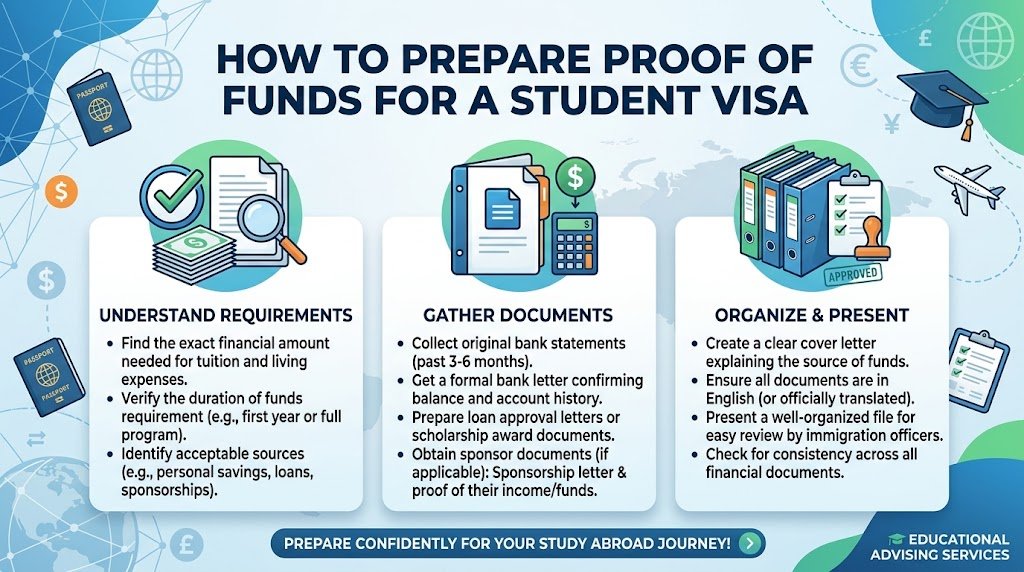
To prepare proof of funds for a student visa, calculate your tuition fees and living expenses, arrange the required money, and collect official documents showing that you can afford to study abroad. Depending on your destination, you may use bank statements, parental sponsorship, scholarship letters, or an approved education loan. Each country has different rules about the required amount, acceptable financial documents, and bank statement dates, so check the official immigration guidance before submitting your application.
What Is Proof of Funds for a Student Visa?
Proof of funds is evidence that you have enough money to pay for your education and living expenses while studying in another country. Immigration authorities review these documents to assess whether you can support yourself during your studies.
Your financial support may come from personal savings, your parents, a scholarship, or an eligible education loan. The documents must show that the funds are genuine, available when required, and acceptable under the rules of your destination country.
How Much Money Do You Need for a Student Visa?
The amount required depends on your destination, unpaid tuition fees, living expenses, course duration, and whether family members will accompany you. Some countries set specific financial thresholds, while others assess several types of evidence to determine whether you can afford your studies.
For example, UK applicants generally need to show sufficient funds for outstanding course fees and the required living costs. Canadian study permit applicants must demonstrate funds for tuition, living expenses, and transportation. Australia also has specific financial capacity requirements for international students.
Before preparing your documents, calculate your expected expenses, including:
- Outstanding tuition fees for the required period.
- Living costs for yourself and any accompanying dependants.
- Travel expenses and other costs required by immigration rules.
- Any remaining amount not covered by a scholarship or eligible financial support.
The final amount should meet the current requirements for your destination. If you are still checking eligibility, admission conditions, and other application rules, read our guide to Student Visa Requirements for International Students.
Which Documents Can You Use as Proof of Funds?
The financial documents you need depend on who is paying for your education and which forms of evidence the immigration authority accepts. Your aim is to show the amount available, who owns the funds, and where the money came from.
Common documents used as proof of funds include official bank statements, bank balance certificates, sponsorship letters, scholarship award letters, education loan confirmations, and tuition payment receipts. Salary slips, tax records, or business income documents may also help explain the source of your money.
You do not necessarily need every document listed above. For example, a student receiving a full scholarship may have different evidence requirements from someone whose parents are paying all the expenses.
Before submitting your application, compare your financial records with the other required documents using our Student Visa Documents Checklist for International Students. This can help you identify missing paperwork before your application is submitted.
How to Prepare a Bank Statement for a Student Visa
A bank statement is one of the most common ways to demonstrate financial capacity. However, having the required balance does not automatically mean your evidence will be accepted. Immigration authorities may also check the account holder’s details, transaction history, source of funds, and whether the money is available for your studies.
Contact your bank to request an official statement covering the required period. Check that your name, account details, statement dates, transactions, and closing balance are clearly visible. If your destination requires a separate bank certificate or verification letter, obtain it as well.
Pay particular attention to these details:
- Your name matches your passport and visa application.
- Your balance meets the required financial amount.
- Your statement covers the correct period.
- Large deposits can be explained with genuine supporting evidence.
- Any required translations or certifications are included.
Never alter bank statements or hide transactions. False financial evidence can lead to refusal and may affect future visa applications.
How Long Must Money Stay in Your Bank Account?
The required bank holding period varies by country and the type of financial evidence you use. You should confirm this requirement before transferring money or arranging your account.
For the UK Student visa, applicants relying on qualifying personal or family funds generally need to hold the required amount for 28 consecutive days. The final date of the evidence must normally fall within 31 days before the visa application. Different provisions may apply to certain official sponsorships and loans.
Canada accepts several forms of financial evidence, including bank statements covering a specified recent period. Other evidence may also be relevant, depending on the applicant’s circumstances. Australian applicants must demonstrate access to sufficient funds under the applicable visa rules.
If you plan to study in Britain, read our guide to UK Student Visa Requirements for International Students in 2027 for a broader explanation of the application requirements, including financial evidence. Always confirm the latest rules before applying.
How to Show Proof of Funds Through Your Parents or Sponsor
If your parents are paying for your education, their financial documents may be accepted if your destination allows this type of support. You may need to show both that your sponsor has sufficient money and that they intend to use it to support your studies.
Depending on the country, the required evidence may include a signed sponsorship letter, your sponsor’s bank statements, proof of your relationship, and documents showing their income or employment.
For example, if your father is paying for your master’s degree, his bank statement may show the available savings, while salary slips or tax records can help explain how the money was earned. A birth certificate may be required to establish your relationship.
Your sponsorship letter should identify the sponsor, explain their relationship to you, state which expenses they will cover, and confirm their commitment to providing financial support. Follow any specific format or declaration requirements set by the immigration authority.
Can You Use a Scholarship or Education Loan as Proof of Funds?
Yes, a scholarship or education loan may count as proof of funds when the destination accepts it and the supporting documents meet its rules. The important point is to establish how much money is available and which expenses it covers.
A scholarship award letter should state the funding amount, duration, and expenses covered. If the scholarship pays tuition fees only, you may still need to show that you can pay for accommodation, food, transportation, and other required costs.
For an education loan, request an official letter confirming the approved amount, relevant conditions, and availability of the funds. A loan application that is still being processed may not meet the requirements.
If your scholarship or loan covers only part of your expenses, prepare additional financial evidence for the remaining amount. Make sure the figures are consistent across your application and supporting documents.
Common Mistakes to Avoid When Preparing Proof of Funds
Small errors in financial documents can lead to additional questions or a visa refusal. Reviewing your evidence early gives you time to correct mistakes and obtain any missing records.
Avoid submitting a bank statement with an insufficient balance, using the wrong statement period, or relying on large unexplained deposits. Incomplete sponsor letters, unclear loan conditions, and scholarship documents that fail to explain the funding amount can also create problems.
You should also avoid assuming that one country’s rules apply to another. For example, students planning to study in Australia should review the Australia Student Visa Requirements for International Students in 2027 to understand the relevant financial capacity rules and other application conditions.
Keep copies of your statements, receipts, sponsor documents, and other evidence. If the immigration authority requests additional information, organised records can help you respond accurately.
Final Checklist Before Submitting Your Application
Before submitting your student visa application, review your financial documents against the latest official instructions for your destination. Check that your available funds meet the required amount, your account history satisfies the applicable rules, and every document is complete and readable.
Make sure you have calculated your expenses correctly, obtained the required bank statements, and collected supporting evidence for any sponsor, scholarship, or education loan. Explain significant deposits with genuine records and check whether translations or certified documents are required.
Preparing your proof of funds early can help you identify gaps before applying. It also gives you time to contact your bank, request missing documents, or arrange acceptable evidence for expenses that are not covered by your existing funding.
Frequently Asked Questions
How much money should I have in my bank account for a student visa?
The amount depends on your destination, tuition fees, living expenses, and current immigration rules. Calculate your expected costs and check the official financial threshold before applying.
Can I use my parents’ bank statement for a student visa?
Many countries allow eligible parental financial support. You may need a sponsorship letter, proof of relationship, and evidence of your parent’s available funds and income.
Is a bank statement enough for a student visa?
Not always. Depending on your circumstances, you may also need a sponsor letter, scholarship confirmation, education loan documents, or proof of tuition payments.
Can I deposit money into my bank account before applying?
You can deposit legitimate funds, but you must meet the applicable holding-period rules and explain significant deposits when required. Keep supporting records that show where the money came from.