Every business that collects information, from a small clinic tracking patient records to a logistics company
managing shipments, depends on someone keeping that information accurate and organized. That
ongoing need is a large part of why data entry jobs remain part of the employment landscape in 2026,
even as software takes over more of the repetitive keystrokes involved. For job seekers, though, the role
looks different than it did a decade ago. Employers now expect comfort with spreadsheet and database
tools, an eye for verifying information rather than just typing it, and in many cases, the ability to work
independently from a home office. This article walks through what data entry jobs actually involve in 2026,
what counts as a competitive skill set, what pay realistically looks like, and where the field is headed as
automation continues to reshape administrative work.
What Are Data Entry Jobs?
Data entry jobs are administrative or clerical roles centered on getting information into a company's
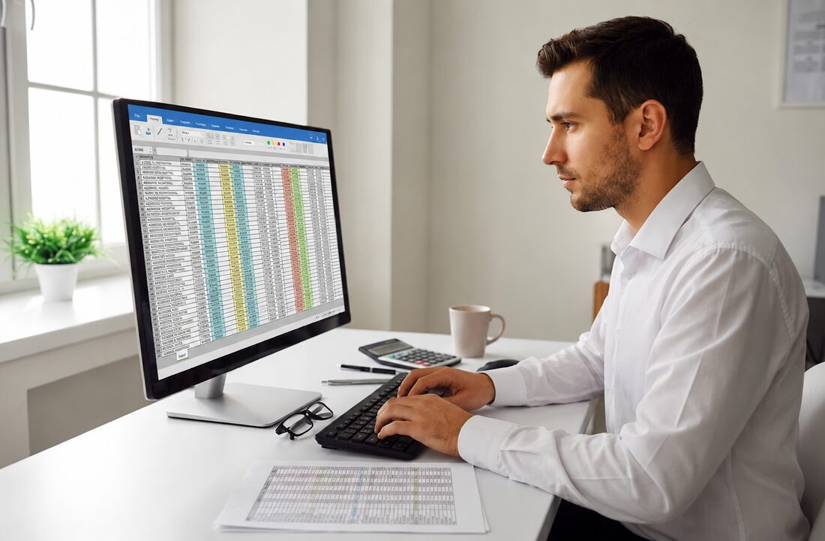
systems accurately, consistently, and on schedule. In practice, that can mean entering figures into
spreadsheets, updating a customer relationship management database, digitizing paper records,
processing forms and invoices, or reconciling information between two systems that don't talk to each
other automatically.
The work is rarely limited to typing alone. Most positions also involve checking the information for errors,
organizing files so they can be found later, and flagging anything that looks inconsistent. Because so
many industries generate paperwork, health care providers, insurance companies, logistics firms, financial
services companies, government agencies, and retailers all hire for versions of this role, though the exact
title and duties vary by employer.
What Does a Data Entry Professional Do?
A typical day usually combines several related tasks rather than one repetitive action. Someone in this
role might enter data from scanned documents or online forms, update existing records as new
information comes in, and compare entries against source documents to catch mistakes before they
cause problems downstream.
Entering and updating information in spreadsheets or databases
Verifying accuracy by cross-checking against source documents
Formatting spreadsheets so data is consistent and usable
Cleaning up duplicate or outdated records
Organizing digital files and folders
Conducting basic online research to fill in missing details
Maintaining confidentiality when handling sensitive information
Accuracy tends to matter more than raw speed, though most employers expect a reasonable typing pace
as well. A worker who enters data quickly but carelessly usually creates more work for a team than one
who is a bit slower but consistently correct.
Types of Data Entry Jobs Available in 2026
Job titles in this field overlap quite a bit, but a few categories show up consistently in current job postings:
Data Entry Clerk — general-purpose entry and record-keeping, often the most common entry-level title
Data Entry Specialist — usually involves a specific system or industry, such as medical billing or
logistics
Data Processing Clerk — focuses on processing batches of forms, invoices, or transactions
Remote Data Entry Clerk — the same core duties, performed from home for a distributed team
Administrative Data Entry roles — data entry combined with broader office support tasks
Database or Data Management Assistant — maintaining and organizing a company's internal
databases
Online Data Entry roles — freelance or contract-based entry work found through platforms like Upwork
Specialist roles, particularly in health care and finance, tend to pay more because they require familiarity
with industry-specific terminology and software, along with a higher standard for accuracy.
Skills Employers Look for in Data Entry Candidates
Postings for these roles cluster around a fairly consistent set of technical and interpersonal skills.
Technical skills.
Microsoft Excel and Google Sheets, including basic formulas and formatting.
Microsoft Word and general document handling.
Accurate touch typing, generally in the 40 to 55+ words-per-minute range.
Data verification and error-checking.
Comfort with cloud storage tools such as Google Drive.
Basic web research skills.
Soft skills
Attention to detail and accuracy under repetitive conditions
Time management and the ability to meet deadlines with minimal supervision
Reliability, since remote and contract roles depend on trust
Clear written communication, especially for remote positions
Discretion when handling confidential or personal information
Employers weigh accuracy and reliability heavily because a single data entry error, especially in finance or
health care, can be costly to fix once it has already spread into other systems.
Data Entry Software and Tools to Know in 2026
The tool list for this field is narrower than it might seem. Rather than mastering dozens of programs, most
job seekers benefit more from being genuinely comfortable with a smaller set of core tools.
Microsoft Excel and Google Sheets — spreadsheet work is still the backbone of most data entry roles
Microsoft Word and Google Docs — for reports, forms, and documentation
Google Drive or similar cloud storage — for shared file organization
PDF tools — for converting, editing, and extracting data from documents
OCR (optical character recognition) software — increasingly used to pull text from scanned
documents, which workers then verify
Employers are less interested in exotic software knowledge and more interested in whether a candidate
can pick up their specific internal systems quickly, which is one reason general spreadsheet fluency
continues to matter so much.
Are Data Entry Jobs Available Remotely in 2026?
Yes, but not universally. Remote and hybrid data entry positions are common, particularly among
freelance platforms, business process outsourcing firms, and companies that have restructured
administrative work to be location-independent. At the same time, some employers, especially those
handling regulated or highly sensitive data, still prefer in-office or hybrid arrangements for security
reasons.
Remote employers typically expect a reliable internet connection, a functioning computer, and a
workspace where confidential information can be handled privately. Communication expectations also
tend to be higher for remote roles, since supervisors can't simply check in at a desk. Workers are usually
expected to respond to messages within a reasonable window, meet deadlines without close oversight,
and use time-tracking or project-management tools if the employer requires them.
It's worth setting realistic expectations here: not every data entry job is remote, and not every remote
listing is legitimate. Both points matter when job hunting, and the scam-avoidance section later in this
article addresses the second one directly.
Data Entry Job Requirements in 2026
Requirements vary by employer, but a few patterns are consistent across entry-level and experienced
postings.
Entry-level requirements
A high school diploma or equivalent is typically sufficient
Little or no prior experience required, though basic computer literacy is expected
Demonstrated typing speed and accuracy, sometimes tested during the application process
Working knowledge of Excel, Google Sheets, or similar spreadsheet software
Experienced-level requirement
One or more years of data entry, administrative, or clerical experience
Familiarity with industry-specific systems, such as medical records or accounting software
A track record of low error rates and consistent accuracy
Comfort working independently, particularly for remote or freelance roles
Certifications are rarely mandatory, though completing a recognized course in Excel or a relevant industry
system can help an entry-level applicant stand out.
Data Entry Salary in 2026
Pay for data entry roles varies significantly depending on location, employer size, industry, and whether
the role is full-time, part-time, or freelance. According to salary-tracking sources including ZipRecruiter,
Glassdoor, and Salary.com, the average annual pay for a Data Entry Clerk in the United States in 2026
sits in roughly the $37,000 to $43,000 range, which works out to approximately $18 to $21 per hour. Entry-
level workers with under a year of experience tend to fall closer to the lower end of that range, while
experienced clerks in larger organizations or higher-paying industries such as government,
telecommunications, or pharmaceuticals can earn $45,000 or more.
Remote and freelance data entry pay tends to be reported by hour rather than salary. Current estimates
from remote-work resources put typical hourly pay for entry-level remote data entry work around $15 to
$21 per hour in the U.S., with specialized categories such as medical or legal data entry sometimes
reaching higher rates. Freelance platforms like Upwork show a wider spread, since pay there depends on
client budgets and a worker's ratings and experience rather than a fixed salary structure.
These figures apply specifically to the U.S. market. Salary and hourly-rate expectations differ substantially
in other countries, and a job seeker outside the United States should look for local salary data rather than
assuming U.S. figures apply. It's also worth treating any single number as a rough guide rather than a
guarantee. Actual pay depends heavily on the employer, the specific responsibilities of the role, and the
local cost of living.
Is Data Entry Still a Good Career in 2026?
The honest answer is that it depends on how someone plans to use it. As a long-term, standalone career,
data entry faces real headwinds. The U.S. Bureau of Labor Statistics projects that employment for data
entry keyers will decline significantly through the mid-2030s, largely due to automation, optical character
recognition, and the growing ability of software to capture data at the point its created rather than
requiring someone to type it in later.
That said, the underlying business need behind data entry, accurate, organized, verified information, disappearing. changing is who does the work and how. Businesses still need people who can catch errors that automated systems miss, clean up messy datasets, and apply judgment that software can’t yet replicate. For many people, data entry functions well as an accessible entry point into office work or as a flexible source of income, rather than a decades-long career destination. Workers who treat it that way, and who use it to build broader administrative or technical skills, tend to have more staying power in the job market than those who rely on it long-term without adapting.
How AI Is Changing Data Entry Jobs
Artificial intelligence and automation are reshaping data entry work rather than eliminating it outright, at
least for now. Optical character recognition and document-extraction tools can pull text from scanned
forms and invoices automatically, and workflow automation software can move information between
systems without manual re-entry. Data validation tools can flag likely errors before a human ever reviews
them.
The practical effect is that fewer workers are needed to do pure keystroke-level entry, but there still
demand for people who can verify what automated systems produce, correct what they get wrong, and
handle exceptions that don’t fit a standard pattern. In short, modern data entry workers increasingly need
to know how to work alongside these tools rather than compete with them. Building comfort with
automation and data-cleaning software, rather than avoiding it, tends to make a candidate more
employable, not less.
How to Become Job-Ready for a Data Entry Career
Learn basic computer skills, including file management and navigating common office software.
Learn Excel, starting with formulas, sorting, filtering, and basic formatting.
Get comfortable with Google Sheets, since many employers use it instead of or alongside Excel.
Practice typing to improve both speed and accuracy using free online typing tools.
Practice data cleaning on sample datasets to build familiarity with the process.
Practice formatting spreadsheets so they're clear and easy to read.
Learn basic file organization and naming conventions.
Practice data verification by comparing entries against a source document.
Build a few sample projects to demonstrate skills to employers.
Put together a clear, honest resume that highlights relevant skills.
Practice professional written communication for remote and freelance applications.
Start applying to positions that match your current skill level.
Where to Find Legitimate Data Entry Jobs in 2026
A handful of platform types account for most legitimate listings.
General job boards, such as Indeed and LinkedIn — useful for both remote and local postings, with
filtering options to narrow results
Vetted remote-job platforms, such as FlexJobs — these charge a membership fee but manually screen
listings, which cuts down on scam postings
Freelance platforms, such as Upwork and Fiverr — useful for contract-based data entry work, though
building a strong profile takes time
Company career pages — going directly to an employer's official website avoids third-party scams
entirely
Professional networking platforms, such as LinkedIn — useful for finding openings shared by
connections or recruiters at verified companies
Combining a broad board like Indeed with a curated one like FlexJobs, and occasionally checking
company career pages directly, tends to produce better results than relying on a single source.
Common Data Entry Job Scams to Avoid
Data entry is one of the most commonly impersonated job categories, largely because it sounds
accessible and doesn’t require specialized credentials. The Federal Trade Commission and other
consumer protection groups regularly warn about employment scams in this space. Watch for these red
flags:
Requests for payment upfront for training, software, or equipment
Promises of high pay for very little work
Vague or unverifiable employer identity
Communication conducted only through personal email, text, or chat apps rather than a company
domain
Interviews skipped entirely, with an offer made almost immediately
Requests for sensitive personal or banking information before any formal offer
Pressure to make a decision or payment quickly
A reliable rule of thumb: legitimate employers pay workers, not the other way around. Any listing that asks
for money before you have been hired deserves serious skepticism, and it’s worth verifying a company
identity independently before sharing personal details.
Career Growth After Data Entry
Data entry experience often serves as a stepping stone into broader administrative or operations roles.
Common next steps include:
Administrative Assistant
Virtual Assistant
Operations Assistant
Data Processing or Records Management roles
Reporting Assistant
Junior data analysis or data-adjacent positions, for workers who build additional technical skills
How far and how quickly someone progresses depends on the additional skills they build, whether that is
more advanced Excel work, exposure to a specific industry is software, or general administrative
experience, rather than data entry experience alone.
Final Thoughts
Data entry remains a viable, if evolving, part of the job market in 2026. Demand for pure keystroke entry is
shrinking as automation takes over more routine work, but demand for accuracy, verification, and
organized information hasn’t gone away. Job seekers who build solid spreadsheet skills, stay comfortable
working alongside automation tools, and treat the role as a foundation rather than a final destination tend
to get the most out of it. Remote opportunities are real and worth pursuing, but they require the same
caution as any other job search when it comes to spotting scams and verifying employers.
Sources / Research References
U.S. Bureau of Labor Statistics, Occupational Outlook Handbook and Employment Projections
2024–34 (bls.gov)
ZipRecruiter, Glassdoor, and Salary.com — Data Entry Clerk salary data (2026)
O*NET OnLine, Data Entry Keyers occupational profile (onetonline.org)
Federal Trade Commission — guidance on employment and job scams (ftc.gov)
FlexJobs and Indeed — remote job market and platform overviews (2026)
-
True Cost of Car Ownership: What You Really Pay Beyond the Sticker Price
True Cost of Car Ownership: What You Really Pay Beyond the Sticker Price You negotiate hard, sign the paperwork, and drive off feeling good about the price you paid. Then the first insurance bill arrives. After that come registration, new tires, weekly fuel stops, and the loan interest that was folded into your monthly payment […]
-
Retirement Plans for the Self-Employed: How to Save Without an Employer
Retirement Plans for the Self-Employed: How to Save Without an Employer There’s no HR portal, no automatic payroll deduction, and no employer match waiting for you. When you work for yourself, retirement saving is something you have to choose, fund, and manage on your own. The good news is that self-employed retirement plans can be […]
-
Financial Declutter: How to Simplify Your Accounts, Subscriptions and Paperwork
Financial Declutter: How to Simplify Your Accounts, Subscriptions and Paperwork A financial declutter starts with one honest question: how many accounts, subscriptions, and stacks of paper are you actually keeping track of? If you hesitated, you’re in good company. Over the years, most of us collect an old savings account here, a free trial that […]
-
Inheritance or Windfall? What to Do First With a Sudden Lump Sum of Money
Inheritance or Windfall? What to Do First With a Sudden Lump Sum of Money The news arrives on an ordinary Tuesday. A relative’s estate has settled, a settlement check has cleared, or a bonus has landed, and suddenly your account holds more money than it ever has at one time. Excitement, relief and a little […]
-
Income Diversification: Why Relying on One Paycheck Is a Financial Risk
Income Diversification: Why Relying on One Paycheck Is a Financial Risk Your paycheck lands on schedule, and for years that reliability has felt like safety. Then a rumor of layoffs, a cut in hours, or a surprise medical bill reminds you that your whole financial life rests on one employer’s decision. Income diversification is the […]
-
Micro-Savings Apps and Round-Ups: Do They Actually Help You Save?
Micro-Savings Apps and Round-Ups: Do They Actually Help You Save? You buy a $4.35 coffee. In the background, 65 cents slips into a savings account you rarely think about. Repeat that thirty times a month, and in theory you’ve built a savings habit without trying. That’s the promise behind micro-savings apps, and it’s a tempting […]