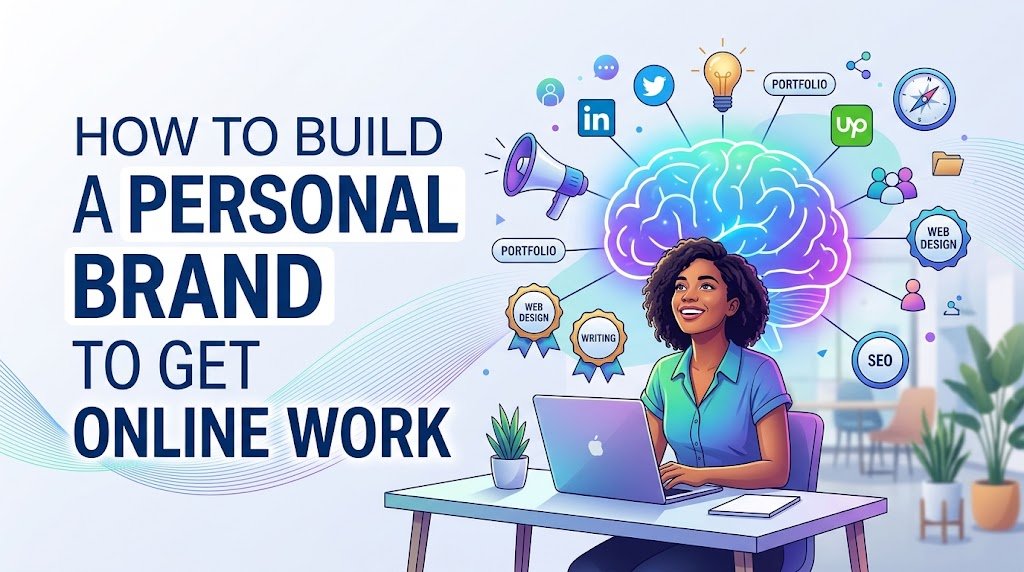
To build a personal brand that helps you get online work, focus on one clear skill, one specific type of client, visible proof of your ability, and consistent communication. You don’t need thousands of followers. You need people to quickly understand what you do, who you help, and why they should trust your work. A strong personal brand makes your skills easier to find and gives potential clients a reason to contact you.
What Is a Personal Brand for Online Work?
Your personal brand is the professional impression people associate with your name. It comes from your skills, work samples, communication, experience, opinions, and the way you present yourself online.
For example, saying “I’m a freelancer who does many things” doesn’t give a potential client much information. Saying “I write SEO blog content for small business websites” is much clearer. The second statement gives people a specific service to remember.
Personal branding also isn’t about pretending to be an expert. Your reputation should match what you can actually deliver. Your portfolio, profile, posts, client feedback, and conversations should all support the same professional identity.
Choose One Skill You Want to Be Known For
The first practical step is choosing the main service you want your name associated with. You can have several skills, but your public profile shouldn’t look like a long list of unrelated services.
If you’re still deciding which type of online work suits you, learning the basics of Freelancing can help you understand how services, clients, pricing, and projects fit together. Think about three things: what you’re good at, what businesses need, and what type of work you’d enjoy doing repeatedly.
For example, you could position yourself as a:
- Freelance writer for SaaS companies
- Video editor for YouTube creators
- Graphic designer for small businesses
- WordPress developer for local companies
- Virtual assistant for online coaches
A focused position also makes your content easier to create because you already know which problems, questions, and examples are relevant to your audience.
Know Who You Want to Attract
A personal brand becomes much more useful when it’s built around a specific client rather than everyone who might need your service.
Ask yourself who normally buys your skill. Is it a startup founder, blogger, agency owner, ecommerce seller, coach, local business, or marketing manager? Then learn what this person struggles with and what kind of result they want.
For example, a freelance writer targeting small business owners might talk about creating useful website content, improving search visibility, and turning readers into enquiries. A writer targeting authors would have a different message.
When your message matches a client’s problem, your profile becomes much easier for that person to understand.
Create a Professional Profile That Explains Your Value
Your profile is often the first place a potential client checks after seeing your name. Make it easy to understand within a few seconds.
Use a clear profile photo, strong headline, complete professional information, relevant skills, recommendations, and examples of your work. Your headline should state what you do and who you help.
Instead of:
Freelancer | Writer | Creative | Hard Worker
try something more specific:
SEO Content Writer Helping Small Businesses Publish Helpful Blog Content
Your About section can then explain your experience, services, working style, and the type of projects you’re available for.
Show Proof Instead of Only Making Claims
One of the biggest mistakes in personal branding is telling people you’re good without showing them your work.
If you’re new and don’t have client projects yet, create your own sample projects. A writer can publish three useful articles. A designer can create sample branding projects. A video editor can edit publicly available footage into practice examples, where permitted.
Once you have paid projects, turn strong results into case studies. Explain the problem, what you did, and what changed afterward.
Testimonials can also help because they allow previous clients or colleagues to describe your work from their perspective.
Build a Portfolio That Supports Your Brand
Your Portfolio doesn’t need dozens of projects. Three to five relevant examples can be enough when they’re presented well.
Each sample should answer three simple questions: What was the project? What did you do? What was the result or purpose?
Keep your strongest work near the top. If you’re offering SEO writing, don’t make a client search through unrelated graphic design samples to find your articles.
Your portfolio, LinkedIn profile, freelance marketplace profiles, and social accounts should tell roughly the same professional story. That consistency makes it easier for someone to understand your expertise.
Share Useful Content Consistently
You don’t have to publish every day to build a personal brand. What matters more is having something useful to say and showing up regularly.
Choose two or three topics connected to your service. Then share lessons, examples, common mistakes, short tutorials, project observations, or answers to questions clients often ask.
For instance, someone working as a Social Media Manager could discuss:
- Common problems with business social media pages
- Simple ways to improve engagement
- Content planning ideas for small businesses
Don’t make every post an advertisement. People are more likely to remember someone who regularly helps them solve small problems than someone who constantly says, “Hire me.”
Consistency also matters because personal branding takes time. You don’t need viral posts; you need content that reaches people who may actually need your service.
Use LinkedIn and Freelance Platforms Together
You don’t have to choose between personal branding and freelance websites.
Platforms such as Upwork and Fiverr can help you find projects, while LinkedIn and your own portfolio can help people learn more about you. Your public profile can also support your proposals because a potential client can see your expertise beyond a single application.
LinkedIn can be especially useful for service providers who want to connect with business owners, founders, recruiters, and marketing teams.
The key is not to copy the same message everywhere. Keep your core positioning consistent while adapting your profile and content to each platform.
Build Relationships, Not Just Followers
A large follower count doesn’t automatically produce paid work. A smaller network of relevant people can be far more useful.
Comment thoughtfully on posts from people in your target industry. Answer questions when you have something useful to add. Congratulate people on genuine achievements. Connect with potential clients without immediately sending a sales pitch.
If you’re looking for your First Client, this approach can be especially useful. Rather than contacting hundreds of random businesses, focus on people who have a clear reason to need your service and give them a useful reason to remember you.
Over time, people may begin to associate your name with a particular skill. That’s the real purpose of networking: becoming recognizable and trustworthy within the group you want to work with.
Let Your Personal Brand Grow With Your Experience
You don’t need a perfect brand before looking for online work. In fact, waiting until everything looks perfect can keep you stuck.
Start with a clear service, a simple profile, a few useful samples, and regular activity. As you complete projects, your portfolio becomes stronger. As you learn, your content improves. As clients give feedback, you gain better evidence of what you do well.
Your personal brand should reflect your actual growth rather than an image you’ve invented.
A Simple 30-Day Personal Branding Plan
If you’re starting from zero, don’t try to fix everything in one day. Give yourself four weeks and work on one part at a time.
During the first week, choose your service, target client, profile headline, and main message. In the second week, create or organize three strong portfolio samples. During the third week, publish useful content and start connecting with relevant people. In the fourth week, review your profile, improve weak sections, and begin direct outreach.
By the end of the month, you should have a clear professional identity, visible proof of your skills, and several places where potential clients can learn about your work.
Common Personal Branding Mistakes to Avoid
A personal brand can work against you when it becomes too broad, too promotional, or disconnected from your actual skills. The goal isn’t to look famous. It’s to become easy for the right client to understand and remember.
Avoid these common problems:
- Listing every skill you have instead of choosing a clear focus
- Posting motivational content with little connection to your service
- Claiming results you can’t prove
- Copying another freelancer’s personality or content
- Having an empty or outdated portfolio
- Sending sales messages before building any professional connection
- Changing your niche every few weeks
A useful rule is simple: make your name easier to associate with one valuable service.
FAQs
How long does it take to build a personal brand for online work?
There isn’t a fixed timeline. You can create a clear profile and portfolio within weeks, but earning consistent opportunities usually takes longer because trust develops through repeated proof, useful content, networking, and completed projects.
Do I need a large social media following to get online work?
No. A small audience can produce work if the right people are seeing your content. Ten potential clients who understand your service can be more valuable than thousands of unrelated followers.
Can beginners build a personal brand without work experience?
Yes. Beginners can create relevant sample projects, document what they’re learning, answer questions in their niche, and build a portfolio around practical examples. Just be honest about your experience and don’t present practice work as paid client work.
Which platform is best for personal branding and online work?
It depends on your service and target client. LinkedIn is useful for professional and business-focused services, while platforms such as Upwork and Fiverr can help freelancers find project-based work. A personal portfolio gives you another place to present your work independently.