
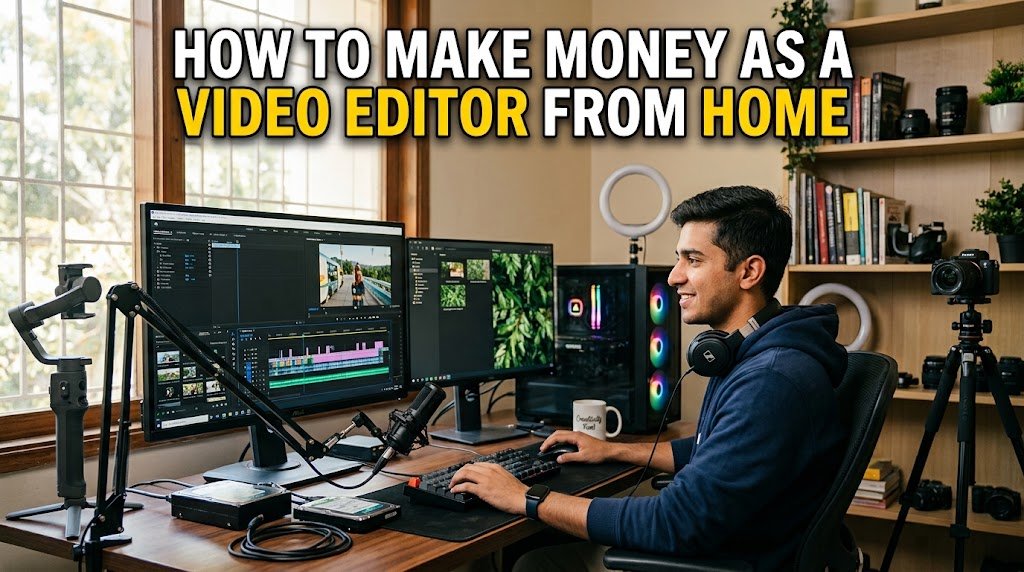
What Do You Need to Start Video Editing From Home?
You don’t need a complete professional studio when you’re starting. Your first priority should be learning the core editing process: cutting footage, arranging clips, cleaning audio, adding captions, correcting color, using transitions appropriately, and exporting videos in the right format.
For software, you have several choices. Adobe Premiere Pro, Final Cut Pro, and DaVinci Resolve are widely used options. DaVinci Resolve is particularly useful for beginners because Blackmagic Design provides a free version with editing, color correction, visual effects, motion graphics, and audio tools.
Video editors can also expand their services as they gain experience. For example, learning AI Video Creation can help you understand newer ways to generate, organize, or assist with video content while keeping traditional editing skills at the center of your work.
Your basic setup can include:
- A computer that can handle your chosen editing software
- Reliable storage for large video files
- Headphones for checking audio
- A stable internet connection for receiving and sending footage
- Editing software and basic backup storage
You can start with the equipment you already have and replace or add hardware as your workload increases.
How to Build a Video Editor Portfolio With No Clients
A Portfolio matters more than simply telling people that you’re a video editor. Potential clients want to see how you handle footage, pacing, captions, audio, color, and storytelling.
If you don’t have paid work yet, create your own samples. Take legally available practice footage, record yourself speaking, or ask a friend or small business owner for permission to edit their footage. Make five to eight strong samples rather than filling your portfolio with dozens of average projects.
Your samples should show different abilities. For example, one could be a YouTube talking-head edit, another could demonstrate short-form captions, and another could show color correction and sound cleanup.
Keep each sample focused. A client should be able to watch it quickly and understand what you did.
Where Can You Find Video Editing Jobs Online?
There are several ways to find work from home, and you don’t have to rely on one website.
Upwork has a dedicated market for video editors, with listings covering YouTube, social media, podcasts, ads, motion graphics, and other editing work. It can be useful for beginners who want to find projects while building experience and for experienced editors looking for longer-term clients.
Fiverr works differently. Instead of applying to individual listings, you create service listings that clients can discover. You can also contact potential clients directly. YouTubers, podcasters, coaches, real estate agents, local businesses, agencies, and online educators often have recurring video needs.
How Much Can a Video Editor Make?
Video editing income varies widely because your earnings depend on your skill level, niche, client location, project complexity, workload, and pricing model.
As you gain experience, video editing can become part of a broader set of Freelance Skills. Client communication, project management, writing proposals, meeting deadlines, file organization, and basic business knowledge can be just as useful as editing ability when you’re working independently.
Project pricing can also vary considerably. Actual quotes depend on the scope and the editor’s experience.
When setting your own price, account for the entire workload. Editing isn’t just the time spent cutting clips. Downloading footage, organizing files, finding music, adding captions, exporting, communicating with the client, and handling revisions all take time.
How to Get Your First Video Editing Client
Your first client usually comes from showing proof of your skills rather than waiting until your profile looks perfect.
Start by choosing one target market. You might focus on YouTube creators, podcasters, real estate businesses, coaches, or small companies. Then create two or three samples specifically for that type of client.
When applying for jobs, don’t send the same generic message to everyone. Mention the client’s video type, explain what you can improve, and include a relevant sample from your Portfolio.
A short proposal might explain that you can clean the audio, remove unnecessary pauses, add captions, improve pacing, and prepare the final video for YouTube. Keep the focus on the client’s project rather than giving them a long biography.