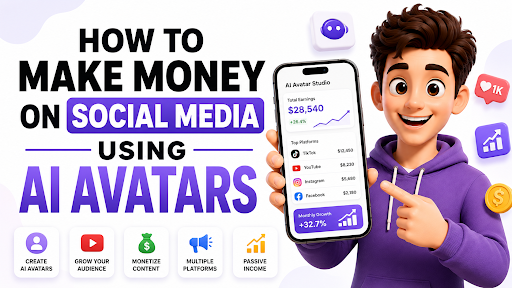
How to Make Money on Social Media Using AI Avatars
A lot of brands are sitting on 50,000+ followers, thousands of posts, and still running weak, generic marketing that doesn’t actually convert. The problem usually isn’t the budget. It’s that the content looks like everyone else’s. AI avatars are changing that fast, and the wild part is that what used to take a full production crew and a real shoot now takes maybe 15 minutes and a few dollars in tool credits. Here’s how the actual process works.
Picking a Product and an Angle
Before touching any AI tool, you need something to actually sell or promote. In a fitness or calisthenics niche, for example, you might pick a product and rebrand the marketing around it entirely, with a fresh angle instead of the same generic “buy now” style ad everyone else is running.
Step 1: Build Your Avatar
Start with a reference style: professional athlete or casual lifestyle, whatever fits your brand. A real photo can work as a base reference for generating a prompt; run through an AI chat tool to describe the look you’re going for in detail.
From there, an AI image generator creates several variations based on that prompt. You’re looking for one specific image that becomes your “primary” avatar photo, the one that looks most natural, like an actual selfie rather than something obviously synthetic.
Once you’ve got that base image, most modern AI avatar platforms let you generate a batch of additional pictures of the same character, from different angles and with different expressions, without needing to pay per image the way older tools required. After generating a solid batch, you lock the character in as a reusable avatar inside the platform, which means every future image or video uses the same consistent face and features.
Step 2: Plan Your Three Content Types
Once the avatar’s locked in, there are generally three formats worth producing:
- A formal product ad, polished and straightforward
- A product showcase, the avatar actually using or wearing the product
- A first-person testimonial-style video
That third one needs real care; more on that below.
Step 3: Generate Product Images and Animate Them
Product placement tools built into most AI content platforms let you add your actual product into a scene realistically: on the avatar, in their hands, wherever it fits the shot. Different image generation tools inside these platforms vary in speed and quality, so testing a couple options for the same product image is worth doing before settling on one.
Once you’ve got a strong still image, video animation tools bring it to life; generally a 5- to 10-second clip works well for a single scene, and running at 1080p keeps quality high enough for most social platforms. Some platforms also offer a “draw to animate” style option, where instead of writing a detailed prompt, you sketch simple directional arrows or notes directly on the image to show the AI what motion you want. Both prompt-based and draw-based animation can produce solid results depending on the scene.
For voiceover, lip-sync tools let you generate an AI voice track and match it to the avatar’s mouth movements convincingly. This is genuinely useful for the formal ad and product showcase formats, adding narration without needing a separate voice actor.
Step 4: Handle the Testimonial Format Honestly
This is the part that actually matters most. A first-person “customer testimonial” video, where your AI avatar speaks directly to the camera about their experience with the product, is powerful marketing, but it’s also where things can go wrong fast if it’s not handled with real transparency.
Here’s the line that matters: an AI avatar giving a testimonial is not a real customer, and presenting it as if it were, especially inventing specific personal claims like fake credentials, fake achievements, or a fabricated personal history, crosses from creative marketing into deceptive advertising. Regulators in multiple countries, including the FTC in the US, have been explicit that AI-generated endorsements presented as genuine customer experiences without disclosure are a real compliance risk, not just a gray area.
The workable version of this format keeps the avatar clearly framed as a brand character or spokesperson, not a specific real customer, and any AI-generated or synthetic content used in advertising should be disclosed as such, whether through an on-screen label, a caption, or clear messaging in the post itself. Done this way, avatar-led content can still be genuinely engaging and effective; it just doesn’t pretend to be something it isn’t.
Combining Formats for a Full Campaign
Once you’ve got your formal ad, your product showcase, and a properly disclosed avatar-led piece, combining these with additional B-roll footage (extra scenes, close-ups, and lifestyle shots) rounds out a full campaign that feels a lot more like something a professional agency put together, at a fraction of the cost and turnaround time.
Why This Actually Works for Marketing
The value here isn’t in tricking anyone. It’s in being able to produce polished, varied, professional-looking content fast and cheap, testing multiple angles and products without needing a studio, a real model, or a multi-day shoot. Used properly, with clear disclosure where it matters, this is a genuinely useful shift for small brands competing against companies with much bigger production budgets.