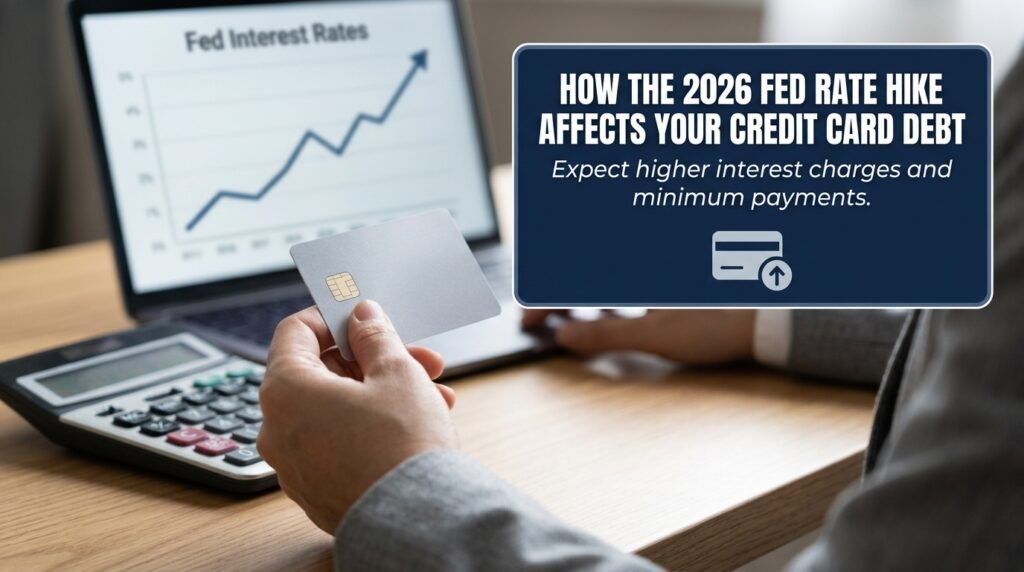
The Federal Reserve raised its benchmark federal funds rate by 0.25 percentage point on September 16, 2026, bringing the target range to 3.75% to 4.00%. It was the first Fed rate increase in more than three years.
For consumers carrying credit card balances, the move matters because many credit cards have variable APRs. When benchmark rates and the prime rate move higher, credit card interest rates can also increase. That can make existing credit card debt more expensive, especially for borrowers who carry balances from one month to the next.
The increase itself may not dramatically change one person’s monthly bill, but the effect can become more noticeable when combined with a high balance, a high APR, and minimum payments.
Why Does a Fed Rate Hike Affect Credit Cards?
The Federal Reserve does not directly set the APR on your credit card. Instead, the federal funds rate influences other short-term interest rates, including the prime rate that many lenders use as a reference.
Many credit cards have variable interest rates. This means the APR can change when the underlying benchmark changes.
When the Fed raises rates, card issuers may increase variable APRs. The exact timing and amount depend on your card agreement and the rate structure used by your issuer.
For borrowers who pay their credit card statement balance in full each month, the direct effect may be limited because they generally avoid interest on eligible purchases when their card’s grace-period terms apply.
For someone carrying a revolving balance, however, a higher APR can increase interest charges.
What Does the 2026 Fed Rate Hike Mean for Credit Card Debt?
The September 2026 rate increase means some consumers with variable-rate credit card debt may see higher interest costs.
For example, imagine you have a $5,000 balance on a credit card. Even a relatively small increase in the APR can add to the interest charged over time.
The actual impact depends on your balance, APR, payment amount, and whether you continue adding new purchases.
Recent reporting has highlighted that the average credit card balance and high APR environment make rate changes relevant for borrowers who carry debt. The Washington Post reported an average credit card balance of roughly $6,600 and an average interest rate just under 21% in September 2026.
This is why even a modest rate increase can matter when it occurs alongside already-high borrowing costs.
For greater context on current borrowing costs, see our guide to Credit Card Debt in 2026.
Will Everyone See a Higher Credit Card Payment?
Not necessarily.
The effect depends largely on how you use your credit card.
If you pay your statement balance in full every month, you may not pay interest on eligible purchases, assuming you meet the card’s grace-period requirements.
If you carry a balance, however, a higher APR can increase the amount of interest charged.
There can also be differences between credit cards. Some accounts may have different APR structures, promotional rates, penalty rates, or other terms.
Your cardholder agreement is the best source for understanding exactly how your APR can change.
How Much More Could You Pay?
The additional cost depends on your balance and the size of the APR change.
Consider a simplified example.
Suppose you have a $5,000 balance and your APR increases by 0.25 percentage point.
A rough annualized calculation would be:
$5,000 × 0.25% = $12.50
This does not mean your actual interest bill will automatically increase by exactly $12.50. Credit card interest is generally calculated using daily balances or an average daily balance method, depending on the issuer and agreement.
Your actual cost can also change if you make payments, add new purchases, or have fees.
The bigger issue is that higher rates can compound the cost of carrying debt over many months.
Why Minimum Payments Can Become More Expensive
A higher APR becomes particularly important when you are making only minimum payments.
Minimum payments are designed to keep your account current, but they may not reduce your balance quickly.
Suppose you have a large credit card balance and make only the required minimum payment each month. If the APR rises, more of your payment may go toward interest, leaving less to reduce the underlying balance.
That can extend the time required to repay the debt.
If you want to understand the difference between minimum payments and paying your balance in full, our published guide Credit Card Minimum Payment vs. Full Payment covers the repayment implications in more detail.
Credit Utilization Can Also Matter
Interest charges are not the only reason to pay attention to your credit card balance.
Your credit utilization measures how much of your available revolving credit you are using. A higher balance relative to your credit limit can affect your credit profile.
For example, if you have a $10,000 credit limit and a $6,000 balance, your utilization is 60%.
If interest charges cause your balance to grow while you make relatively small payments, your utilization could remain high or increase.
Our guide to Credit Utilization Explained explains how overall and per-card utilization work and why the commonly discussed 30% guideline is not a hard cutoff.
What Can You Do If Your Credit Card APR Increases?

A higher interest rate does not mean you have no options. There are several practical steps you can consider.
Pay More Than the Minimum
If your budget allows it, paying more than the minimum can help reduce your balance faster.
The faster the balance falls, the less debt remains subject to interest.
Even a relatively small additional payment can make a difference over time, particularly when you stop adding new purchases to the balance.
Reduce New Credit Card Spending
If you are already carrying a balance, consider limiting new discretionary purchases on the card.
Continuing to add new charges while trying to pay down an existing balance can slow your progress.
Review your monthly spending and identify expenses that can temporarily be reduced or paid with available cash instead.
Consider a Balance Transfer
A balance transfer credit card may offer a promotional APR for a limited period. This can potentially reduce interest costs while you work on paying down the balance.
However, balance transfers may involve fees, eligibility requirements, and promotional periods that eventually expire.
You should compare the transfer fee, promotional period, regular APR, and repayment amount before applying.
Our guide on What Is a Balance Transfer Credit Card and How Does It Work? explains how these cards work and what borrowers should check before transferring debt.
Review Your Budget
If higher interest charges are making your monthly payments harder to manage, revisit your budget.
Start with your take-home income and essential expenses. Then identify how much money is realistically available for debt repayment.
Our guide on How to Create a Monthly Budget That Actually Works provides practical steps for organizing income, expenses, debt payments, and savings.
Should You Use Your Savings to Pay Credit Card Debt?
This depends on your overall financial situation.
Credit card interest rates can be significantly higher than the interest earned on many savings accounts, so paying down expensive revolving debt can reduce future interest costs.
However, using every dollar of savings to pay a credit card balance can leave you without cash for an unexpected expense.
That matters because an emergency without available savings could force you to use the credit card again.
Our published guide Emergency Fund vs. Paying Off Debt discusses how borrowers can think about balancing emergency savings with high-interest debt.
Could the Fed Raise Rates Again?
Future Federal Reserve decisions will depend on incoming economic data and the Fed’s assessment of inflation, employment, and other economic conditions.
The September 2026 increase does not automatically mean another increase will follow.
For credit card users, the important point is that variable APRs can change over time. Borrowers should therefore avoid assuming that today’s interest rate will remain unchanged indefinitely.
If you carry a balance, understanding your current APR and monitoring your statements can help you identify changes early.
How Higher Rates Can Affect Your Debt Repayment Plan
A changing interest rate is a good reason to review your repayment strategy.
Suppose you planned to pay $250 per month toward a credit card balance. If your APR increases, the amount of interest charged each month can increase as well.
Your $250 payment may therefore reduce the principal balance more slowly than before.
You may respond by increasing your payment if your budget allows it, reducing new purchases, or considering whether another repayment option could lower your interest costs.
The goal should not simply be to reduce the monthly payment. You should also consider the total amount you will pay and how long it will take to eliminate the balance.
What If You Have Multiple Credit Cards?
If you have several credit card balances, start by making at least the required minimum payment on each account.
After that, you can direct additional money toward a selected balance.
One approach is to focus on the card with the highest APR because reducing high-interest debt can lower the amount of interest accumulating over time.
Another approach is to focus on the smallest balance first.
Whichever method you choose, avoid missing minimum payments on your other accounts.
You should also monitor your overall credit utilization and avoid taking on additional high-interest debt while trying to repay existing balances.
Final Thoughts
The September 2026 Federal Reserve rate hike could affect consumers carrying credit card debt because many credit cards have variable APRs. The Fed raised its benchmark rate by 0.25 percentage point to a target range of 3.75% to 4.00%, and higher benchmark rates can contribute to higher borrowing costs.
The direct effect of the increase will vary by card, balance, APR, and repayment behavior.
If you carry a credit card balance, review your current APR, make payments on time, consider paying more than the minimum when possible, and stop adding unnecessary new debt.
A higher-rate environment also makes budgeting and debt repayment more important. By understanding how your credit card works and monitoring your balances, you can make more informed decisions about managing credit card debt.
Frequently Asked Questions
Does the Fed rate hike directly increase my credit card APR?
Not directly. The Federal Reserve sets the federal funds target rate, not individual credit card APRs. However, many credit cards have variable APRs that can move with benchmark rates influenced by Fed policy.
Will the 2026 Fed rate hike increase my credit card payment?
It can increase your interest costs if you carry a balance and your card’s variable APR rises. The actual effect depends on your balance, APR, payment amount, and card terms.
What happens if I only make the minimum payment?
Your remaining balance can continue into future billing cycles and may accrue interest. If your APR increases, repayment can become more expensive.
Can a balance transfer help with higher credit card interest?
A balance transfer may offer a promotional APR that can reduce interest costs for a limited period. However, transfer fees and post-promotional APRs should be considered before applying.
Should I pay off my credit card before building an emergency fund?
There is no universal answer. A small emergency cushion can help prevent unexpected expenses from going back onto a high-interest credit card, while paying down expensive debt can reduce future interest costs.
Can credit card interest rates go down after the Fed cuts rates?
They can, particularly for variable-rate cards, but the timing and amount of any change depend on the card’s terms and how the issuer adjusts its APR.