
When you need to borrow money, a personal loan and a credit card are two common options. Both can help cover expenses, but they work in very different ways.
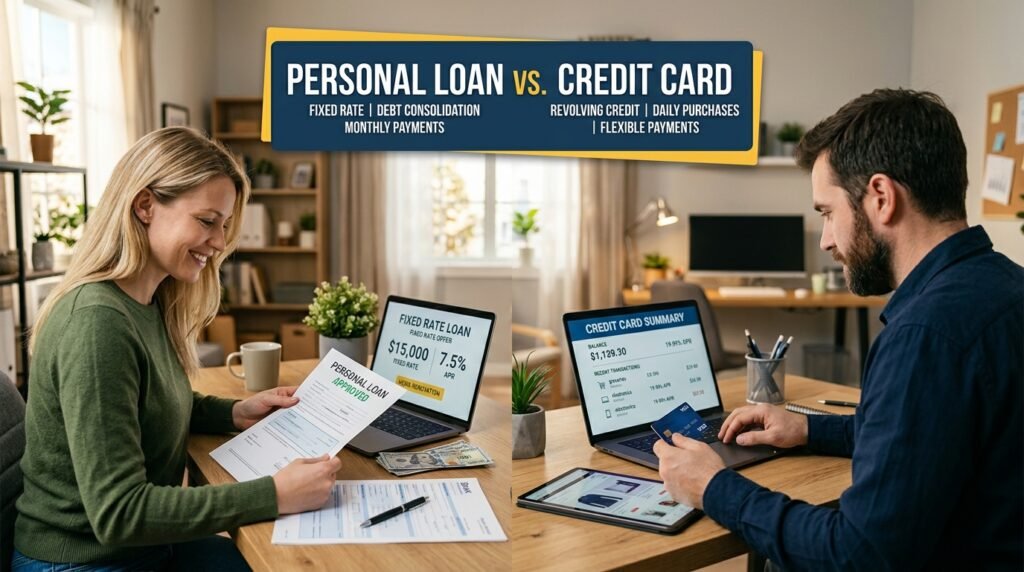
A personal loan usually provides a fixed amount of money that you repay through scheduled monthly payments. A credit card provides a revolving line of credit that you can use repeatedly as you repay the balance.
Understanding the difference between a personal loan vs credit card can help you compare borrowing costs and choose an option that fits your financial situation.

The main difference is how the money is borrowed and repaid.
With a personal loan, you receive a specific amount upfront. For example, you could borrow $10,000 and agree to repay it over three or five years. Your monthly payment is generally fixed if the loan has a fixed interest rate.
A credit card works differently. You receive a credit limit and can use part or all of that available credit. As you make payments, your available credit can increase again.
This makes credit cards flexible, while personal loans usually provide more predictable repayment.
How Personal Loans Work
Personal loans can be used for many purposes, including major purchases, home improvements, unexpected expenses, or debt consolidation.
After approval, the lender gives you the agreed loan amount. You then repay the principal and interest over a predetermined period.
Many personal loans have fixed rates, which means your interest rate generally remains the same throughout the loan term.
Your personal loan rate can depend on factors such as your credit history, income, loan amount, lender, and repayment period.
Before accepting a loan, look beyond the monthly payment. Check the APR, origination fees, repayment term, and total amount you will repay.
How Credit Cards Work
Credit cards provide revolving credit instead of a fixed loan.
You can use a credit card for purchases and then repay the balance over time. If you carry a balance, interest can be charged according to the card’s APR and terms.
One major advantage of credit cards is convenience. You can use available credit whenever you need it without applying for a new loan each time.
The downside is that credit card APRs can be high, particularly when you carry a balance for a long period.
In 2026, U.S. consumers continue to carry substantial credit card debt. Total U.S. credit card balances reached approximately $1.263 trillion in the second quarter of 2026.
Personal Loan vs Credit Card Interest
Interest rate is one of the most important things to compare.
Credit card APRs can be significantly higher than personal loan rates for some borrowers. This means carrying a large credit card balance can become expensive over time.
A personal loan may offer a lower APR and a fixed repayment schedule, depending on your credit profile and the lender.
For example, imagine you have $8,000 in credit card debt at a high APR. If you qualify for a personal loan with a lower APR, consolidation could potentially reduce your interest costs.
However, you should always calculate the complete cost. A personal loan with a lower rate may still include an origination fee or a longer repayment period.
When a Credit Card May Be Useful
A credit card can make sense for short-term spending when you can repay the balance quickly.
For example, if you pay your statement balance in full each month, you may avoid interest on eligible purchases according to your card’s terms.
Credit cards can also provide convenience for everyday purchases, travel, subscriptions, and emergencies.
The problem starts when you consistently spend more than you can repay.
If you are already carrying credit card debt, our guide on credit card debt in 2026 explains how high APRs affect borrowing costs and different ways to approach repayment.
When a Personal Loan May Be Useful
A personal loan may be useful when you need a larger fixed amount and prefer predictable monthly payments.
For instance, someone paying several high-interest debts might consider a personal loan for consolidation.
Instead of making multiple payments to different credit card companies, the borrower could have one loan payment each month.
However, consolidation does not eliminate debt. If you pay off your credit cards with a personal loan and then start building new balances, you could end up with even more financial obligations.
Personal Loan vs Credit Card for Debt Consolidation
Debt consolidation is one of the most common reasons people compare these two options.
Before using a personal loan to consolidate credit card debt, compare:
- Current credit card APRs
- Personal loan APR
- Origination fees
- Monthly payment
- Repayment period
- Total interest
- Total repayment amount
- Prepayment conditions
Do not choose an option only because the monthly payment is lower. A longer repayment period can sometimes result in more interest being paid overall.
How Interest Rates Affect Borrowing

Broader interest rates can also affect consumer borrowing costs.
Credit card rates are often variable, meaning they can change over time. The Federal Reserve Bank of Boston notes that many credit card rates generally move with changes in broader interest rates.
This makes APR an important consideration when carrying a revolving credit card balance.
For a broader explanation of how changing interest rates can affect savings and borrowing, see our guide on how higher interest rates affect your money.
Can AI Help You Compare Debt Options?
AI-powered personal finance tools can help organize financial information and make budgeting easier.
For example, AI can help you categorize expenses, track spending, create repayment plans, and compare monthly cash flow scenarios.
However, you should always verify the actual APR, fees, lender requirements, and repayment terms before accepting a financial product.
Our guide to AI personal finance covers how AI tools can support budgeting and everyday money management.
What Should You Choose?
Instead of asking which option is universally better, compare the option against your specific borrowing needs.
A credit card may provide more flexibility for smaller or short-term expenses, particularly when you can pay the balance in full.
A personal loan may provide more structure when you need a fixed amount and want scheduled payments over a specific period.
If you are considering debt consolidation, compare the total cost of your current debt with the total cost of the proposed loan.
Personal Loan vs Credit Card: Key Things to Compare
Before borrowing, look at these factors:
APR: Compare the actual interest rate you qualify for.
Fees: Check origination fees, annual fees, balance transfer fees, and other charges.
Repayment: Consider how long it will take to become debt-free.
Flexibility: Credit cards provide revolving access, while personal loans provide a fixed amount.
Monthly payment: Make sure the payment fits your budget.
Total cost: Calculate the full amount you will repay, including interest and fees.
Final Thoughts
The decision between a personal loan vs credit card depends on your financial needs, credit profile, repayment ability, and the terms you receive.
Personal loans can provide predictable payments and a fixed repayment period. Credit cards provide flexibility but can become expensive when balances are carried at high APRs.
Before borrowing, compare APRs, fees, monthly payments, and total repayment costs. Taking a few minutes to compare the complete terms can help you understand the true cost of borrowing.
FAQs
Is a personal loan cheaper than a credit card?
It can be, particularly if you qualify for a lower APR. However, fees and the repayment period should also be considered.
Can I use a personal loan to pay credit card debt?
Yes. Personal loans can be used for debt consolidation, but you should compare the total cost before making the switch.
Is a credit card better for short-term borrowing?
It can be convenient for short-term borrowing if you can repay the balance quickly. Carrying a balance for a long period can increase interest costs.
What is more flexible, a personal loan or credit card?
Credit cards are generally more flexible because they provide revolving credit. Personal loans provide a fixed amount with a structured repayment schedule.
What should I check before taking a personal loan?
Check the APR, fees, repayment period, monthly payment, total repayment amount, and any prepayment conditions.