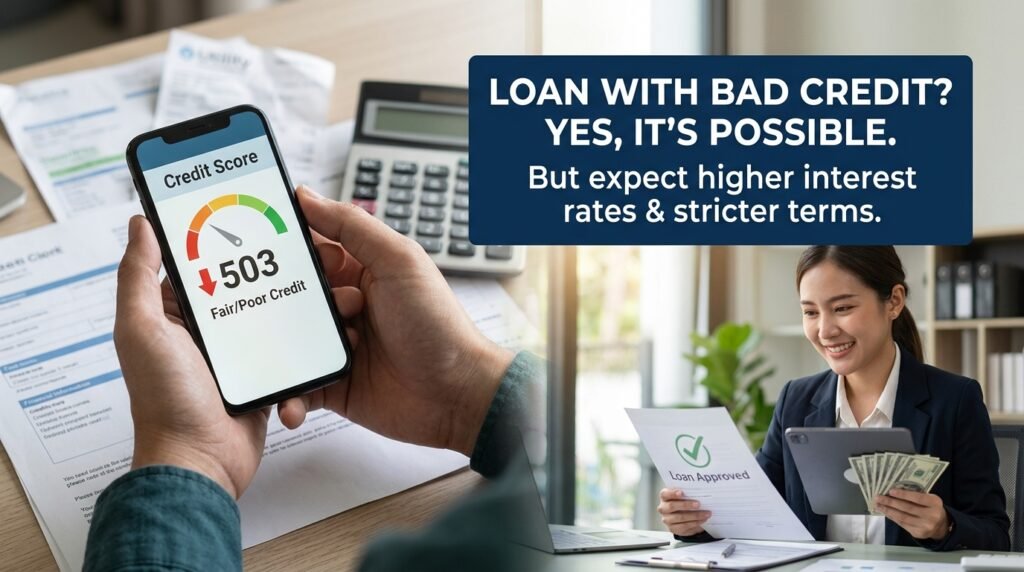
Having bad credit can make borrowing money more difficult, but it does not always mean you cannot get a personal loan. Some lenders consider applicants with lower credit scores, although approval requirements, interest rates, fees, and loan amounts can vary significantly.
If you are considering a personal loan with bad credit, it is important to understand what lenders look at, how your credit affects loan terms, and what you can do before applying. Comparing offers carefully can help you understand the actual cost of borrowing and avoid taking on payments you cannot comfortably afford.
Can You Get a Personal Loan With Bad Credit?
Yes, some borrowers with bad credit may qualify for a personal loan. However, approval is never guaranteed, and lenders may consider several factors beyond your credit score.
Depending on the lender, an application may be evaluated based on:
- Credit history
- Income
- Employment or income stability
- Existing debts
- Debt-to-income ratio
- Loan amount
- Repayment term
- Payment history
- Other information included in the application
A lower credit score can affect the interest rate or other terms you are offered. Lenders generally use your credit history as one way to assess how you have handled borrowed money in the past.
The Consumer Financial Protection Bureau recommends checking your credit history for errors and comparing loan offers from multiple lenders before borrowing.
How Does Bad Credit Affect a Personal Loan?
Your credit profile can influence both your ability to qualify and the terms you receive.
For example, two people applying for the same loan amount may receive different offers because their credit histories, income, debt levels, or other financial information are different.
A borrower with a weaker credit profile may be offered a higher interest rate. A higher rate can increase the monthly payment and the total amount paid over the life of the loan.
This is why it is important to look beyond whether you are approved. A loan may technically be available but still be difficult to repay if the monthly payment or total borrowing cost is too high.
What Credit Score Is Considered Bad?
Credit scoring models use different ranges, and lenders can have their own standards. In general, scores toward the lower end of common scoring ranges are often described as poor or bad credit.
However, there is no universal credit score cutoff that determines whether you can receive a personal loan.
One lender may reject an application while another may consider it based on additional factors such as income, debt, and payment history.
Your credit score is also only one part of your overall credit profile. Before applying, review your credit reports and check for inaccurate information that could be affecting your score.
If an application is denied based on information in your credit report, the CFPB says the lender must provide an adverse action notice explaining the main reasons for the decision or explaining how to obtain those reasons.
What Do Lenders Look at Besides Credit Score?
Credit score is important, but lenders can consider other financial information when evaluating a personal loan application.
Income
Lenders generally want to know whether you have sufficient income to make the required payments. A stable income may help demonstrate your ability to repay the loan.
Debt-to-Income Ratio
Your debt-to-income ratio compares your monthly debt payments with your gross monthly income.
For example, if you have $1,500 in monthly debt payments and earn $5,000 in gross monthly income, your DTI would be 30%.
Understanding your DTI can help you see how much room you have for another monthly payment. Our guide on Debt-to-Income Ratio Explained explains how lenders use this measurement.
Payment History
Your previous payment behavior can provide lenders with information about how you have managed credit.
Recent late payments, defaults, or accounts in collections may make borrowing more difficult or more expensive.
Existing Debt
A lender may also consider your existing financial obligations. If you already have substantial monthly debt payments, adding another loan could create additional pressure on your budget.
Can a Personal Loan Help Consolidate Debt?
Some borrowers with bad credit consider personal loans for debt consolidation.
A debt consolidation loan can combine multiple debts into one loan, potentially replacing several payments with one scheduled payment.
However, consolidation does not automatically reduce your debt. You still owe the money, and the new loan may involve interest and fees.
Our guide on Debt Consolidation vs. Debt Settlement explains the difference between these two approaches and the costs and risks borrowers should consider.
Before using a personal loan for consolidation, compare the new loan’s APR, fees, monthly payment, and total repayment cost with your existing debts.
How to Improve Your Chances of Getting a Personal Loan

If you have bad credit, there are several steps you can take before applying.
Check Your Credit Reports
Review your credit reports for inaccurate information, accounts you do not recognize, or outdated information. If you find an error, follow the appropriate dispute process.
Calculate Your Budget
Before applying, determine how much you can realistically afford to pay each month.
Do not choose a loan simply because a lender approves a particular amount. Consider your rent or mortgage, utilities, groceries, insurance, existing debt payments, and other regular expenses.
Reduce Existing Debt
Paying down existing debt may improve your financial profile and reduce your DTI.
Even reducing one monthly debt payment can create more room in your budget for a new loan.
Compare Multiple Lenders
Different lenders may have different eligibility requirements and pricing. Compare APRs, fees, loan amounts, repayment terms, and monthly payments before accepting an offer.
Some lenders also allow you to check potential rates without immediately submitting a full application. If available, this can help you compare potential offers before deciding whether to proceed.
Should You Use a Cosigner?
A cosigner may help some borrowers qualify or potentially obtain different loan terms because the cosigner agrees to share responsibility for repayment.
However, cosigning is a serious financial commitment. If the borrower does not make payments, the cosigner may be responsible for the debt, and missed payments can affect both parties’ credit histories.
If you are considering this option, make sure everyone understands the loan terms and repayment responsibilities before signing.
Watch Out for Bad Credit Loan Scams
People with poor credit can be attractive targets for loan scams.
Be particularly cautious about companies that guarantee approval regardless of your credit history or demand an upfront payment before providing the promised loan.
The Federal Trade Commission warns about advance-fee loan scams in which fraudsters promise loans or credit but ask consumers to pay fees first. Legitimate lenders may charge legitimate fees in some circumstances, but paying money should not be treated as a guarantee that you will receive a loan.
Avoid lenders that pressure you to send money through unusual payment methods or provide sensitive information before you have verified the company.
Research the lender, review the loan agreement, and make sure all fees and repayment terms are clearly disclosed.
Personal Loan vs. Other Borrowing Options
A personal loan is only one possible way to borrow money.
Depending on your situation, you may also consider a credit card, balance transfer, secured loan, credit union loan, or other financing option.
Each option can have different interest rates, fees, repayment periods, and eligibility requirements.
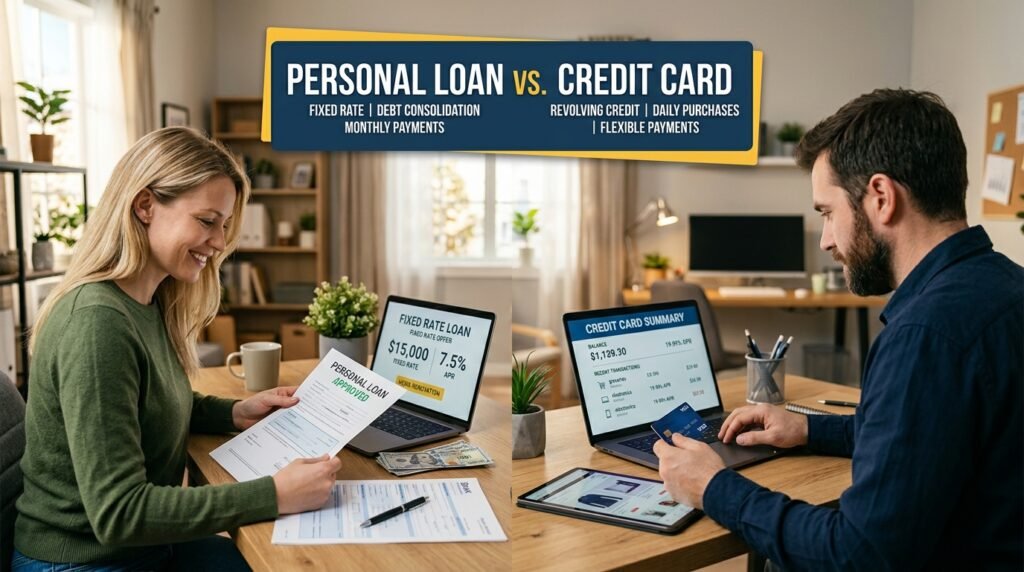
For example, a balance transfer card may offer a promotional APR to eligible borrowers, while a personal loan generally provides a fixed amount with scheduled payments. Your credit profile can affect whether you qualify for either option and what terms you receive.
What Should You Check Before Accepting a Bad Credit Loan?
Before signing a loan agreement, review:
- APR
- Interest rate
- Origination fees
- Monthly payment
- Loan term
- Total repayment amount
- Late payment fees
- Prepayment terms
- Amount you will actually receive
A longer loan term may reduce your monthly payment but increase the total interest paid. Similarly, a lower monthly payment does not necessarily mean the loan is less expensive overall.
Make sure the payment fits your budget and that you understand the full cost before accepting the loan.
Final Thoughts
Getting a personal loan with bad credit can be possible, but the terms may be different from those offered to borrowers with stronger credit profiles. Your credit history, income, existing debt, DTI, loan amount, and other factors can influence the lender’s decision and the terms you receive.
Before applying, check your credit reports, calculate what you can afford, compare multiple lenders, and review the complete cost of each offer.
Most importantly, do not let an urgent financial need push you into accepting a loan you cannot comfortably repay. Taking time to understand the interest rate, fees, monthly payment, and total repayment cost can help you make a more informed borrowing decision.