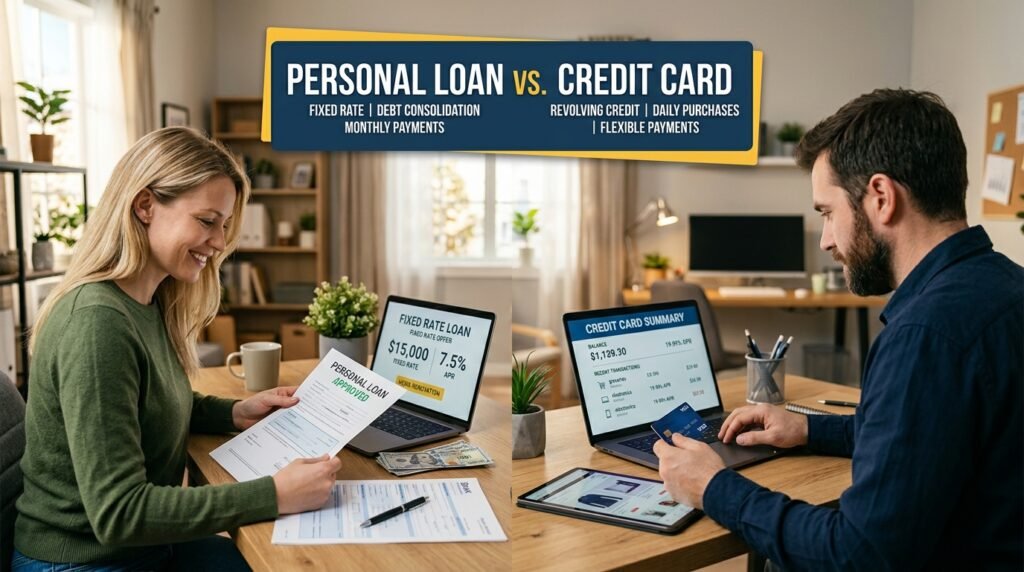
Personal loan scams cost borrowers money and personal data every year. Scammers pose as lenders, promise fast cash, and then ask for fees or sensitive details. The loan never arrives.
This guide explains the red flags of personal loan scams and how to check whether a lender is legitimate before you apply.
How Personal Loan Scams Work
Personal loan scams usually start with an offer that feels convenient. It may arrive by text, email, social media, or a search ad. The scammer promises quick approval, even for people with bad credit.
Then the pressure begins. The scammer asks for a fee, or for your bank login or Social Security number. After you pay or share information, the money never shows up.
The Federal Trade Commission has warned about these advance-fee schemes. Scammers often target people who are stressed, short on cash, or worried about their credit. Those borrowers may feel they have fewer options.
Red Flags of Personal Loan Scams
Spotting personal loan scams early depends on knowing the warning signs. One red flag alone should make you pause. Several together are a strong signal to walk away.
Upfront Fees Before Approval
A fee requested before you receive any money is one of the clearest warning signs. Scammers may call it “insurance,” a “processing fee,” or a “deposit.”
Legitimate lenders may charge an origination fee. However, they typically deduct it from the loan proceeds instead of asking you to pay first. The FTC’s Telemarketing Sales Rule also generally bars telemarketers from charging advance fees for loans they guarantee or say you are likely to get.
Guaranteed Approval With No Credit Check
No real lender can guarantee approval before reviewing your application. Legitimate lenders check credit, income, and debts.
Be careful with “no credit check” claims too. Some lenders offer prequalification with a soft pull, which is different. Our guide on pre-approval vs pre-qualification explains the difference.
Pressure to Act Immediately
Scammers create false urgency. They may say the offer expires today or that you will lose the loan if you wait.
Real lenders give you time to read the terms. They also disclose the APR, fees, and repayment schedule clearly before you sign.
Unusual Payment Methods
Payment demands are a common thread in personal loan scams. Be suspicious if a “lender” asks you to pay by gift card, wire transfer, cryptocurrency, or a cash app. The FTC warns that demands for these payment types are hallmarks of scams.
Unsolicited Offers
Be careful with loan offers you never requested. Cold calls, random texts, and direct messages are common ways scammers reach victims. Fake “pre-approved” notices are also common.
Missing License or Contact Details
Legitimate lenders are usually licensed in the states where they operate. They also list a physical address, a phone number, and clear company information.
If those details are missing or hard to verify, treat that as a warning sign.
Legitimate Fees vs Advance Fees
Not every fee is a sign of personal loan scams. Knowing the difference helps you avoid both mistakes.
Fees that can be legitimate:
- An origination fee taken out of your loan amount
- A late payment fee after you miss a due date
- A prepayment penalty that is clearly disclosed in your loan agreement
Fees that signal a scam:
- Any fee you must pay before you receive the loan
- Payments requested outside the lender’s official loan agreement
- Fees described vaguely as “insurance” or “unlocking” your funds
For more on how real fees work, see our guide to loan origination fees.
How to Avoid Personal Loan Scams by Verifying the Lender
Verification is your strongest defense against personal loan scams. Take these steps before you share any information:
- Search the lender’s name with words like “complaints” or “reviews.”
- Check licensing. NMLS Consumer Access lets you look up licensed lenders, and your state banking regulator can help too.
- Confirm contact details. Call the number listed on a regulator’s site, not the one in a message.
- Read the full terms. Look for a clear APR, fee schedule, and repayment plan.
- Search complaints. The CFPB accepts and publishes consumer complaints about financial companies.
- Compare with trusted lenders. Banks and credit unions are usually safer starting points.
If your credit is limited, safer options exist. Our guide on how to build credit from scratch explains steps that do not require risky lenders.
Common Types of Personal Loan Scams
Personal loan scams come in several forms:
- Advance-fee scams: the scammer collects a fee and disappears.
- Phishing applications: a fake application site steals your Social Security number, bank details, or login information.
- Lender impersonation: scammers copy the name or website of a real lender.
- Fake check scams: the scammer sends a check, asks you to return part of it, and the check later bounces.
- Fake refinancing offers: scammers promise to lower your rate for a fee. Our guide to loan refinancing shows what a real refinance process looks like.
What to Do If You Already Shared Information or Paid
If you think you have fallen for one of these personal loan scams, act quickly.
- Stop all contact and do not send more money.
- Contact your bank or card issuer right away to report the payment. If you paid by card, you may be able to dispute the charge. See our guide on how to dispute a credit card charge.
- Report the scam to the FTC at ReportFraud.ftc.gov.
- Report internet-based fraud to the FBI’s Internet Crime Complaint Center.
- Visit IdentityTheft.gov if you shared your Social Security number or other identifying details.
- Consider a credit freeze or fraud alert. Freezing your credit is free.
- Change passwords on any accounts you may have exposed.
Final Thoughts on Personal Loan Scams
Personal loan scams rely on urgency and fear. The clearest red flags are upfront fees, guaranteed approval, pressure, and unusual payment methods.
Slow down, verify the lender, and read every term before you agree. A legitimate lender will give you time to check. If something feels off, walk away.
This article is for general information and is not legal or financial advice. If you believe you have been scammed, contact your financial institution and the appropriate authorities.