When you check your credit card account, you may notice two numbers that seem similar: your credit limit and your available credit. Although they are connected, they mean different things.
Your credit limit is the maximum amount your card issuer allows you to borrow on the account. Your available credit is the amount you can still use based on your current balance, pending transactions, payments, and other activity.
Understanding the difference between available credit vs credit limit can help you avoid declined transactions, manage your spending, and better understand your credit utilization.
What Is a Credit Card Credit Limit?
Your credit card limit is the maximum amount of credit available on your account.
For example, suppose your credit card has a $5,000 credit limit. This means your account can generally have up to $5,000 in outstanding credit card balances, subject to the terms of your card agreement.
Your credit limit does not mean you should spend $5,000 every month. It simply represents the maximum credit line assigned to your account.
Credit card issuers determine limits based on factors such as your credit history, income, existing debts, payment history, and their own lending policies.
Your credit limit can also change over time. An issuer may increase it, or in some situations, reduce it.
What Is Available Credit?
Available credit is the amount of your credit limit that remains available for new purchases.
For example, imagine you have:
- Credit limit: $5,000
- Current balance: $1,500
- Available credit: approximately $3,500
In this example, you have used $1,500 of your $5,000 credit limit, leaving approximately $3,500 available.
However, available credit is not always calculated from your posted balance alone. Pending transactions, authorization holds, and recently processed payments can also affect what your account shows.
This is why your available credit can sometimes look different from what you expect.
Credit Limit vs Available Credit: The Key Difference
The easiest way to understand the difference is this:
Your credit limit is the total credit line assigned to your card.
Your available credit is the portion of that credit line that you can currently use.
Consider this example:
- Credit limit: $10,000
- Current balance: $3,000
- Available credit: approximately $7,000
If you make another $1,000 purchase, your available credit may fall to approximately $6,000.
Your credit limit has not changed. Only the amount of credit remaining for new spending has changed.
This distinction becomes especially important when you are close to your credit limit.
Why Can Available Credit Be Lower Than Expected?
Several types of account activity can reduce your available credit.
One common reason is a pending transaction. A purchase may temporarily reduce your available credit before it becomes a finalized posted charge.
Authorization holds can also affect available credit. Hotels, rental car companies, gas stations, and some other merchants may temporarily reserve part of your credit before the final transaction is processed. If you want to understand how these temporary holds work, see What Is a Credit Card Authorization Hold and How Does It Work?
Payments can also affect the number you see, but the timing of payment processing can vary. A payment may not immediately restore all available credit if the issuer is still processing it or if other transactions are pending.
Can Available Credit Be Higher Than Your Current Balance?
Yes, and this is normal.
Suppose your credit limit is $8,000 and your current balance is $2,000. Your available credit could be approximately $6,000.
The two figures are related, but they are not the same measurement.
Your current balance tells you how much is currently owed based on posted account activity. Available credit tells you how much credit remains available for additional spending.
Your account may also show pending transactions that have not yet become part of the posted balance.
Does Available Credit Affect Your Credit Score?
Available credit can indirectly matter because it is connected to credit utilization.
Credit utilization generally compares the amount of revolving credit you are using with the credit available to you.
For example, suppose you have a $10,000 credit limit and a $2,000 balance. Your utilization on that card would be 20%.
If your credit limit stays at $10,000 but your balance rises to $6,000, your utilization becomes 60%.
This is why keeping balances manageable can be important even when you have a relatively high credit limit.
Your credit report may also reflect balances based on when your issuer reports account information. For a deeper explanation of how statement timing and balances work, see Credit Card Statement Balance vs. Current Balance.
Can a Credit Card Issuer Change Your Available Credit?
Yes. Your available credit can change whenever your balance or account activity changes.
For example, making a purchase reduces available credit. Making a qualifying payment can increase it after the payment is processed.
However, your credit limit can also change.
An issuer may increase your credit limit after reviewing your account, or it may reduce the limit based on its risk-management policies.
A reduction can be important because your balance may stay the same while your available credit decreases.
For example:
- Original credit limit: $10,000
- Balance: $3,000
- Original utilization: 30%
- New credit limit: $6,000
- Same balance: $3,000
- New utilization: 50%
You did not spend additional money, but your utilization increased because the credit limit changed.
CoreFoxes explains this type of situation in What Is a Credit Card Financial Review and Can It Lead to a Credit Limit Reduction?
What Happens When You Reach Your Credit Limit?
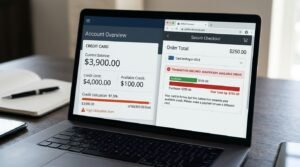
If your balance and pending transactions use most or all of your available credit, a new purchase may be declined.
For example, suppose you have:
- Credit limit: $4,000
- Available credit: $100
A merchant attempts to charge $250 to your card. The transaction may be declined because you do not have enough available credit.
This does not necessarily mean your credit card has been closed. It simply means there may not be enough available credit for that particular transaction.
If you frequently approach your limit, monitoring your account can help you avoid unexpected declines.
Does Paying Your Credit Card Increase Available Credit?
Generally, a processed payment can restore available credit because it reduces the amount owed on the account.
For example, suppose your credit limit is $5,000 and your balance is $4,000. Your available credit is approximately $1,000.
If you make a $500 payment and the payment is processed, your balance may fall to approximately $3,500 and your available credit may increase to approximately $1,500, assuming there are no other transactions or holds.
However, the timing of available credit restoration depends on the issuer and payment method.
A payment may also be subject to processing or verification before the full amount becomes available again.
Should You Use All of Your Available Credit?
Having available credit does not mean you should use all of it.
Using a large portion of your credit limit can increase your credit utilization and leave less room for unexpected expenses.
It can also make your monthly payments harder to manage if you are carrying balances from month to month.
Instead of focusing only on how much credit you have available, consider whether your spending fits comfortably within your budget and repayment ability.
A high credit limit can provide flexibility, but it does not increase your income or make debt more affordable.
How to Monitor Your Available Credit
You can usually find your available credit through your credit card issuer’s website or mobile app.
Check your account regularly for:
- Current balance
- Available credit
- Credit limit
- Pending transactions
- Recent payments
- Authorization holds
- Unexpected charges
If the numbers do not appear to match your expectations, review pending transactions and recent payments first.
If something still looks incorrect, contact your credit card issuer using the official phone number or secure communication method provided by the issuer.
Final Thoughts
Credit card available credit vs. credit limit is an important distinction for anyone who uses a credit card.
Your credit limit is the total credit line assigned to your account, while available credit is the amount remaining for new spending at a particular point in time.
Available credit can change because of purchases, payments, pending transactions, and temporary authorization holds. Your credit limit can also change if the issuer increases or reduces your credit line.
Understanding both numbers can help you avoid declined purchases, manage your spending, and keep a closer eye on credit utilization.
Instead of looking only at your credit limit, regularly check your available credit, current balance, pending transactions, and payment activity. This gives you a clearer picture of how much credit you can actually use and helps you manage your card more responsibly.