
The Envelope Budgeting Method: Does Cash-Only Spending Actually Work in 2026?
You get paid, pay the bills, and somehow the rest of the money just… disappears. Not on anything huge. A few takeout orders, a couple of “just this once” purchases, some tap-to-pay charges you don’t even remember making. If that sounds familiar, the envelope budgeting method is one of the oldest and most effective fixes for exactly this problem, and it’s making a real comeback in 2026.
That gap between what you earn and what you can actually account for is what the envelope budgeting method was built to close, decades before contactless payments made spending feel almost invisible. So does this cash-based approach still hold up now that so much of life runs on digital payments? Let’s break down how the envelope budgeting method works, whether cash-only spending still makes sense, and how to adapt the system if pure cash isn’t realistic for your life.
What Is the Envelope Budgeting Method?
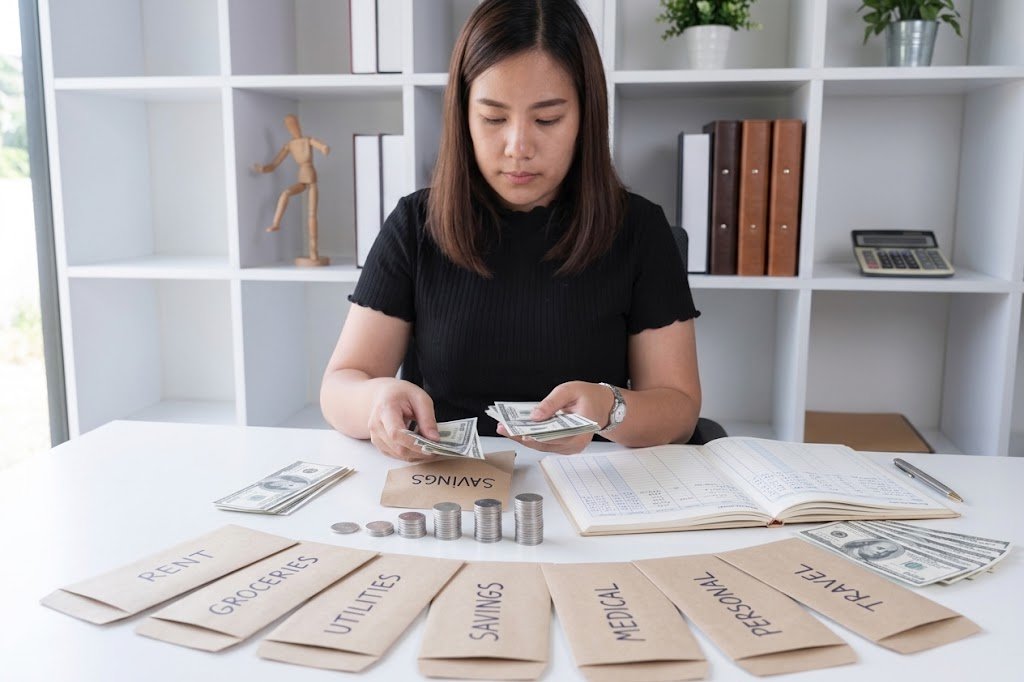
The envelope budgeting method is a cash-based system where you divide your income into spending categories, physically put the cash for each category into a labeled envelope, and only spend from that envelope for that purpose. Groceries get their own envelope. So does gas, dining out, entertainment, and anything else you spend on regularly.
Once an envelope is empty, spending in that category stops until your next budgeting period. There’s no swiping “just this once” and dealing with it later. The cash is gone, so the spending is gone too.
This is different from most digital budgeting apps, which track what you’ve already spent after the fact. The envelope budgeting method works in real time. You see the cash shrink with every purchase, which creates a kind of built-in friction that a checking account balance rarely provides.
Why the Envelope Budgeting Method Creates a Different Kind of Discipline
There’s a well-documented psychological effect at play here: physically handing over cash tends to feel more painful than swiping a card, which is part of why people consistently spend more when paying electronically. When you’re not physically watching money leave your hand, it’s easier to lose track of the running total. The envelope budgeting method reintroduces that friction on purpose.
This ties into a broader idea worth understanding if you’re prone to impulse purchases — giving yourself a short pause before spending, similar to the logic behind the 24-hour rule for spending, can dramatically cut down on regret purchases. An empty envelope does something similar automatically: it forces a stop, even if you don’t consciously decide to pause.
Does Cash-Only Spending Still Work in a Digital Economy?
It’s a fair question. Most bills are paid electronically, direct deposit is standard, and plenty of smaller retailers have gone cashless entirely. So is the cash-only spending at the heart of the envelope budgeting method still realistic?
According to the Federal Reserve’s 2025 Diary of Consumer Payment Choice, cash usage has actually held remarkably steady even as digital payments have grown. U.S. consumers made an average of seven cash payments per month in 2024, a figure that has remained unchanged since 2020, with cash holding its position as the third-most-used payment method behind credit and debit cards. Nearly 80% of consumers reported carrying cash for at least one day during the survey period, and more than 90% said they intend to keep using cash as either a payment method or a store of value going forward.
In other words, cash hasn’t disappeared. It’s just being used more deliberately, often for exactly the kind of discretionary, budget-sensitive categories the envelope budgeting method targets, like groceries, dining out, and entertainment.
That said, cash-only spending isn’t realistic for everything. Fixed expenses like rent, utilities, insurance, and loan payments are almost always handled electronically now, and trying to force those into a cash envelope usually creates more hassle than benefit. The envelope budgeting method works best when it’s applied selectively, to the categories where overspending actually tends to happen.
How to Set Up an Envelope Budgeting Method for Yourself
Step 1: List Your Variable Spending Categories
Start by identifying the spending categories that fluctuate month to month and are prone to overspending. Common examples include:
- Groceries
- Dining out and takeout
- Entertainment and hobbies
- Personal care
- Clothing
- Miscellaneous or “fun money”
Fixed expenses like your mortgage or car payment don’t need envelopes. Those amounts don’t change, and they’re usually easier to automate.
Step 2: Set a Realistic Amount for Each Envelope
Look at your last two or three months of spending in each category to get a realistic starting number, rather than guessing. This is also a good moment to apply a broader budgeting framework, like the 50/50/50 wealth rule, to make sure your envelope amounts fit within your overall income allocation rather than being set in isolation.
Setting your smart financial goals before you assign envelope amounts also helps. If you’re trying to get out of debt or build an emergency fund, your discretionary envelopes may need to shrink to free up money for those priorities. The Federal Trade Commission offers a free budgeting worksheet that’s a solid starting point if you want a structured way to map out income and expenses before dividing anything into envelopes.
Step 3: Withdraw and Divide the Cash
At the start of each pay period, withdraw the total amount you’ve budgeted for your cash categories and physically divide it into labeled envelopes, whether that’s actual paper envelopes, a cash wallet with dividers, or small zippered pouches.
Step 4: Spend Only From the Matching Envelope
When you go grocery shopping, you use the grocery envelope. When you go out to eat, you use the dining envelope. If an envelope runs out before the period ends, you stop spending in that category. You don’t borrow from another envelope unless you consciously decide to and adjust accordingly.
Step 5: Review and Adjust Your Envelope Budgeting Method Each Month
At the end of each budgeting period, check which envelopes ran out too fast and which had money left over. Adjust the amounts for next time. This kind of regular review is part of what separates people who stick with a budget long-term from people who abandon it after a few weeks, similar to what keeps a no-spend month challenge effective instead of just a short burst of willpower.
A Realistic Envelope Budgeting Example
Say someone brings home $3,800 a month after taxes. Their fixed expenses (rent, utilities, insurance, loan payments) total $2,600 and are all paid electronically. That leaves $1,200 for variable spending and savings.
They might divide that $1,200 like this:
- Groceries: $500
- Dining out: $150
- Entertainment: $100
- Personal care: $75
- Clothing: $75
- Savings transfer: $300
The first four categories go into cash envelopes. The savings amount gets automated separately, since automating your finances for savings and fixed bills tends to work better than trying to manage everything in cash. This hybrid approach — cash for the categories where overspending happens, automation for everything else — is how most people who use the envelope budgeting method actually apply it in 2026, rather than going fully cash-only.
This is a hypothetical example meant to illustrate how the math works. Your own numbers will depend on your income, cost of living, and financial obligations.
Digital Alternatives to the Traditional Envelope Budgeting Method
If carrying cash isn’t practical for your lifestyle, several banking apps now offer digital “envelope” or “bucket” features that mimic the same idea without the paper. You allocate money into virtual categories within your checking or savings account, and the app tracks what’s left in each one.
The psychological friction isn’t quite as strong as handling physical cash, but it still beats a single account balance with no categories at all. If you go this route, pairing it with a high-yield savings account for the categories you’re not actively spending from can also help that money earn something while it sits.
Common Mistakes With the Envelope Budgeting Method
Trying to put everything in envelopes. Fixed bills don’t belong in a cash system. Trying to force rent or utility payments into envelopes just adds unnecessary risk and hassle.
Setting envelope amounts too tight. If every envelope runs dry by the second week, the system starts to feel punishing rather than helpful, and most people abandon it. It helps to remember that cutting every small expense rarely moves the needle the way people expect, a point covered in the latte factor myth — the goal is realistic categories, not extreme restriction.
Borrowing between envelopes without a plan. Occasionally shifting money from one envelope to another is fine if it’s intentional. Doing it constantly usually means the original amounts weren’t realistic to begin with.
Carrying large amounts of cash without a backup plan. Physical cash can be lost or stolen and isn’t insured the way a bank deposit is, unlike deposits at FDIC-insured banks. Keep the amounts in each envelope reasonable, and don’t carry more than you’d be comfortable losing.
Ignoring the review step. Skipping the monthly check-in is one of the most common reasons people quit. The envelope budgeting method only works if you keep adjusting it based on what actually happens, not what you hoped would happen.
Practical Takeaways
- The envelope budgeting method works best for variable, discretionary spending categories, not fixed bills.
- Federal Reserve data shows cash use has stayed stable in recent years, so the cash-only spending behind the envelope budgeting method is still realistic, not outdated.
- A hybrid approach, cash for spending-prone categories and automation for savings and fixed bills, tends to be more sustainable than an all-cash or all-digital system.
- Setting realistic envelope amounts based on real past spending matters more than picking round, aspirational numbers.
- Reviewing and adjusting your envelope budgeting method monthly is what keeps the system working long-term.
Final Thoughts
The envelope budgeting method isn’t a relic from a pre-digital era. It’s a system built around a simple truth: physically seeing your money shrink changes how you spend it. Whether you use actual cash, a digital bucket app, or some combination of both, the core idea holds up in 2026 just as well as it did decades ago.
If your spending tends to drift without you noticing until it’s already happened, the envelope budgeting method gives you a concrete way to catch it before it becomes a pattern. Start with one or two categories where overspending tends to happen, not your entire budget, and adjust from there based on what you actually learn about your own habits.
This article is for general educational purposes and isn’t personalized financial advice. Consider your own income, expenses, and financial goals before adopting any new budgeting system.