
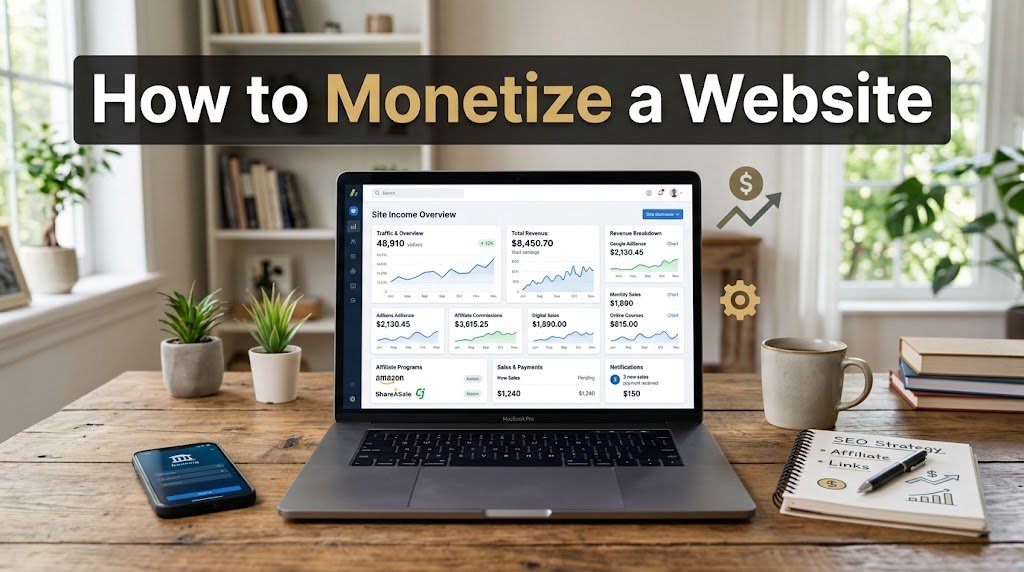
You can monetize a website through display ads, affiliate marketing, selling products, paid memberships, sponsored content, lead generation, online courses, or services. The right method depends on your audience, website topic, traffic volume, and what visitors are willing to pay for. You don’t need millions of visitors, either. A smaller website with a specific audience can sometimes earn more from products, services, or affiliate commissions than a general site that relies only on advertising.
If you’re building a site around articles and useful resources, Blogging can become the foundation for attracting organic visitors and creating several income sources over time.
What Is Website Monetization?
Website monetization means turning the visitors, content, products, or services on your site into income. Instead of simply publishing articles or providing free information, you create a way for the business to earn when visitors view ads, purchase something, sign up for a service, or become customers.
There isn’t one website monetization method that works for every site. A recipe blog may earn from ads and affiliate links, while a software website may sell subscriptions. A local service website may generate leads, and an online store may make money directly from product sales.
Your website should therefore be monetized around what your visitors already want, rather than adding every possible income method.
1. Display Ads With Google AdSense
Display advertising is one of the simplest ways to monetize a content website. With Google AdSense, advertisers pay to show ads on available spaces on your pages. Google explains that advertisers bid for those spaces, and the amount a publisher earns varies because different ads have different prices.
AdSense can work well for blogs, informational websites, news sites, and other websites that receive regular traffic. However, you shouldn’t cover every section of a page with ads. Too many ads can make content difficult to use and may also create policy problems.
Google requires publishers to follow its policies, including rules against encouraging ad clicks, misleading ad placement, and placing more ads than content on a page.
2. Make Money With Affiliate Marketing
Affiliate marketing lets you earn a commission by referring visitors to another company’s product or service. You place a special affiliate link on your website, and when someone completes a qualifying purchase or action through that link, you may receive a commission.
This works particularly well when your content helps people make buying decisions. For example, a technology website could publish laptop comparisons, a fitness site could review equipment, and a finance website could explain relevant financial products.
The key is to recommend products that genuinely fit the topic and your audience. Helpful reviews, comparisons, tutorials, and buying guides usually make more sense than adding random affiliate links throughout an article.
3. Sell Your Own Digital Products
If your website has an audience with a specific need, selling your own products can create a direct source of income. Physical products can be sold through an online store, while downloadable products may include templates, ebooks, checklists, printables, or other resources.
For example, a website about photography could sell Lightroom presets, while a career website could sell resume templates. A cooking website might sell meal plans or recipe collections.
Digital products can be particularly useful because they don’t require physical storage or shipping. You’ll still need to handle product creation, payments, customer support, and delivery, but one useful resource can potentially be sold repeatedly.
4. Offer Paid Memberships
A membership model allows visitors to pay regularly for access to content, resources, tools, or a private community. You might offer a free section of your website and reserve more detailed resources for paying members.
This approach can work well when visitors have a reason to return regularly. Examples include premium tutorials, industry research, private lessons, member-only downloads, or specialist communities.
Before introducing a subscription, make sure the paid material solves a problem that your audience actually has. A recurring payment needs to provide continuing value, not simply put ordinary website content behind a paywall.
5. Sell Online Courses
If you have expertise in a particular subject, an online course can turn your website into a source of income beyond advertising. Your course could teach a practical skill through written lessons, videos, worksheets, quizzes, or projects.
A website about graphic design, for example, could sell a beginner course. A language website could offer structured lessons, while a cooking site could sell a complete cooking program.
You can also use YouTube to introduce people to your subject through free educational videos, then direct interested viewers to detailed articles, courses, services, or products on your website. This creates another way to bring relevant visitors to your site.
6. Earn Through Sponsored Content
Businesses may pay websites to publish sponsored articles, product reviews, interviews, or other promotional material. This can become an income source once your website has a defined audience and a reputation in its niche.
Sponsored content should be clearly identified so visitors understand that a business has paid for the placement. It’s also important to protect your site’s credibility. Accepting every sponsorship can make a website look unreliable, especially when the promoted products don’t match the site’s subject.
A smaller website with a highly specific audience may attract relevant sponsors even without enormous traffic because advertisers may care about audience quality and relevance.
7. Generate Leads for Businesses
Lead generation is another website monetization method that doesn’t require selling a product yourself. Your website attracts people who need a particular service and sends qualified inquiries to a business.
For instance, a home improvement website could collect requests from people looking for contractors. A legal information site could connect visitors with relevant legal professionals, subject to applicable laws and professional rules.
The business can pay per lead, per qualified inquiry, or through another agreed arrangement. The important part is that your website needs to attract people with genuine buying intent.
8. Sell Services Through Your Website
Your website can also act as a place where visitors hire you directly. Writers, designers, developers, consultants, tutors, photographers, and other professionals can use their websites to explain their services and collect inquiries.
This model can work with relatively modest traffic because one client may be worth much more than thousands of ad impressions.
Create clear service pages that explain what you offer, who it’s for, what the client receives, and how to contact you. Examples, testimonials, case studies, and a simple inquiry process can also help visitors decide whether your service is suitable.
9. Use Your Website to Build an Email List
An email list isn’t a monetization method by itself, but it can support several income models. You can invite visitors to subscribe in exchange for a useful resource, such as a checklist, guide, template, or short course.
Once people voluntarily join your list, you can send useful content and introduce relevant products, services, affiliate offers, or paid resources.
The important point is to avoid treating subscribers as a list of people to sell to repeatedly. Useful emails build familiarity, while irrelevant promotional messages can cause people to unsubscribe.
Which Website Monetization Method Should You Choose?
The right approach depends on the type of website you run, how much traffic you receive, and what your audience expects from you.
| Website type | Suitable monetization methods |
| Blog or information site | Ads, affiliate marketing, sponsored content |
| Product review site | Affiliate marketing, ads |
| Online store | Product sales, memberships |
| Professional website | Services, lead generation |
| Educational website | Courses, memberships, digital products |
| Specialist community | Memberships, sponsorships, premium content |
| Local service site | Lead generation, services |
You can also combine methods. For example, a content website could use affiliate marketing and ads while building an email list for future product sales.
How Much Traffic Do You Need to Monetize a Website?
There is no single traffic number that guarantees website income. Earnings depend on the monetization model, audience location, niche, visitor intent, conversion rate, product price, and advertiser demand.
A site receiving 1,000 visitors who are actively looking for a product may generate more revenue through affiliate sales than a site receiving 10,000 visitors who aren’t interested in buying anything.
This is why traffic quality matters alongside traffic volume. Focus on attracting people who need the information, products, or services your website provides.
How to Start Monetizing a Website
Before adding monetization, make sure your website has a clear purpose and useful content. Visitors should be able to understand what your site offers and find important pages without confusion.
Your traffic strategy also matters. A practical Website SEO Plan can help you organize keyword research, content creation, internal linking, technical improvements, and other work needed to attract search visitors. Without relevant traffic, even a well-designed monetization system may produce little income.
Then choose one or two income methods that naturally fit your audience. Track results using appropriate analytics, and pay attention to which pages attract visitors, which links receive clicks, and which offers lead to actual sales.
A practical starting process is:
- Choose one primary monetization method.
- Create useful content that attracts your target audience.
- Build steady, relevant website traffic.
- Add the offer, ads, or service naturally.
- Track clicks, leads, sales, and revenue.
- Keep improving based on actual results.
Common Website Monetization Mistakes
One common mistake is adding ads, affiliate links, and promotional offers before a website has enough useful content or a clear audience. Monetization works better when it supports the purpose of the site rather than becoming the purpose of every page.
Another problem is choosing a method simply because another website uses it. A business website may earn more from leads or services than ads, while an informational blog may benefit from advertising and affiliate content.
You should also avoid misleading claims, poor-quality affiliate recommendations, copied content, and aggressive advertising. If you’re using Google AdSense, review its current publisher policies because violations can result in ads being restricted or an account being suspended or terminated.
Final Thoughts
Learning how to monetize a website isn’t about placing as many ads or links as possible. It’s about matching an income model to the reason people visit your site.
For many websites, a sensible starting point is ads or affiliate marketing. Sites with specialist knowledge may earn more through services, courses, memberships, or Digital Products. As your audience grows, you can test additional income sources while keeping the visitor experience at the center of your decisions.
The strongest website monetization strategy is usually the one that gives visitors something useful and creates a clear reason for them to take a paid action.
FAQs
Can I monetize a website without a lot of traffic?
Yes. A smaller website can earn through services, affiliate marketing, products, courses, or lead generation if it attracts a specific audience with a genuine need.
Is Google AdSense free to use?
Yes. Google provides AdSense as a way for publishers to earn from eligible website content, but your site must meet Google’s eligibility and publisher policy requirements.
What is the easiest way to monetize a website?
For many content websites, display ads and affiliate marketing are relatively simple starting options. The right choice depends on your audience, traffic, niche, and content.
Can I monetize a website before getting thousands of visitors?
Yes. You don’t necessarily need thousands of visitors. A focused audience with strong buying intent can support affiliate sales, services, lead generation, or product sales with comparatively less traffic.