
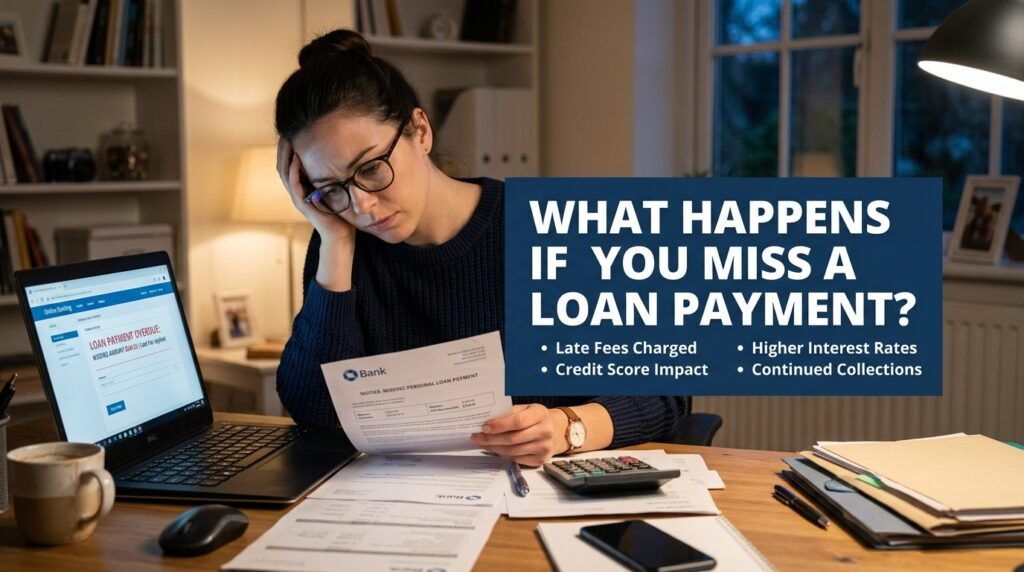
Missing a personal loan payment can happen for many reasons, including an unexpected expense, reduced income, or simply forgetting the due date. However, even one missed payment can have financial consequences, depending on how quickly you bring the account current and how your lender handles late payments.
A missed payment may result in late fees, additional interest, collection activity, and potentially negative information on your credit report. If payments continue to be missed, the consequences can become more serious.
Understanding what happens after a missed personal loan payment can help you respond quickly and reduce the potential impact on your finances.
What Is a Missed Personal Loan Payment?
A missed personal loan payment occurs when you do not make the required payment by the date specified in your loan agreement.
Your lender may provide a grace period before treating the payment as officially late, but the rules vary by lender and loan agreement. A payment can also be considered late even if you make only part of the required amount.
If you realize that you cannot make a payment, reviewing your loan agreement and contacting the lender as soon as possible can help you understand your available options.
What Happens When You Miss One Payment?
The immediate consequences of missing one payment depend on your lender and the terms of your loan.
You May Be Charged a Late Fee
A lender may charge a late fee when a required payment is not made according to the loan agreement. The amount and timing of the fee depend on the lender and applicable rules.
Review your loan documents to determine whether your personal loan includes late-payment charges.
Interest May Continue to Accumulate
Personal loans generally accrue interest according to the terms of the agreement. Missing a payment does not necessarily stop interest from accumulating.
As a result, delaying payment can increase the amount you ultimately need to repay.
Your Lender May Contact You
If a payment is missed, the lender may contact you through email, phone, text, or mail. The purpose may be to notify you about the missed payment and request that you bring the account current.
Responding to the lender instead of ignoring the communication can help you understand what is required to resolve the missed payment.
Can a Missed Payment Hurt Your Credit Score?

A missed payment can potentially affect your credit, particularly if it becomes seriously delinquent and is reported to credit reporting companies.
Not every missed payment is immediately reported as a negative item. Reporting practices and timing can vary, so borrowers should review their loan agreement and communicate with the lender.
Your payment history is an important part of your credit profile. Consistently making payments on time can help maintain positive credit history, while serious delinquencies can negatively affect your credit.
If you want to understand the broader relationship between borrowing and credit, read our guide on How Personal Loans Affect Your Credit Score.
What Happens If You Miss Multiple Payments?
The consequences can become more serious when multiple payments are missed.
Your account may become delinquent, and the lender may increase collection efforts. Depending on the loan agreement and applicable laws, continued nonpayment can eventually lead to the account being sent to collections or other legal recovery actions.
A prolonged failure to make payments can also make it harder to manage other financial obligations.
If you are struggling with multiple debts, understanding different debt-relief approaches may be useful. Our guide on Debt Consolidation vs. Debt Settlement explains how these two approaches work and how they differ.
What Does Loan Default Mean?
Loan default generally means that a borrower has failed to meet the repayment requirements for a longer period or in a manner defined by the loan agreement.
The exact point at which a personal loan is considered in default varies by lender and contract.
Default can lead to more serious collection activity, additional costs, and potential legal consequences. If the loan is secured by collateral, the consequences can also include action against the asset used to secure the loan.
This is why borrowers should not wait until the situation becomes severe before contacting their lender.
What Should You Do After Missing a Payment?
If you realize that you have missed a personal loan payment, taking action quickly is important.
Check Your Loan Account
Log into your lender’s website or mobile app and check the current status of your account. Determine whether the payment is simply pending, officially late, or already considered delinquent.
Also check whether a late fee has been added.
Contact Your Lender
If you cannot make the payment, contact your lender and explain the situation. Ask whether there are any available options for bringing the account current.
Depending on the lender, options may include changing the payment date, arranging a payment plan, or discussing temporary assistance.
Never assume that a lender will automatically provide a solution. Ask about the available options and any costs or conditions associated with them.
Make the Payment If You Can Afford It
If you have enough money available, making the missed payment as soon as possible may help prevent the account from becoming further delinquent.
However, avoid using high-cost borrowing simply to make a payment without considering the consequences. Adding another expensive debt can create a larger financial problem.
Can You Ask for a Payment Extension?
Some lenders may offer payment extensions, hardship programs, or other forms of temporary assistance, but availability depends on the lender and your circumstances.
Before accepting an extension, ask whether interest will continue to accumulate, whether fees will apply, and whether the loan term will be extended.
A temporary reduction in payment pressure may also increase the total cost of the loan, so understand the terms before agreeing.
How Can You Prevent Future Missed Payments?
Preventing missed payments is generally easier than dealing with their consequences.
Consider setting up automatic payments if your lender offers the option. You can also create calendar reminders several days before each due date.
Keeping a separate amount of money available for upcoming loan payments can also help you avoid problems when unexpected expenses occur.
Building an emergency fund may provide additional financial flexibility when unexpected expenses arise. A savings cushion can make it easier to continue making required payments during temporary financial difficulties.
What If You Can No Longer Afford the Loan?
If your financial situation has changed and you can no longer afford your monthly payment, do not simply stop paying.
Contact the lender before the next payment is missed and explain your situation. Ask whether the lender offers hardship assistance or alternative repayment arrangements.
You can also review your overall debt, monthly income, and essential expenses to understand what payment you can realistically afford.
If you are considering replacing or restructuring debt, compare the total cost carefully. A new loan may lower a monthly payment but could increase the repayment period or total interest paid.
Does Refinancing Help After a Missed Payment?
Refinancing means replacing an existing loan with a new loan, usually with different terms.
Depending on your credit profile, income, current interest rate, and lender requirements, refinancing may potentially change your monthly payment or interest costs. However, qualifying for a new loan after missed payments may be more difficult.
Before refinancing, compare the new APR, fees, repayment period, monthly payment, and total amount you will repay.
You should also avoid refinancing simply to postpone an unaffordable debt problem. Make sure the new payment fits realistically within your budget.
Common Mistakes After Missing a Loan Payment
Several mistakes can make the situation worse.
Ignoring the Lender
Avoiding calls, emails, or letters does not make the debt disappear. Communication can help you understand your account status and available options.
Taking Another High-Cost Loan Immediately
Using another expensive loan to cover a missed payment may create additional financial pressure.
Assuming One Missed Payment Will Never Matter
Even if one missed payment does not immediately appear as a serious credit problem, repeated missed payments can create much greater consequences.
Not Reviewing the Loan Agreement
Your loan agreement contains important information about late fees, payment requirements, default, and other conditions. Read it carefully so you know what applies to your loan.
Final Thoughts
Missing a personal loan payment does not necessarily mean your financial situation cannot be recovered. The most important step is to understand what has happened and take action quickly.
Check your account, review your loan agreement, contact the lender, and determine how you can bring the account current. If you are experiencing broader financial difficulties, review your budget and debt obligations rather than relying on additional high-cost borrowing.
Managing personal loan payments consistently can help protect your finances and reduce the risk of more serious problems in the future.
FAQs About Missing a Personal Loan Payment
What happens if I miss one personal loan payment?
You may face a late fee, continued interest, lender contact, and potentially credit-reporting consequences depending on how late the payment becomes and the lender’s reporting practices.
How long can you be late on a personal loan?
The consequences depend on the lender and loan agreement. Different lenders have different policies regarding late payments, delinquency, and default.
Can I fix my credit after missing a loan payment?
You can work on rebuilding your credit by making future payments on time, managing existing debt responsibly, and avoiding additional missed payments.
Can a personal loan go to collections?
Yes. If a borrower remains seriously delinquent, a lender may eventually send the account to collections or take other recovery actions, depending on the circumstances and applicable laws.
Should I contact my lender if I know I cannot make the payment?
Yes. Contacting the lender early can help you understand whether any hardship or repayment options are available before the account becomes more seriously delinquent.