
What Credit Score Do You Need for a Personal Loan? Minimums by Lender Type
You find a loan with a monthly payment that looks manageable, start the application, and then a worry hits: what if my score is too low? It’s a fair concern, because your personal loan credit score is one of the first things a lender checks.
The tricky part is that there’s no single national cutoff. Each lender sets its own rules, and those rules change depending on whether you’re dealing with a big bank, a credit union, or an online lender. This guide breaks down typical minimums by lender type, what your score means for the rate you pay, and what to do if your number isn’t where you’d like it.
What Is the Minimum Credit Score for a Personal Loan?
Among lenders that publish their requirements, the minimum credit score for a personal loan usually falls between 580 and 660. Scores at the low end of that range tend to come with smaller loan amounts and higher rates. Scores of roughly 670 and above generally open the door to more competitive offers. These are patterns, not promises. Every lender publishes its own numbers, and those numbers change.
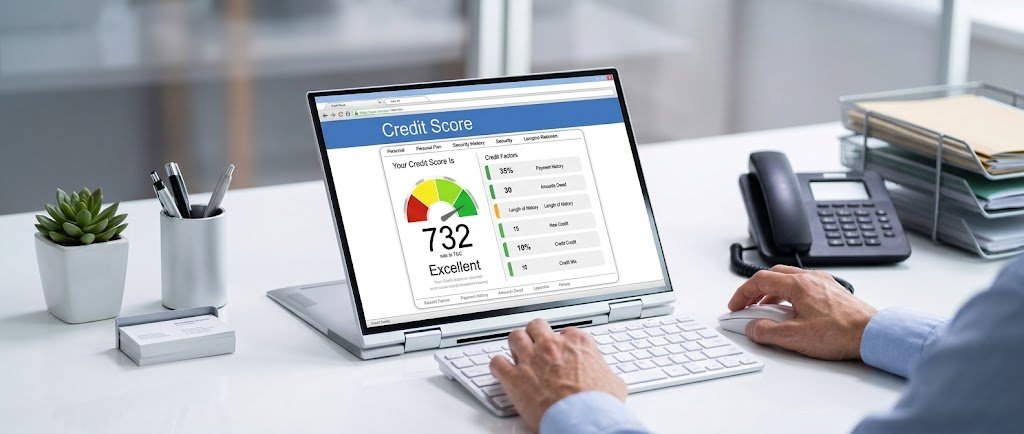
To see where you fit, here are the standard FICO categories on the 300 to 850 scale:
- Poor: below 580
- Fair: 580 to 669
- Good: 670 to 739
- Very good: 740 to 799
- Exceptional: 800 to 850
You also have more than one score. VantageScore uses different category cutoffs, and a lender may pull a different version than the one in your banking app. Our breakdown of FICO vs VantageScore differences explains why two numbers for the same person can disagree. In practice, your personal loan credit score is the one the lender actually pulls, and it may not match the free number you checked last week.
Personal Loan Credit Score Requirements by Lender Type
Different lenders accept different levels of risk, so the minimums vary. The table below shows commonly reported ranges. Treat it as a starting point and confirm the current requirements on each lender’s own site.
| Lender type | Commonly reported minimum | What to expect |
|---|---|---|
| Banks and large national lenders | Around 640 to 680, sometimes higher | Stricter standards, strong rates for good credit |
| Credit unions | Varies by institution | Membership required, rate caps on many loans |
| Online lenders | Often 580 to 640 | Fast decisions, wider approval range |
| Flexible-credit lenders | Low or no published minimum | Smaller amounts, higher fees and APRs |
Banks: Stricter Credit Score Cutoffs for Personal Loans
Traditional banks and big national lenders usually sit at the stricter end. Published minimums around 660 show up often, and some review sites describe 660 as one of the higher bars in the market. The trade-off is that borrowers who clear it may see some of the lowest rates available.
If you already have an account at a bank, ask what they offer existing customers. The NCUA’s consumer site notes that people with a bank or credit union account, especially with direct deposit or a stable credit history, can often find less expensive options there.
Credit Unions: Member-Based Lending
Credit unions are member-owned, and federal credit unions follow NCUA rules. Under those rules, loans that aren’t official payday alternatives can carry a maximum APR of 18%, though the lender may apply stricter eligibility requirements to them. Federal credit unions can also offer small-dollar Payday Alternative Loans of $200 to $1,000 with terms of one to six months, usually after you’ve been a member for at least a month. You can read the details in the NCUA’s guide to payday alternative loans.
Credit unions rarely publish a firm minimum score. If you’re close to the line, call and ask how they evaluate applicants.
Online Lenders and Personal Loan Credit Score Minimums
Online lenders often list minimums in the 580 to 640 range, and many show them up front. Some also weigh income, job history, or education alongside your credit. That flexibility means a fair-range personal loan credit score can still be approved, usually at a higher APR than a good-credit borrower would see. Marketplace sites let you compare several prequalified offers at once, which makes shopping easier.
Lenders for Bad or No Credit
A smaller group of lenders skips a minimum score entirely and looks at income or other factors instead. These loans can be the most expensive. Some lenders charge origination fees of up to 12% of the loan amount, and APRs often sit near the top of the usual range. Our guide to bad credit personal loans covers the trade-offs, and our explainer on loan origination fees shows how an upfront fee shrinks the cash you actually receive.
Even so, a higher-cost personal loan is typically far cheaper than a payday loan. The NCUA’s example of a $15 fee on a $100 two-week loan works out to an APR of about 391%.
How Your Credit Score Affects Personal Loan Costs
Approval is only half the story. Personal loan APRs generally range from about 6% to 36%, and your score is a major reason you land where you do. For more rate context, see our look at personal loan interest rates in 2026.
Here’s a hypothetical example. Rates are illustrative, not quotes from any lender. Say two borrowers each take a $10,000 loan over 36 months:
- Borrower A gets a 9% APR, for a payment of roughly $318 a month and about $1,450 in total interest.
- Borrower B gets a 24% APR, for a payment of roughly $392 a month and about $4,120 in total interest.
That’s a gap of more than $2,600 on the same loan amount, which is why even a modest change in your personal loan credit score can matter. You can test your own numbers with our personal loan EMI calculator.
What Else Lenders Look At
Your personal loan credit score gets you in the door, but it rarely works alone. According to the CFPB, lenders typically weigh your credit scores and reports, income, debts, the amount and length of the loan, interest rates allowed under state law, and sometimes your bank account transactions. You can read more in the CFPB’s overview of personal installment loans.
A few factors deserve special attention:
- Debt-to-income ratio (DTI): Many lenders want your DTI, including the new payment, to stay somewhere around 35% to 50%.
- Loan size: Larger loans often call for a stronger overall profile.
- Recent inquiries: Several applications in a short window can signal financial stress.
Two applicants with the same score can get different answers because of these factors.
How to Prequalify Without Hurting Your Score
Before you apply anywhere, find out where you stand. Check your score and review your credit reports for mistakes. Then use prequalification tools, which typically rely on a soft credit check that doesn’t affect your score. A formal application usually triggers a hard inquiry, which can lower your score slightly.
If the difference between those terms is fuzzy, our comparison of pre-approval vs pre-qualification walks through it. Collect a few prequalified offers, compare the APR and total cost rather than just the monthly payment, and only then submit a full application.
Improve Your Personal Loan Credit Score Before Applying
If the loan isn’t urgent, a few months of focused effort can change which lenders and rates are open to you. Raising your personal loan credit score takes time, but these habits are the usual starting points:
- Pay every bill on time. The CFPB notes that missed payments can significantly affect your credit scores and reports.
- Lower your card balances. Paying down revolving debt often helps your score.
- Check your reports for errors. Dispute anything that looks wrong.
- Pause new applications. Each hard inquiry adds a small, temporary dent.
- Build history if you’re new. Our guide on how to build credit from scratch is a good place to start.
Common Mistakes When Applying With a Lower Score
- Applying everywhere at once. Multiple hard inquiries can add up. Prequalify first.
- Looking only at the monthly payment. A long term can make a pricey loan look affordable.
- Overlooking fees. An origination fee reduces the money you receive but not the amount you owe.
- Ignoring the APR ceiling. The NCUA notes that most financial experts agree an affordable loan shouldn’t exceed a 36% APR.
- Assuming prequalification means approval. It’s an estimate, not a final decision.
- Giving up after one denial. If you’re turned down, read our guide on what to do when a loan application is rejected before you reapply.
Practical Takeaways
- Most lenders that publish a minimum credit score for a personal loan land between 580 and 660, but each sets its own rule.
- Banks tend to be stricter, online lenders more flexible, and credit unions vary by institution.
- Your personal loan credit score affects both your approval odds and the total cost of the loan.
- Income, DTI, and loan size matter too, so a fair score isn’t automatically a denial.
- Use soft-check prequalification to compare offers before a hard inquiry.
- Fees and APR matter more than the headline monthly payment.
- If you can wait, a few months of on-time payments and lower balances may widen your options.
Final Thoughts
There’s no magic number that guarantees approval, but there is a useful range. Aim for 670 or higher if you want the broadest choice of lenders, and know that options exist in the fair range if you’re willing to compare carefully. The best move is to learn your personal loan credit score, check it against each lender’s stated minimum, and shop with soft checks before committing.
This article is for educational purposes only and isn’t personalized financial advice. Lender requirements, rates, and fees change often, so confirm current terms directly with any lender and consider speaking with a qualified professional about your situation.