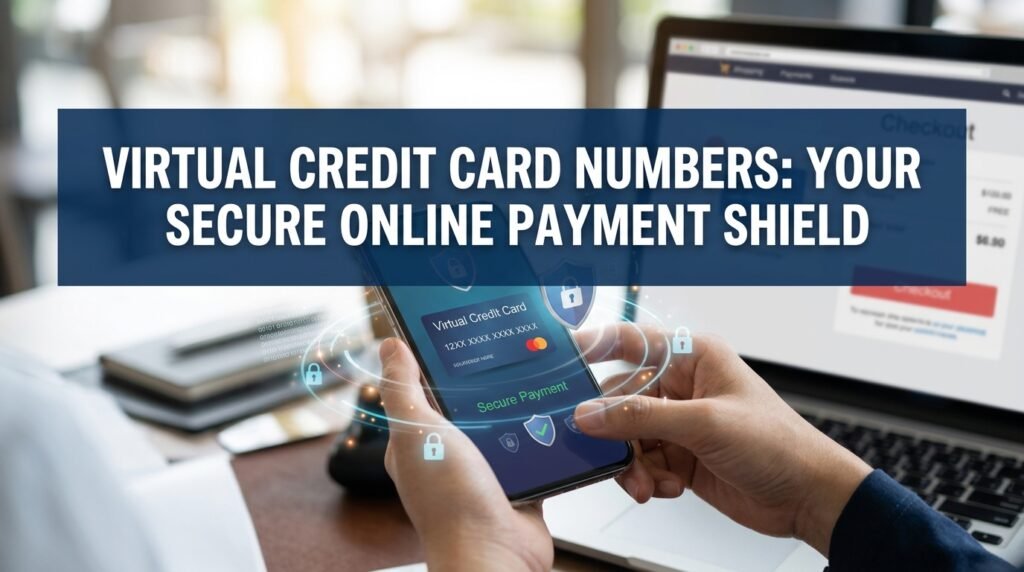
Online shopping has become a normal part of everyday life, but using a credit card online can expose your card details to security risks. If your card number is stolen through a data breach, phishing attack, or compromised website, someone could potentially attempt unauthorized transactions.
Virtual credit card numbers offer one way to reduce this risk.
A virtual credit card number is a digital card number that can be used for online purchases without sharing your physical credit card number. Depending on the card issuer or financial service, the virtual number may be linked to your existing credit card account and can sometimes be locked, replaced, or limited after use.
Understanding how virtual credit card numbers work can help consumers make more informed decisions about protecting their payment information online.
What Is a Virtual Credit Card Number?
A virtual credit card number is a temporary or alternative card number designed primarily for online or other card-not-present transactions.
It can look similar to a normal credit card number because it may include a card number, expiration date, and security code. However, the number may be different from the number printed on your physical credit card.
For example, suppose your physical credit card number is stored in your wallet. Instead of entering that number when buying something online, your card issuer may allow you to generate a virtual number.
The online merchant receives the virtual number rather than your primary card number.
Depending on the service, that virtual number may remain usable for multiple purchases or may be intended for a single transaction.
How Do Virtual Credit Card Numbers Work?
The exact process depends on the credit card issuer or financial service.
Generally, you first access your account through an online banking platform, mobile app, or dedicated security feature. If virtual card numbers are supported, you may be able to generate an alternative card number.
You can then use that number for an online purchase.
The transaction can still be connected to your underlying credit card account. This means you generally do not have to maintain a completely separate credit account just to use the virtual number.
Some services provide additional controls, such as:
- Temporary card numbers
- Merchant-specific numbers
- Spending limits
- Expiration controls
- Ability to lock or delete a virtual number
- Automatic replacement of compromised numbers
These features vary significantly between issuers, so consumers should review the specific terms before relying on a virtual card number for security.
Why Use a Virtual Credit Card Number?
The biggest potential advantage is reducing the exposure of your primary card number.
If you enter your physical card number on multiple websites, each merchant becomes another place where your information is stored or processed.
A virtual number can create an additional layer between the merchant and your primary account information.
For example, imagine you purchase something from an unfamiliar online retailer. Instead of providing your main card number, you use a virtual number.
If that virtual number is later compromised, you may be able to disable it without replacing the physical card connected to your account, depending on the issuer’s system.
This can make managing certain online payment risks easier.
Do Virtual Credit Cards Prevent Fraud?
No payment method can guarantee complete protection against fraud.
A virtual credit card number can reduce exposure of your primary card information, but it does not eliminate every type of financial risk.
For example, criminals may still attempt to obtain your login credentials through phishing. They could also gain access to your banking account if your password or authentication method is compromised.
A virtual number also does not prevent a legitimate merchant from charging you according to the terms of a purchase.
Consumers should therefore view virtual card numbers as a security feature rather than a complete fraud-prevention solution.
Virtual Credit Cards vs. Physical Credit Cards
The main difference is the card number being provided to the merchant.
With a physical credit card, you normally use the card number associated with the physical card.
With a virtual credit card number, you may use a separate digital number that is connected to your underlying account.
A virtual number can be particularly useful for online purchases because you do not have to expose your primary card number.
However, physical cards remain useful for situations where merchants require a physical card, such as some in-person purchases, identity verification, or certain hotel and rental car transactions.
The best option depends on how and where you are making the purchase.
Are Virtual Credit Card Numbers Free?
There is no universal answer.
Some credit card issuers may provide virtual card numbers as part of their existing services without charging a separate fee.
Other financial services may have different pricing structures or eligibility requirements.
Before using a virtual card service, check whether there are:
- Monthly fees
- Transaction fees
- Foreign transaction fees
- Spending restrictions
- Merchant restrictions
- Number-generation limits
- Special terms for recurring payments
If you are comparing credit cards, security features should be considered alongside APR, fees, rewards, and other benefits. Our guide on how to choose the right credit card for your spending habits explains several factors consumers should consider when comparing cards.
Can You Use Virtual Card Numbers for Subscriptions?
Sometimes.
Some virtual card systems are designed to work with recurring payments, while others may create temporary numbers that are not suitable for long-term subscriptions.
This distinction is important.
Suppose you use a virtual number to sign up for a streaming service. If the number expires or is deleted, the merchant may no longer be able to process future payments.
That could result in a declined payment or interruption of service.
Before using a virtual card number for a subscription, check whether the number is intended for recurring transactions.
What Happens If a Virtual Card Number Is Stolen?
One of the potential advantages of a virtual card number is that the compromised number may be easier to replace or disable.
For example, if a merchant database is breached and your virtual card number appears in the stolen information, you may be able to deactivate that number while keeping your primary physical card active.
However, you should still monitor your account for unauthorized transactions.
If you notice suspicious activity, contact your card issuer promptly and follow its fraud-reporting procedures.
Understanding how different transactions can be handled is also useful. For example, credit card payments can sometimes involve multiple balances with different interest rates. Our guide to how credit card payment allocation works explains how payments may be applied to different balances.
What Are the Limitations of Virtual Credit Cards?

Virtual card numbers are useful, but they are not perfect for every situation.
One limitation is merchant compatibility.
Some websites or merchants may reject virtual card numbers because of how they verify payment information.
Another issue is recurring billing.
A temporary virtual number may not work properly when a merchant needs to charge the same card repeatedly.
Virtual numbers can also make refunds or account verification more complicated in certain situations, depending on the issuer.
For these reasons, consumers should understand how their particular virtual card system works before using it for important recurring purchases.
Virtual Credit Cards and Credit Card Security
Virtual card numbers are only one part of good credit card security.
You should also use strong and unique passwords for financial accounts and avoid entering payment information on suspicious websites.
Keep your devices updated and enable multi-factor authentication when available.
Regularly reviewing your credit card transactions is also important.
Look for unfamiliar purchases, unexpected fees, duplicate charges, or other transactions you do not recognize.
If you use a credit card for cash access, remember that cash advances can have different costs from ordinary purchases. Our guide on what a credit card cash advance is and how it works explains why these transactions can carry additional fees and interest costs.
Are Virtual Credit Card Numbers Worth Using?
For consumers who frequently shop online, a virtual credit card number can provide an additional layer of protection by reducing how often the primary card number is shared with merchants.
The biggest potential benefit is flexibility. If a virtual number is compromised, it may be possible to disable or replace that number without replacing the physical card, depending on the issuer.
However, virtual card numbers do not eliminate fraud risk. You still need to monitor transactions, protect your account credentials, and understand the terms of your credit card.
Before using a virtual card number, check whether your issuer supports the feature and learn how it handles recurring payments, refunds, expiration, and disputed transactions.
Final Thoughts
Virtual credit card numbers can make online payments more secure by allowing consumers to use an alternative card number instead of exposing their primary credit card information.
They can be especially useful for online shopping, unfamiliar merchants, and situations where consumers want more control over the payment credentials they share.
However, they should be viewed as one security tool rather than a complete solution.
Good account security, transaction monitoring, strong passwords, multi-factor authentication, and careful online shopping habits remain important.
If your credit card issuer offers virtual card numbers, understanding how the feature works can help you decide when it makes sense to use one and when a regular card number may be more appropriate.