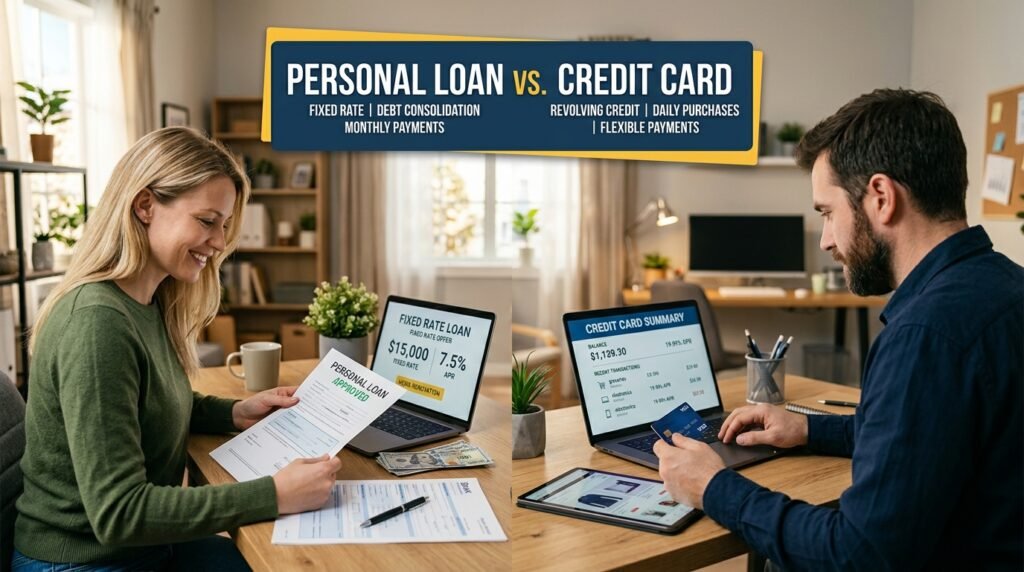
Taking out a personal loan can affect your credit score in several ways. For some borrowers, a personal loan may create a temporary drop in their score when they apply, while consistent on-time payments may support their credit profile over time. On the other hand, missed payments, taking on unaffordable debt, or applying for too much new credit can create problems.
Understanding how personal loans affect your credit score before borrowing can help you make better financial decisions. Whether you are considering a loan for a major expense, debt consolidation, or another financial need, knowing the potential effects can help you prepare.
Does Applying for a Personal Loan Affect Your Credit Score?
Yes, applying for a personal loan can affect your credit score.
When you submit a formal loan application, a lender will usually review your credit report. This can result in a hard inquiry, also called a hard credit pull. Hard inquiries can have a small and temporary effect on your credit score.
However, a single hard inquiry generally has a relatively small impact. The effect is different from the potential damage caused by repeatedly missing loan payments.
Some lenders may offer prequalification before you submit a full application. Depending on the lender and process, prequalification may use a soft inquiry, which does not affect your credit score. Always check the lender’s terms to understand whether the process involves a hard or soft inquiry.
How a Personal Loan Can Help Your Credit Score

A personal loan is not automatically good or bad for your credit. Much depends on how you manage the account after borrowing.
On-Time Payments Can Build Positive Credit History
Payment history is an important part of credit scoring. When a lender reports your personal loan to the credit bureaus, making your scheduled payments on time can add positive information to your credit history.
For example, suppose you take out a personal loan with a fixed monthly payment. If you consistently make each payment by the due date, the account can demonstrate responsible credit management.
This is one reason it is important to choose a monthly payment that comfortably fits your budget before accepting a loan.
A Personal Loan Can Diversify Your Credit Mix
Credit scoring models can consider the different types of credit accounts in your credit history. Personal loans are generally installment accounts, while credit cards are revolving accounts.
Having experience managing different types of credit may contribute to your credit profile. However, you should not take out a loan simply to add another type of credit to your report. Borrowing should have a genuine financial purpose and fit your budget.
If you are comparing borrowing options, you can also read our guide on personal loans vs. credit cards to understand how the two options differ.
How a Personal Loan Can Hurt Your Credit Score
Although responsible borrowing can support your credit profile, a personal loan can also create negative effects.
Hard Inquiry From the Application
The first potential impact happens when you apply. A hard inquiry may cause a small temporary decline in your credit score. The CFPB notes that hard inquiries can affect scores because scoring models consider how recently and how frequently you have applied for credit.
This does not mean you should avoid comparing loan offers. Credit scoring models generally account for rate shopping for certain types of installment loans when applications happen within a relatively short period.
Missed or Late Payments
Missing payments can be much more serious than the temporary effect of a hard inquiry.
If you fail to make your personal loan payments as agreed, the negative payment information may be reported to credit reporting companies. Payment history is one of the most important factors used in credit scoring, so late payments can have a significant effect.
Before taking out a loan, calculate whether you can comfortably afford the monthly payment along with your rent or mortgage, utilities, insurance, food, and other debts.
Taking on Too Much Debt
A new personal loan increases your outstanding debt. If the loan creates a payment that is difficult to manage, it could put pressure on your overall finances.
For example, someone who already has several credit cards, an auto loan, and other monthly obligations may find that adding another loan makes their budget harder to manage.
The problem is not simply having a personal loan. The bigger concern is taking on debt that you cannot reasonably repay.
Can Debt Consolidation Improve Your Credit?
Some borrowers use personal loans to consolidate higher-interest credit card debt. This can change their credit profile because paying down credit card balances can reduce revolving credit utilization.
For example, imagine someone has several credit card balances and uses a personal loan to pay them off. If the credit cards are paid down and the borrower continues making all payments on time, their credit profile may improve over time.
However, debt consolidation does not automatically improve credit. If the borrower pays off the cards but then builds new balances while also making personal loan payments, their overall debt situation could become more difficult.
Before using a personal loan for consolidation, compare the interest rate, fees, repayment period, and total cost of borrowing.
How Long Does a Personal Loan Affect Your Credit?
The effect of a personal loan can change over time.
A hard inquiry may cause a temporary decrease in your score, while the loan itself can affect factors such as new credit, outstanding debt, payment history, credit mix, and the age of your accounts.
As you make consistent payments, the account can become part of your credit history. Positive payment information may continue to appear on your credit report after the loan is paid off, depending on the reporting practices and applicable credit-reporting rules.
The exact effect will vary because credit scores are calculated using multiple factors and different scoring models may evaluate information differently.
How to Protect Your Credit When Taking a Personal Loan
If you decide that a personal loan is appropriate for your situation, several habits can help you manage the account responsibly.
Check Your Budget First
Calculate your expected monthly payment before accepting the loan. Make sure it fits comfortably within your regular income.
Compare Loan Offers
Look at APRs, fees, repayment terms, and monthly payments instead of focusing only on the advertised interest rate.
Avoid Unnecessary Applications
Research lenders and understand their application process before submitting multiple formal applications.
Set Up Automatic Payments
Autopay can help reduce the risk of accidentally missing a payment. You should still monitor your account to make sure sufficient funds are available.
Monitor Your Credit Reports
Regularly reviewing your credit reports can help you identify incorrect information or unexpected account activity.
For additional guidance on managing borrowing and personal finances, explore the CoreFoxes personal finance resources.
Personal Loan Credit Score: What Should You Remember?
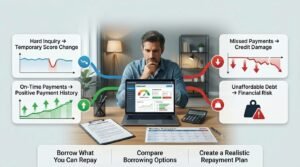
A personal loan can affect your credit score both positively and negatively. The initial application may result in a hard inquiry and a temporary score change. After the loan is opened, consistent on-time payments may help establish a positive payment history.
However, missed payments and unaffordable debt can create more serious problems. The key is to borrow only what you can reasonably repay and manage the loan responsibly throughout its repayment period.
If you are considering a personal loan, understanding your credit, comparing borrowing options, and creating a realistic repayment plan can help you make a more informed decision.
Final Thoughts
Understanding how personal loans affect your credit score can help you avoid surprises after borrowing. A new loan may cause a temporary impact when you apply, but responsible repayment can contribute to a positive credit history.
Before applying, compare your options, review the full cost of the loan, and make sure the monthly payment fits your budget. Most importantly, make every effort to pay on time and avoid taking on more debt than you can comfortably manage.
Frequently Asked Questions
Does a personal loan lower your credit score?
A personal loan application may cause a small, temporary decrease because of a hard inquiry. Opening the loan can also affect other credit factors. However, responsible repayment may support your credit profile over time.
Can paying a personal loan on time improve credit?
Yes. If the lender reports the account to the credit bureaus, consistent on-time payments can contribute positive payment history to your credit report.
Does paying off a personal loan hurt your credit?
Paying off a personal loan is not inherently negative. Your credit score can change after an account is closed because the information in your credit profile changes, but a successfully paid loan can remain part of your credit history depending on reporting practices.
How many points can a personal loan lower your credit score?
There is no single number that applies to every borrower. The effect of a hard inquiry is generally small, but the impact can vary based on your overall credit profile and scoring model.
Is a personal loan better than a credit card for your credit score?
Neither option is automatically better for everyone. Both can affect your credit depending on how you use and repay them. Personal loans are generally installment credit, while credit cards are revolving credit. Your payment history and overall credit management are important considerations.