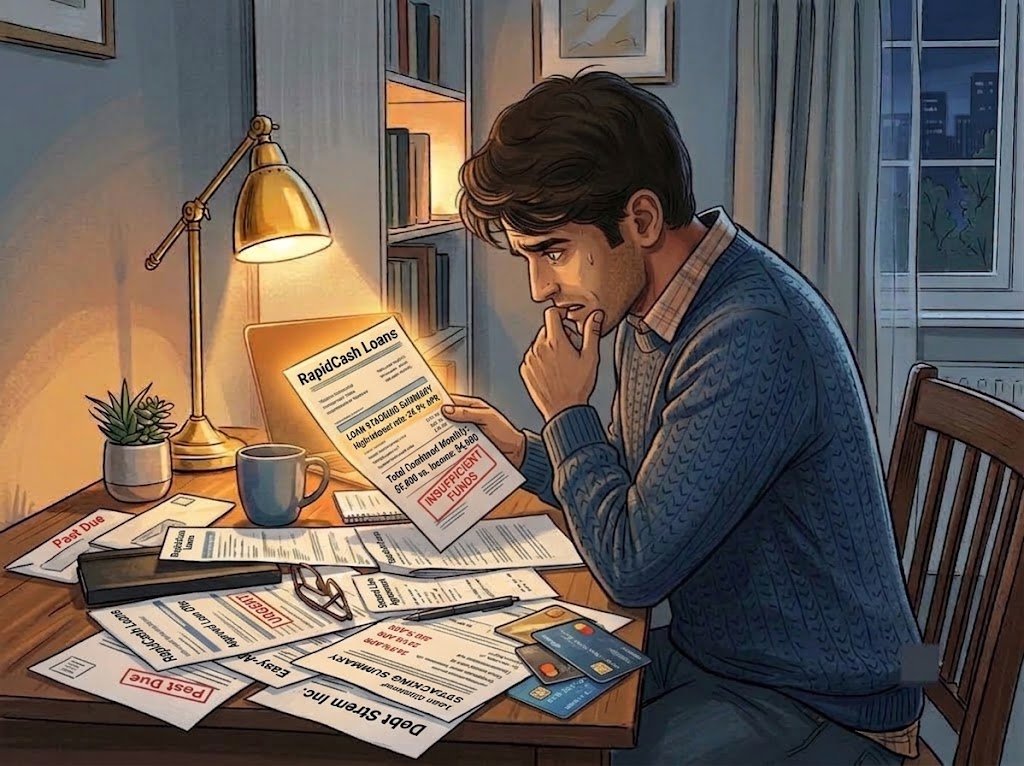
Getting approved for a personal loan feels like proof you can handle the payment. So when a second offer arrives a few weeks later — maybe even from a different lender entirely — it can feel just as safe to accept. This pattern, known as loan stacking, is more common than most borrowers realize, and it carries risks that aren’t obvious until the payments start overlapping.
Here’s what loan stacking actually is, why it happens, and how to avoid getting caught in it.
What Is Loan Stacking?
Loan stacking happens when a borrower takes out multiple personal loans from different lenders within a short period of time — often within days or weeks of each other. Because credit bureaus don’t always update in real time, and because online lenders sometimes approve loans quickly without waiting for the most current data, it’s possible to qualify for several loans before any single lender sees the full picture of how much you’ve already borrowed.
The term is most closely associated with online and marketplace lending, where fast approvals and same-day funding make it easier to apply for — and receive — multiple loans in a very short window.
Why Loan Stacking Happens
Fast Online Approvals Move Faster Than Credit Reporting
Many online lenders pull a credit report at the moment of application, but new loans don’t always appear on your credit file immediately after funding. If a second application happens before the first loan is reported, the second lender may approve you without knowing about the first loan at all.
Borrowers Don’t Always Intend to Stack Loans
Loan stacking isn’t always a deliberate strategy. Sometimes it happens because a borrower applies to several lenders while comparison shopping, gets approved by more than one, and accepts multiple offers rather than realizing only one was needed — or takes a second loan later to cover a shortfall the first loan didn’t fully solve.
Marketing and Pre-Approved Offers Encourage It
Borrowers who’ve recently taken out one loan often receive additional loan offers shortly afterward, sometimes from lenders using shared marketing data. These offers can look appealing, especially if the first loan didn’t fully cover the original need.
Why Loan Stacking Is Risky
Your Debt-to-Income Ratio Gets Distorted
Each lender calculates debt-to-income ratio based on what they can see at the time of approval. Stack enough loans quickly enough, and your true DTI — the number that actually reflects your ability to repay — can end up significantly higher than any single lender realized when they approved you.
Multiple Payments Can Quickly Exceed Your Budget
A single loan payment might be manageable. Two or three, approved independently without accounting for each other, can add up to a combined monthly obligation that strains — or exceeds — what your income can actually support.
It Increases the Risk of Default
Borrowers who stack loans are statistically more likely to fall behind on at least one of them, simply because the combined payment burden wasn’t planned around as a whole. If that happens, it’s worth understanding what actually happens if you default on a personal loan — the credit damage and collections risk apply separately to each loan involved, not just the total amount owed.
It Can Trigger a Cycle of Borrowing to Cover Borrowing
In some cases, a new loan is taken out specifically to make payments on an existing one — a pattern that can spiral quickly, since each additional loan adds its own payment, fees, and interest on top of the problem it was meant to solve.
Debt Consolidation Can Become Harder, Not Easier
Ironically, stacked loans can make it more difficult to qualify for a debt consolidation loan later, since a high combined debt load and a recent flurry of new accounts can work against approval odds — the exact tool that might otherwise simplify the situation becomes harder to access once stacking has already happened.
Warning Signs You May Be at Risk of Loan Stacking
- You’re actively comparing offers from multiple lenders at the same time and considering accepting more than one
- A recent loan didn’t fully cover what you needed, and you’re considering a second loan to close the gap
- You’ve received several loan offers in a short period after your credit was recently checked
- You’re not entirely sure what your combined monthly payment across all loans would be if you accepted more than one
How to Avoid Loan Stacking
Know Your Full Debt Picture Before Applying
Before accepting any new loan, calculate your current total monthly debt obligations, including any loan you’re actively considering. This guide on figuring out how much loan you can actually afford offers a useful framework for stress-testing a new payment against your real budget — the same math applies whether it’s your first loan or your third.
Apply to One Lender at a Time
Rather than applying to several lenders simultaneously “to see what happens,” apply to one, review the offer fully, and decide before moving on to another. This avoids the situation where multiple approvals arrive before you’ve had a chance to compare them properly.
Be Honest About Why a Second Loan Feels Necessary
If a recent loan didn’t solve the underlying financial gap, a second loan often won’t either — it just adds another payment on top of the same problem. It’s worth identifying the actual cause of the shortfall before borrowing again.
Check Your Credit Report Directly
Since credit reporting delays are part of what makes loan stacking possible, checking your own credit report before applying for a new loan — rather than relying on what a lender’s initial pull shows — gives you a more complete and current picture of your existing obligations.
What Lenders Are Doing to Detect Loan Stacking
Many online lenders now use additional verification methods beyond a standard credit pull — including real-time income verification, bank account analysis, and data-sharing networks designed specifically to catch loan stacking before it happens. This is part of why some borrowers find it harder to stack loans today than a few years ago, though the practice hasn’t disappeared, particularly among lenders that don’t participate in these shared data networks.
The Consumer Financial Protection Bureau has noted that overlapping debt obligations — including multiple loans taken out in a short window — are a recognized risk factor for default, reinforcing why lenders and regulators alike pay close attention to this pattern.
Final Thoughts
Loan stacking rarely starts as a deliberate scheme — it’s usually the result of comparison shopping that turns into accepting more than one offer, or a second loan taken to patch a gap the first one didn’t close. The risk isn’t any single loan; it’s the combined weight of payments that no individual lender fully accounted for when they approved you.
Before accepting a new loan, especially if you’ve borrowed recently, it’s worth calculating your true combined monthly obligation first — not just whether you were approved, but whether the full picture, added together, is something your budget can actually support.