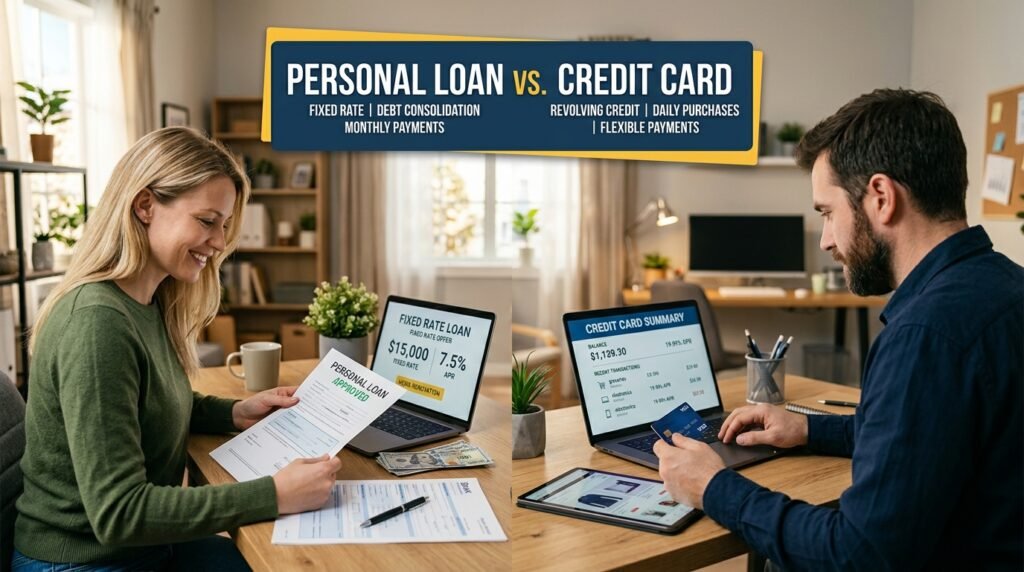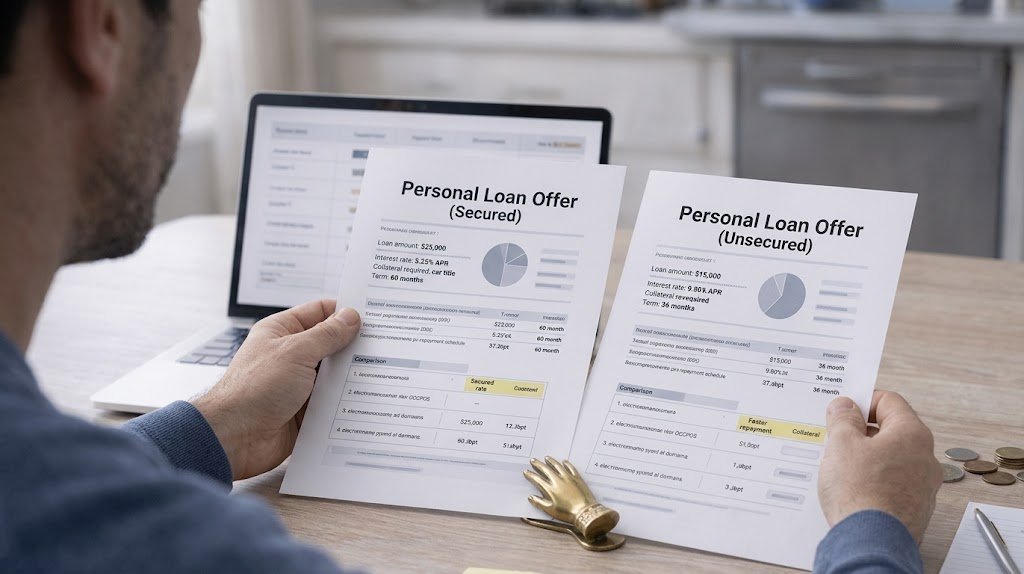
Applying for a personal loan, you’ll typically be offered two structural paths: put up an asset as collateral, or borrow based on your creditworthiness alone. The secured vs unsecured loans decision affects far more than just paperwork — it changes your interest rate, your risk if things go wrong, and in some cases, how much you can borrow in the first place.
Here’s exactly how secured vs unsecured loans differ, the real cost trade-offs involved, and which one actually saves more money depending on your situation.
Secured vs Unsecured Loans: What Is a Secured Loan?
A secured loan is backed by collateral — an asset the lender can seize and sell if you stop making payments. Common forms of collateral include a vehicle, a savings account, a certificate of deposit, or home equity, depending on the loan type.
Because the lender has recourse beyond just your promise to repay, secured loans are generally considered lower risk from the lender’s perspective, which typically translates into more favorable terms for the borrower — assuming payments are made on time.
Secured vs Unsecured Loans: What Is an Unsecured Loan?
An unsecured loan is backed only by your creditworthiness and promise to repay — no collateral is pledged, and the lender has no specific asset to seize if you default. Most standard personal loans, along with credit cards, fall into this category.
Because the lender is taking on more risk with nothing to recover if you stop paying, unsecured loans are typically approved based more heavily on credit score, income, and debt-to-income ratio, and usually come with higher interest rates to offset that added risk.
Secured vs Unsecured Loans: How the Interest Rates Compare
This is usually where the real savings question gets decided.
- Secured loans tend to carry lower interest rates, since the collateral reduces the lender’s risk. The exact discount varies by lender, loan type, and the value of the collateral offered.
- Unsecured loans tend to carry higher interest rates across nearly every credit tier, precisely because the lender has no asset to fall back on if the loan goes unpaid.
For a large loan amount or a long repayment term, this rate gap in the secured vs unsecured loans comparison can add up to a meaningful difference in total interest paid — sometimes thousands of dollars over the life of the loan.
A Simplified Example
Say you’re borrowing $15,000 over 5 years. A secured loan backed by a savings account might come with an interest rate several points lower than an unsecured loan for the same amount and term, given identical credit. Over 5 years, that rate gap alone could mean a meaningful difference in total interest paid — real money that stays in your pocket if you’re comfortable putting up the collateral.
The Real Risk Behind Secured vs Unsecured Loans
Lower cost doesn’t come without a trade-off, and this is the part often glossed over in rate comparisons alone.
Secured Loans Put Your Asset on the Line
If you fall behind on a secured loan, the lender can repossess or seize the collateral — your car, your savings, or in some cases your home — often through a faster and less complicated process than pursuing an unsecured debt through the courts. This is the central risk of a secured loan: the lower rate comes with the possibility of losing a specific asset, not just damaging your credit.
Unsecured Loans Put Your Credit and Finances on the Line
Default on an unsecured loan, and the lender’s recourse shifts to collections, credit reporting, and potentially a lawsuit and judgment — but there’s no specific asset automatically at risk. It’s worth understanding what actually happens if you default on a personal loan, since the consequences, while different from asset seizure, can still be severe and long-lasting on your credit report.
Secured vs Unsecured Loans: Which Saves More Money?
The honest answer depends on your risk tolerance and your ability to repay reliably, not just the interest rate alone:
- If you can comfortably make every payment, a secured loan almost always saves more money in pure interest cost, since the lower rate directly reduces what you pay over time, and the collateral risk never materializes.
- If your income or repayment ability is less certain, an unsecured loan may be the financially safer choice, even at a higher rate, because a missed payment doesn’t put a specific asset at immediate risk.
- If you don’t have qualifying collateral, the comparison is moot — an unsecured loan becomes the only realistic option, regardless of the rate difference.
Other Factors Beyond Interest Rate
Approval Odds
Secured loans can sometimes be easier to qualify for, or allow a larger loan amount, than an unsecured loan would for the same borrower — since the collateral itself reduces the lender’s exposure, some lenders extend more flexible approval criteria.
Loan Amount Limits
Unsecured loan amounts are typically capped based on income and creditworthiness alone, while secured loan amounts can sometimes be tied more directly to the value of the collateral offered, occasionally allowing for a larger loan than an unsecured option would.
Fees to Watch For Either Way
Regardless of which type you choose, check for an origination fee and confirm whether a prepayment penalty applies — these can meaningfully affect the true cost comparison between a secured and unsecured offer, beyond just the advertised interest rate.
Fixed or Variable Rate
Both secured and unsecured loans can come with either a fixed or variable rate, and this matters just as much as the secured-vs-unsecured decision itself. Understanding the difference between fixed and variable interest rates helps you evaluate the full picture, not just whether collateral is involved.
Questions to Ask Before Choosing Between Secured and Unsecured Loans
Can I Truly Afford to Lose the Collateral If Something Goes Wrong?
This is the single most important question for a secured loan. If losing the asset would be financially devastating, the lower rate may not be worth the risk, regardless of how much it would save in a best-case scenario.
Have I Calculated What I Can Actually Afford to Repay?
Whichever type you choose, this guide on figuring out how much loan you can actually afford applies the same underlying math — running your real numbers before signing prevents committing to a payment, secured or not, that strains your budget.
Am I Already Juggling Multiple Loans?
If you’re considering a new loan while already repaying others, it’s worth checking whether you’re at risk of loan stacking — taking on a new secured or unsecured loan without fully accounting for your combined monthly obligations across all existing debt.
Would Consolidating Existing Debt Make More Sense Than a New Loan?
If the goal is simplifying multiple debts rather than financing something new, it’s worth comparing this decision against a debt consolidation loan, which is typically unsecured but structured specifically to combine existing balances into one predictable payment.
What Federal Guidance Says
The Consumer Financial Protection Bureau confirms that secured loans generally offer lower interest rates because collateral reduces the lender’s risk, while unsecured loans rely solely on the borrower’s creditworthiness — the exact trade-off that drives the entire secured vs unsecured loans decision.
Final Thoughts
Secured vs unsecured loans isn’t simply a question of which one is cheaper on paper — it’s a question of how much risk you’re willing to accept in exchange for a lower rate. A secured loan will very often save more money in pure interest cost, but that savings comes with a specific asset on the line if repayment goes wrong. An unsecured loan costs more, but keeps that particular risk off the table entirely.
Before choosing either, weigh the rate savings against what you’d actually lose if your financial situation changed unexpectedly — the cheaper option on paper isn’t always the smarter one for your specific circumstances.