Credit Card Skimming and Cloning: How Thieves Steal Your Card Without Touching It
You didn’t lose your wallet. Nobody bumped into you on the street. Yet a few days later, your statement shows charges in a city you’ve never visited. That’s the unsettling part of credit card skimming: the thief never has to touch your card, or even meet you, to copy the data that makes it work.
This guide explains how skimming and cloning work, where the risk is highest, and how to spot a tampered machine. It also covers what to do if you think your card data was copied.
What Credit Card Skimming Actually Is
Skimming happens when criminals install devices on or inside ATMs, point-of-sale terminals, or fuel pumps that capture card data and record PIN entries. The FBI estimates that this type of fraud costs financial institutions and consumers more than $1 billion each year. You can read the agency’s full overview on the FBI’s skimming page.
Skimming and cloning are two different steps. Credit card skimming is the theft: a hidden device quietly reads your card as you use a legitimate machine. Cloning is what happens next, when the thief writes that stolen data onto a blank card so it behaves like yours.
The result is a counterfeit card made from information you handed over during a perfectly normal transaction.
How Credit Card Skimming Devices Copy Your Card
A traditional magnetic stripe stores the same static data every time you swipe or insert it. A skimmer is simply an extra reader placed where your card goes. It copies that data while the real machine processes your payment as usual. You see nothing wrong, and the transaction goes through.
Some devices hold the data until the thief returns to collect it, while others send it wirelessly. Many are paired with a tiny camera or a fake keypad overlay that records your PIN. Together, the card data and the PIN give a thief what they need to make a working clone.
At ATMs. A skimmer often looks like part of the machine: a bulky or slightly misaligned card slot sitting over the real one. These devices are often installed for only a few hours, sometimes attached with nothing more than double-sided tape. The criminals then remove them, download the stolen data, and encode it onto blank cards used to withdraw cash at other ATMs.
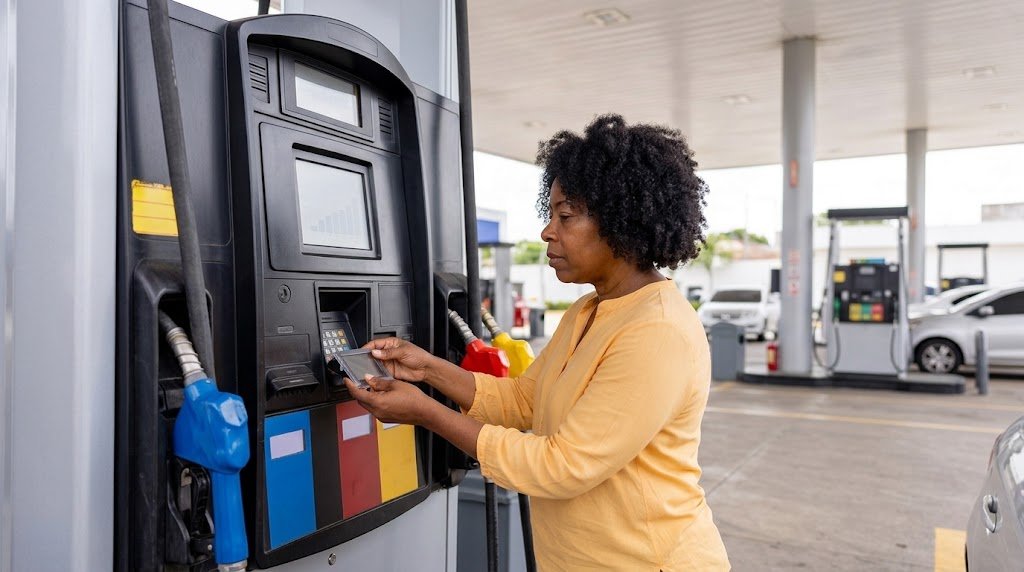
At gas pumps. Pumps are a favorite target because they are unattended and often far from the store window. A thief can open a pump panel or add a device inside the card reader, where it is hard to see. The FBI’s advice is practical: choose a pump closer to the store and in direct view of the attendant, consider paying inside, and tap your card rather than swiping or inserting it when the terminal allows.
At shops and checkout terminals. Tampered card readers at checkout counters are less common than pump or ATM skimmers, but they exist. The FBI warns that tourist areas are popular targets, so be extra alert there.
Skimmers, Shimmers, and Cloned Cards: Does Your Chip Protect You?
Chip cards made a real difference. Visa reported that merchants who completed the chip upgrade saw a 76% decline in counterfeit fraud dollars between December 2015 and December 2017. The reason is that a chip generates unique, one-time transaction data instead of repeating the same static information.
Still, chip cards did not end credit card skimming. Criminals adapted in two ways.
The first is the shimmer. Fraudsters use these thin devices to extract data from the chip during a transaction, then use it to create a magnetic stripe clone. That clone generally can’t work at a chip-enabled terminal, but it may work at a machine that still accepts the stripe, or when a chip reader fails and the transaction falls back to a swipe.
The second is a shift in where fraud happens. As card-present security improved, fraud activity moved increasingly toward card-not-present environments such as online purchases. Chip technology protects you at the terminal, not on a website.
Once data is copied, thieves can use a cloned card at machines that still accept a stripe, or withdraw cash if they also captured your PIN. That is why a debit card is riskier than a credit card at an exposed machine. A debit card connects directly to your bank balance, and if it is linked to other accounts, the exposure grows. The FBI recommends that people with linked accounts avoid using a debit card and use a credit card instead.
How to Spot Credit Card Skimming Before You Use a Machine
The best defense against credit card skimming is a ten-second inspection before you insert, swipe, or tap. You are looking for anything that doesn’t belong. The FBI advises being suspicious of anything loose, crooked, or damaged, as well as scratches or adhesive or tape residue.
Here’s a simple checklist:
- Wiggle the card reader. A genuine reader is part of the machine. A skimmer may shift, protrude, or feel slightly loose.
- Compare it to nearby machines. A different color, mismatched plastic, or odd seams can signal an overlay.
- Check the pump cabinet. If a security seal reads “void” or the panel looks tampered with, use another pump.
- Look for tiny cameras. Check above the keypad, near the screen, or in brochure holders.
- Shield your PIN. Cover the keypad with your other hand every time.
If anything looks off, don’t use the machine. Report it to the station attendant or the bank instead.
Safer Ways to Pay and Reduce Your Risk
You can’t inspect every terminal perfectly, so layer your defenses. These habits lower your exposure to credit card skimming without adding much effort.
Prefer tap or a digital wallet. Tap-to-pay and mobile wallets avoid the magnetic stripe entirely. Digital wallets also typically use tokenization, so your real card number isn’t shared at checkout.
Use a credit card at exposed machines. Keeping one credit card for gas and travel can limit the damage if that card is compromised. Our comparison of multiple credit cards vs. one card and your credit score explains the trade-offs of carrying more than one.
Review your statement regularly. Autopay is convenient, but it can make you stop looking. A credit card autopay setup still needs a monthly glance at your transactions. If statements feel confusing, our guide to how to read a credit card statement can help you spot odd entries.
Turn on alerts. Transaction alerts work like a smoke detector for your account. They fit neatly into an automated personal finance routine that takes little effort once it’s set up.
A Hypothetical Example
This is a made-up scenario for illustration only.
Dana pays for gas with her debit card at a pump far from the station entrance. A skimmer inside the reader copies her card data, and a hidden camera records her PIN. Two days later, someone withdraws cash from her checking account at an ATM across town, and her rent money is gone before she notices.
Now imagine Dana had used a credit card at that same pump. The stolen data would be just as stolen, but the unauthorized charges would sit on a credit line rather than draining her bank account. She would report the charges to her issuer and dispute them, and her own cash would stay untouched while the issuer investigates.
The difference isn’t that credit card skimming can’t happen to a credit card. It’s that the consequences land in a very different place.
What to Do If You Suspect Credit Card Skimming
Speed matters. If something looks wrong, work through these steps:
- Contact your card issuer right away. Use the number on the back of your card or in the issuer’s app. Ask them to freeze the card and send a replacement.
- Dispute the charges in writing. Federal law limits your responsibility for unauthorized credit card charges to $50. The FTC’s guide to disputing credit card charges explains the process. Many issuers also offer zero-liability policies that can reduce your share to $0, though those are voluntary and vary by issuer.
- Know the difference between a dispute and a refund. If you’re not sure which route applies, read our breakdown of credit card chargeback vs. refund.
- Look for other warning signs. Unfamiliar small charges, declined transactions, or alerts you didn’t trigger are all worth checking. Our list of credit card fraud signs can help you recognize them.
- Report it. The FBI asks victims to report skimming through its Internet Crime Complaint Center at ic3.gov, and you should also tell the station or bank that owns the machine.
- Update saved payment details. Swap in the new card number anywhere you have recurring payments.
If the compromised card was a debit card, the rules are different. Liability can generally be $50 if you report within two business days, up to $500 after that, and potentially unlimited if you wait beyond 60 days after the statement. That’s one more reason to act quickly and check your bank’s specific policy.
Common Mistakes
- Assuming a chip means total safety. Chips reduce counterfeit fraud, but shimmers and online fraud still exist.
- Using a debit card at a random pump or ATM. A compromised debit card puts your bank balance on the line.
- Ignoring a card that doesn’t come back. If an ATM doesn’t return your card after you finish or cancel, contact your financial institution immediately.
- Skipping the statement review. Waiting weeks to notice can narrow your options.
- Treating credit card skimming as someone else’s problem. It can happen at any card reader, in any city.
Practical Takeaways
- Inspect any card reader before using it, and skip it if something looks loose or mismatched.
- Choose pumps near the store, or pay inside.
- Use tap-to-pay or a digital wallet when available.
- Keep debit cards away from gas pumps and unfamiliar ATMs, and shield your PIN.
- Turn on transaction alerts and check your statement monthly.
- Remember that credit card skimming is easier to catch early, so report suspicious charges to your issuer right away and report skimming to ic3.gov.
Final Thoughts on Credit Card Skimming
You can’t control every card reader you meet, but you can control how much risk each transaction carries. A quick look at the machine, a preference for tap or credit, and a habit of checking your activity make credit card skimming far less likely to cost you real money. If it does happen, acting quickly gives you the strongest protection.
This article is for educational purposes only and is not personalized financial or legal advice. Policies and liability rules vary by issuer and account type, so check your card agreement or contact your provider for details.