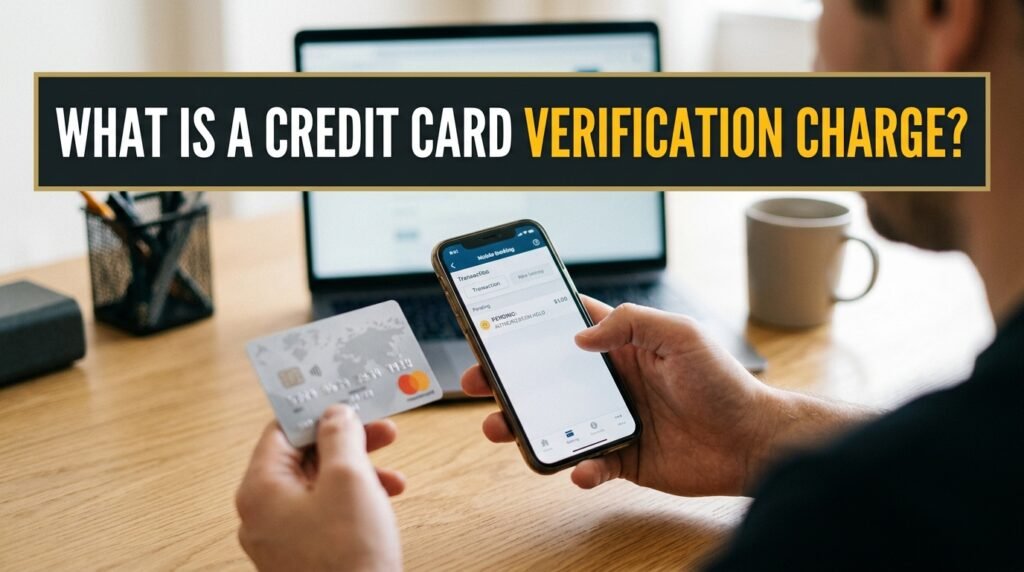
If you check your credit card account and notice a small charge that you do not recognize, you may wonder whether your card has been compromised. One common reason for a small unfamiliar transaction is a credit card verification charge.
A verification charge is usually a temporary or small transaction used by a merchant to confirm that your credit card is active and can be authorized for payment. These charges are often associated with online purchases, free trials, subscriptions, digital services, hotel bookings, and other situations where a merchant wants to verify payment information before processing a larger transaction.
Although a verification charge can look suspicious, it does not always mean fraud. Understanding why these charges appear can help you distinguish a normal verification transaction from an unauthorized charge.
What Is a Credit Card Verification Charge?
A credit card verification charge is a small transaction that a merchant or payment processor may use to confirm that your card information is valid.
The merchant may send an authorization request to your card issuer. In some cases, the transaction may appear as a very small amount, such as $0, $1, or another small amount.
The purpose is generally not to collect meaningful revenue from you. Instead, the merchant wants to confirm that the card exists, is active, and can potentially be used for future payments.
For example, suppose you add your credit card to a new online shopping account. The website may perform a small authorization to verify your payment method. You could temporarily see a small transaction in your account even though you did not intentionally purchase anything for that amount.
Why Do Merchants Use Verification Charges?
Merchants use verification transactions for several reasons.
One reason is to confirm that the payment information provided by a customer is valid before accepting an order or activating a service.
Another reason is fraud prevention. A merchant may want to make sure that the card information can be authorized before allowing an account or transaction to proceed.
Verification can also happen when you add a card to a digital wallet, sign up for a subscription, reserve a hotel room, rent a vehicle, or connect your card to an online service.
The exact process depends on the merchant, payment processor, card network, and card issuer.
How Much Is a Verification Charge?
There is no single amount that applies to every verification transaction.
Some verification requests may appear as $0, while others may show a small amount such as $1. The amount may also vary depending on the merchant and payment processor.
For example, you might see a $1 pending transaction shortly after adding your card to an online service.
This does not necessarily mean that you permanently spent $1.
In many cases, the transaction is only an authorization and may disappear automatically after the merchant or card issuer processes the verification.
Is a Verification Charge a Real Charge?
This depends on how the transaction is processed.
Some verification transactions are authorization holds rather than finalized purchases. They may temporarily affect your available credit but may not become part of your final account balance.
For example, a merchant could request authorization for $1 to confirm your card. The transaction might appear as pending and then disappear after the verification process is complete.
Other merchants may actually post a small charge and later reverse or refund it.
This is why it is important to check whether the transaction is listed as pending or posted.
If you regularly notice temporary transactions on your account, understanding how your card works can help. Our recently published guide on choosing your first credit card explains why checking fees, alerts, payment terms, and account features is important when managing a credit card.
Why Does a $1 Charge Appear on My Credit Card?
A $1 charge is one of the most common examples people notice when talking about verification transactions.
A merchant may use a small authorization to verify that the card is valid before processing a larger transaction.
For example, you might enter your credit card details when:
- Creating an online account
- Starting a free trial
- Adding a card to a digital service
- Reserving a hotel
- Renting a vehicle
- Signing up for a subscription
- Using a payment app
- Saving a card for future purchases
The $1 transaction may remain pending temporarily and then disappear.
However, you should still review the merchant name and transaction details. A small charge should not automatically be assumed to be legitimate simply because it is small.
Does a Verification Charge Reduce Available Credit?
A verification transaction can temporarily affect your available credit if it is processed as an authorization hold.
For example, suppose your credit card has a $3,000 limit, and you have $500 of available credit remaining.
If a merchant places a $1 authorization on your account, your available credit could temporarily decrease by that amount.
The effect is usually very small, but the important distinction is that an authorization and a finalized purchase are not always the same thing.
The transaction may disappear when the authorization is released or may be replaced by a final transaction if the merchant proceeds with the purchase.
Why Does a Verification Charge Disappear?
Verification charges often disappear because they were temporary authorization requests rather than completed purchases.
For example, a merchant might send a $1 authorization to verify your card. After confirming the payment method, the merchant may release the authorization.
Your account could then show the transaction as pending for a short period before it disappears.
The exact timing varies by merchant and card issuer.
If the transaction remains for longer than expected, check your account details and contact the merchant or card issuer if necessary.
Can a Verification Charge Be Fraud?
Yes, a small charge can potentially be fraudulent.
Fraudsters sometimes test stolen card information with small transactions before attempting larger purchases. This means you should not automatically ignore an unfamiliar $1 or small transaction.
Pay attention to:
- The merchant name
- Transaction date
- Transaction amount
- Whether the transaction is pending or posted
- Whether you recently added your card to a service
- Whether you recently made an online purchase
- Whether another larger unfamiliar transaction appears afterward
If you do not recognize the transaction and cannot connect it to a legitimate service, contact your card issuer.
You should also monitor your account regularly for unusual activity. A small unfamiliar transaction can sometimes be an early warning sign that someone has obtained your card information.
What Should You Do If You See an Unknown Verification Charge?
Start by reviewing your recent activity.
Think about whether you recently:
- Added your card to a website
- Started a free trial
- Signed up for a subscription
- Booked a hotel
- Rented a car
- Added your card to a digital wallet
- Made an online purchase
If the transaction matches something you recently did, it may simply be a verification authorization.
If you still cannot identify it, contact your card issuer using the phone number on the back of your card or through the issuer’s official app.
Do not provide your card number, password, PIN, or security code to an unknown caller claiming to investigate the transaction.
If the transaction is genuinely unauthorized, ask your issuer about the appropriate process for reporting and disputing it.
Can Verification Charges Affect Your Credit Score?
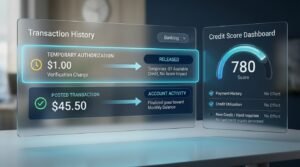
A normal verification charge generally does not work like applying for a new credit card or taking out a new loan.
A small authorization may temporarily affect your available credit, but it is not normally the same thing as a new account or hard credit inquiry.
However, if a merchant transaction becomes a finalized balance, it can become part of your account activity.
The important point is to distinguish between a temporary authorization and a posted transaction.
Your credit score is influenced by broader factors such as payment history, credit utilization, account history, and other information in your credit profile.
Verification Charge vs. Pending Transaction
A verification charge can appear as a pending transaction, but not every pending transaction is a verification charge.
A pending transaction can represent a legitimate purchase that has not yet been finalized.
For example, if you buy something online for $75, the transaction may initially appear as pending before becoming a posted $75 charge.
A verification transaction is different because its primary purpose is to confirm the validity of your payment method rather than represent the final cost of a purchase.
Understanding this difference can make your credit card statement easier to interpret.
When Should You Be Concerned?
A verification charge deserves more attention when you cannot connect it to anything you recently did.
For example, suppose you see a $1 transaction from a merchant you have never heard of, followed by several larger transactions from unfamiliar businesses.
That situation could indicate unauthorized use of your card.
You should contact your card issuer immediately and follow its instructions.
It is also useful to turn on transaction alerts so you receive notifications when purchases or other activity occur.
If you want to understand other reasons a credit card issuer may examine unusual account activity, our recent guide on credit card account reviews explains how issuers may monitor spending patterns, payment history, and other account information.
How Can You Protect Your Credit Card?
You can reduce the risk of unauthorized transactions by following a few basic habits.
First, review your account regularly instead of waiting until the end of the month.
Second, enable transaction notifications through your card issuer’s app or online banking platform.
Third, avoid entering your card information on websites that you do not trust.
Fourth, use strong passwords and enable additional security features when available.
Finally, keep your contact information updated with your card issuer so you can receive fraud alerts quickly.
If you use rewards credit cards, also remember that rewards should not distract you from monitoring fees and account activity. For example, understanding the relationship between credit card rewards and annual fees can help you evaluate the overall value of a card rather than focusing only on rewards.
Final Thoughts
A credit card verification charge is usually a small transaction or authorization used to confirm that your card is valid and available for payment.
It may appear when you sign up for an online service, start a free trial, add a card to a digital wallet, make a reservation, or use certain payment platforms.
Many verification charges are temporary and may disappear after the verification process is completed. However, an unfamiliar small charge should not automatically be ignored because unauthorized card testing can sometimes involve small transactions.
The best approach is to review your account regularly, understand your recent transactions, enable account alerts, and contact your card issuer whenever you cannot identify a transaction.
A small verification charge may be completely normal, but knowing why it appeared is the key to determining whether you should simply wait for it to disappear or take further action.