
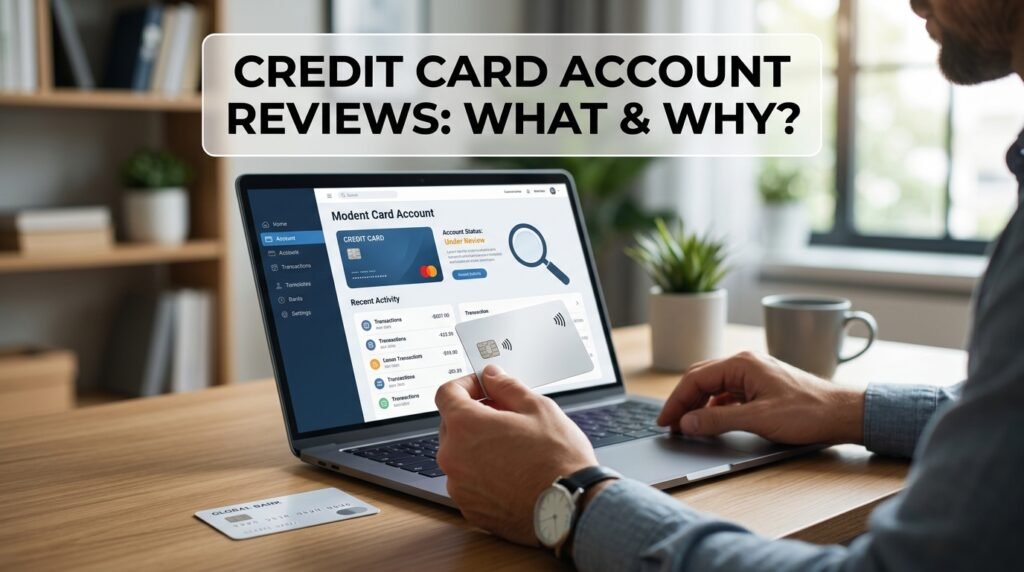
A credit card account review is a process in which a credit card issuer examines information about an existing account to decide whether any changes are needed. The review may involve your payment history, credit profile, account activity, spending patterns, current balance, and other information available to the issuer.
An account review does not necessarily mean that you have done something wrong. Credit card companies may review accounts as part of normal account management, risk monitoring, fraud prevention, or decisions about credit limits and account terms.
Understanding why these reviews happen can help you avoid unnecessary concern and recognize when an account change may require your attention.
What Is a Credit Card Account Review?
A credit card account review occurs when an issuer evaluates an existing card account after the account has already been opened.
When you first apply for a credit card, the issuer generally evaluates your application before deciding whether to approve you. An account review is different because you are already a customer.
During an account review, the issuer may look at information such as:
- Your payment history
- Current credit card balance
- Credit utilization
- Recent credit activity
- Changes in your credit profile
- Account usage and transaction patterns
- Whether payments are being made on time
- Other information available to the issuer
The exact review process varies between credit card companies. Some reviews may happen periodically, while others may be triggered by particular account activity or changes in your financial profile.
Why Do Credit Card Issuers Review Accounts?
There are several reasons a credit card company might review an existing account.
1. Managing Credit Risk
One of the main reasons for account reviews is credit risk management.
A credit card issuer provides you with access to a revolving line of credit. Because you can borrow repeatedly up to your credit limit, the issuer has an ongoing interest in understanding the risk associated with the account.
Changes in your credit profile, increasing balances, missed payments, or other financial changes may lead an issuer to reassess the account.
An account review does not automatically mean that your account will be restricted or closed. It simply means the issuer is evaluating the account under its own policies.
2. Reviewing Your Credit Profile
A credit card issuer may review your credit report after you already have an account.
According to the Consumer Financial Protection Bureau, a card issuer can review the credit report of an existing customer for account-management purposes. This type of review is generally considered a soft inquiry and does not affect your credit score.
Your credit profile can change over time. You may open additional accounts, take on new debt, pay down balances, or experience changes in your payment history.
An issuer may consider these changes when managing an existing credit card account.
3. Evaluating Your Credit Limit
Another reason for an account review is determining whether your credit limit should change.
An issuer may increase a credit limit when it believes additional credit is appropriate. In other circumstances, an issuer may reduce a credit limit based on its risk-management policies.
For example, a significant change in your credit profile or broader lending conditions could influence how an issuer manages existing credit lines.
If your credit limit is reduced while your balance stays the same, your credit utilization can increase. This is one reason it is important to understand your available credit rather than focusing only on your total credit limit.
4. Detecting Suspicious Activity
Credit card companies also monitor accounts for unusual or potentially fraudulent activity.
For example, a sudden change in spending patterns, unfamiliar transactions, unusual locations, or other activity may cause an issuer to investigate or contact you.
This type of review is designed to protect the account and identify potentially unauthorized transactions.
If your issuer contacts you about suspicious activity, verify the communication through the official phone number or website associated with your card rather than providing sensitive information to an unknown caller or message.
5. Monitoring Account Behavior
Issuers may also evaluate how customers use their credit cards.
For example, an account could show patterns involving frequent balance increases, repeated late payments, unusually large transactions, or other activity that differs from previous behavior.
This does not mean that a particular spending pattern automatically causes a negative action. Each issuer has its own policies and risk-management procedures.
If you use credit responsibly, the best approach is generally to continue making payments on time and keep track of your account activity.
Can an Account Review Affect Your Credit Limit?
Yes, an account review can sometimes be connected with a change in your credit limit.
A credit card issuer may decide to increase, maintain, or decrease a credit line based on its evaluation of the account and applicable policies.
A lower credit limit can have an indirect effect on your credit utilization. For example, suppose you have a $5,000 balance and a total credit limit of $20,000. Your utilization is 25%.
If your total available credit were reduced to $10,000 while the balance stayed at $5,000, your utilization would become 50%.
This is why maintaining a manageable balance can be important even when you have never missed a payment.
Does a Credit Card Account Review Hurt Your Credit Score?

A normal account review does not necessarily hurt your credit score.
When an issuer checks the credit report of an existing customer for account-management purposes, the CFPB describes this as a soft inquiry. Soft inquiries do not affect your credit score.
However, the outcome of an account review could potentially affect your credit profile.
For example, if an issuer reduces your credit limit, your utilization could increase. A change in account terms or a closed account could also have consequences depending on your overall credit situation.
The review itself and the possible outcome are therefore two different things.
What Should You Do If Your Account Is Reviewed?
You generally do not need to panic if your credit card issuer reviews your account.
Instead, focus on maintaining good account-management habits.
Keep Payments On Time
Payment history is an important part of your credit profile. Make at least the required payment by the due date and, when possible, pay more to reduce your balance.
Monitor Your Credit Report
Check your credit reports periodically for inaccurate information. Look for incorrect balances, unfamiliar accounts, inaccurate payment information, or other errors.
Watch Your Credit Utilization
Avoid relying too heavily on your available credit. Keeping balances manageable can provide more flexibility if your credit limit changes.
Review Your Statements
Your monthly statements can help you identify unexpected charges, fees, interest, and changes to your account.
You can also learn how statement timing may affect the balance reported to credit bureaus in our guide to the Statement Date Trick.
Be Careful With Frequent New Applications
Opening multiple new credit accounts within a short period can change your overall credit profile.
If you frequently apply for cards mainly to collect introductory rewards, understand the potential consequences first. Our guide to Credit Card Churning explains how repeatedly opening accounts for rewards can create credit and account-management risks.
What If Your Issuer Reduces Your Credit Limit?
If you receive notice that your credit limit has been reduced, review the communication carefully.
Find out what your new credit limit is, whether your interest rate or other terms have changed, and whether the issuer provides an explanation for the decision.
You should also review your current balances because a lower limit can increase your utilization percentage.
If you believe information in your credit report is inaccurate, investigate the error and follow the appropriate dispute process.
Final Thoughts
A credit card account review is a normal part of how issuers manage existing accounts. It may involve reviewing your credit profile, payment history, balances, spending activity, or other account information.
An account review does not automatically mean that your credit card will be closed or that you have made a mistake. In many cases, it is simply part of ongoing account management and risk monitoring.
The best way to stay prepared is to make payments on time, monitor your statements, keep your balances manageable, and regularly check your credit information for errors.
For more practical guidance on credit cards, borrowing, and everyday money management, visit CoreFoxes.