
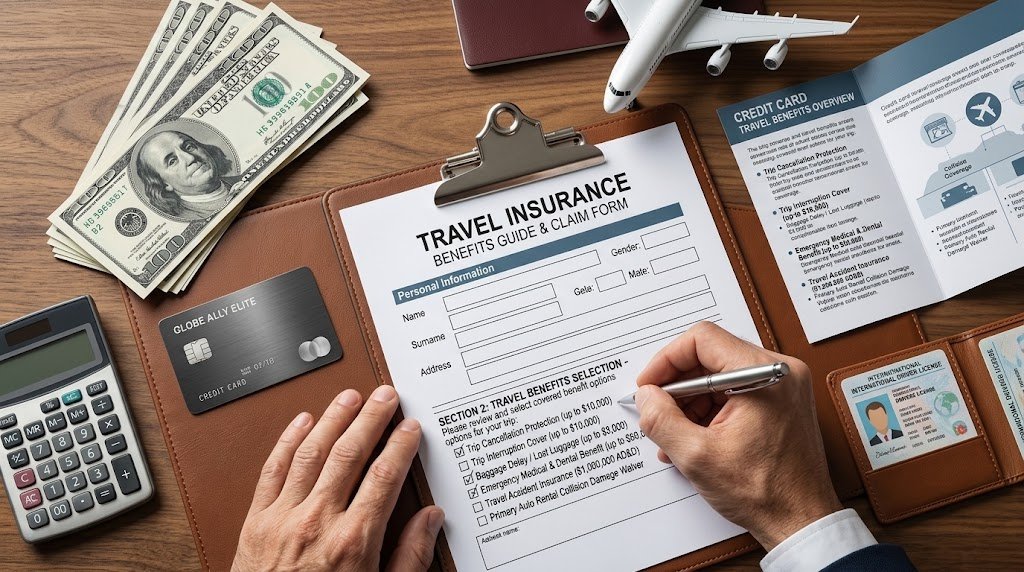
Last spring, a colleague of mine booked a $1,400 flight to a wedding, bought the airline’s $89 “recommended” trip insurance, and then found out — after a storm cancelled her connection — that her credit card already covered the exact same thing. She paid for protection she already owned, and she’s far from alone: millions of Americans carry credit card perks they never activate.
That story is more common than you’d think. Most cardholders know about cash back and points, but the real money hides in the benefits guide nobody reads. The best credit card perks can reimburse you for a cancelled trip, a stolen laptop, or a washing machine that dies three months after you bought it. The catch: you usually have to know they exist — and activate them correctly — before something goes wrong.
This guide walks through the most overlooked credit card perks, how they actually work, and the mistakes that quietly void your coverage.
Credit Card Perks for Travel: Insurance You Already Own
Travel insurance is probably the most valuable perk sitting unused in American wallets. Many mid-tier and premium cards include coverage that would cost $50 to $200 per trip if you bought it separately.
What card travel insurance covers
Coverage varies by card, but the typical package includes several layers:
- Trip cancellation and interruption insurance — reimburses prepaid, non-refundable flights and hotels if you cancel for a covered reason, such as illness, injury, severe weather, or the death of an immediate family member.
- Trip delay reimbursement — covers reasonable expenses like meals and a hotel room when your flight is delayed past a set threshold (often 6 to 12 hours, depending on the card).
- Baggage delay and loss coverage — reimburses essentials you must buy while your bag is missing, and compensates you if luggage is lost or damaged by the carrier.
- Rental car collision coverage — pays for damage to or theft of a rental car, though it’s usually secondary to your personal auto policy and typically excludes liability.
- Emergency medical and evacuation benefits — some premium cards offer limited coverage that supplements health insurance, which often works poorly or not at all abroad.
These benefits sound generous because they are. On some popular travel cards, trip cancellation limits run to $5,000 to $10,000 per trip, and lost luggage coverage can reach $3,000 per passenger.
How to activate travel coverage
Here’s the part that trips people up: coverage almost always requires you to pay for the trip with that specific card. Booking with points, a debit card, or a different credit card can void the benefit entirely — even if the card you’re relying on is “the travel card” in your wallet.
Before your next trip, pull up your card’s benefits guide (usually a PDF on the issuer’s website) and confirm three things: whether you must charge the full fare or just a portion, which family members are covered, and how long the delay must be before benefits kick in.
If you’re weighing whether a travel card is worth its annual fee, our breakdown of travel vs. cashback cards can help you decide which perk structure fits your spending.
Purchase Protection: The Credit Card Perk That Refunds Broken Stuff
Purchase protection is the quiet workhorse of credit card perks. When you buy something with your card and it’s stolen, accidentally damaged, or sometimes lost within a window after purchase — typically 90 to 120 days, depending on the issuer — the benefit can reimburse you for repair or replacement.
Think about what that covers in real life:
- A laptop dropped on a sidewalk two weeks after you bought it
- A new TV that falls off its wall mount during installation
- A phone snatched from a café table
- Exercise equipment damaged in shipping
The limits usually run from $500 to $1,000 per claim on standard cards, and higher on premium products. You’ll generally need the original receipt and your card statement showing the purchase, which is one more reason to learn how to read your credit card statement and keep your records organized.
It’s worth knowing what purchase protection is not: it doesn’t cover buyer’s remorse, and it usually excludes vehicles, plants, animals, and items purchased for resale. When a merchant simply won’t take an item back, your next move may be a credit card chargeback vs. refund — a separate protection with different rules.
If a seller charges you for something you never received or the amount is wrong, the FTC’s guidance on disputing credit card charges explains your federal billing-error rights.
Extended Warranties and Return Protection
Two smaller credit card perks work quietly in the background of big purchases.
Extended warranty protection adds time to a manufacturer’s warranty — often doubling a one-year warranty to two — on eligible items bought with the card. For electronics and appliances, where repairs run $150 to $400, this alone can out-earn a year of 2% cash back.
Return protection covers you when a merchant refuses a return within a set window (often 60 to 90 days). The card issuer may refund the purchase price, minus shipping — useful for final-sale items that don’t fit or work as expected.
Together, these protections mean the card can stand behind purchases long after the store stops caring.
Smaller Credit Card Perks Worth Real Money
Beyond insurance-style benefits, several credit card perks put dollars back in your pocket with almost no effort:
- Cell phone protection — pay your monthly wireless bill with the card, and a cracked or stolen phone may be covered up to a set amount per claim.
- Rental car status upgrades and statement credits — premium travel cards often include credits that offset part of the annual fee by themselves.
- Roadside assistance and travel emergency hotlines — a free dispatch service when you lock your keys in the car abroad.
- Price protection — though rare now, a few cards still refund the difference if a purchased item drops in price shortly after you buy it.
- No foreign transaction fees — worth 3% on every purchase abroad, and standard on most travel products.
The CFPB’s credit card tools are a good neutral starting point for comparing what different cards and issuers offer.
Not every “benefit” is a bargain, though. Understanding the real cost of a cash advance or the fine print behind a 0% APR credit card catch matters just as much as claiming the good stuff.
How to Find the Perks Hiding in Your Wallet
You don’t need to guess. Here’s a five-minute audit:
- Search your card’s name plus “benefits guide” and open the PDF on the issuer’s official site.
- Screenshot the pages covering travel insurance, purchase protection, and extended warranty.
- Note the activation requirements — especially which purchases must go on the card.
- Save the claims phone number in your phone before you need it.
- Set a calendar reminder to re-check once a year, since issuers quietly change terms.
Treat the benefits guide like part of the product. Two cards with identical rewards rates can be worth hundreds of dollars apart annually once these perks enter the math.
Common Mistakes That Cancel Your Coverage
Even cardholders who know their credit card perks routinely lose claims to avoidable errors:
- Paying with the wrong card or with points. If the fare didn’t hit the card, the insurance usually doesn’t apply.
- Skipping the claim window. Many benefits require you to file within 30 to 90 days of the incident.
- Throwing away receipts. Proof of purchase is the backbone of every claim.
- Assuming “secondary” coverage is enough. Rental car coverage that pays only after your personal policy may leave gaps.
- Confusing perks with fraud protection. If your card number is stolen, that’s a different process entirely — know the warning signs of credit card fraud and report quickly.
One more subtle trap: using perks as a reason to overspend. A purchase protection benefit doesn’t make a $900 impulse buy smart — it just softens the blow when a planned purchase goes wrong. Tools like the 24-hour rule for spending pair well with perk-rich cards.
Practical Takeaways
- Read your benefits guide — most credit card perks require activation steps, not enrollment.
- Always book travel and big purchases on the card whose protections you intend to use.
- Keep receipts and your card statement for anything you might claim.
- File claims fast; windows are shorter than most people expect.
- Re-shop your card annually — benefits change, and unused perks are wasted annual fees.
Final Thoughts
The gap between what your card offers and what you actually use is, for most people, pure waste. Spend twenty minutes learning your credit card perks, set up the two or three that fit your life, and the next cancelled flight or broken gadget becomes an inconvenience instead of an emergency.
This article is for educational purposes only and is not personalized financial advice. Benefit terms vary by issuer and card — always confirm details in your card’s official benefits guide.