
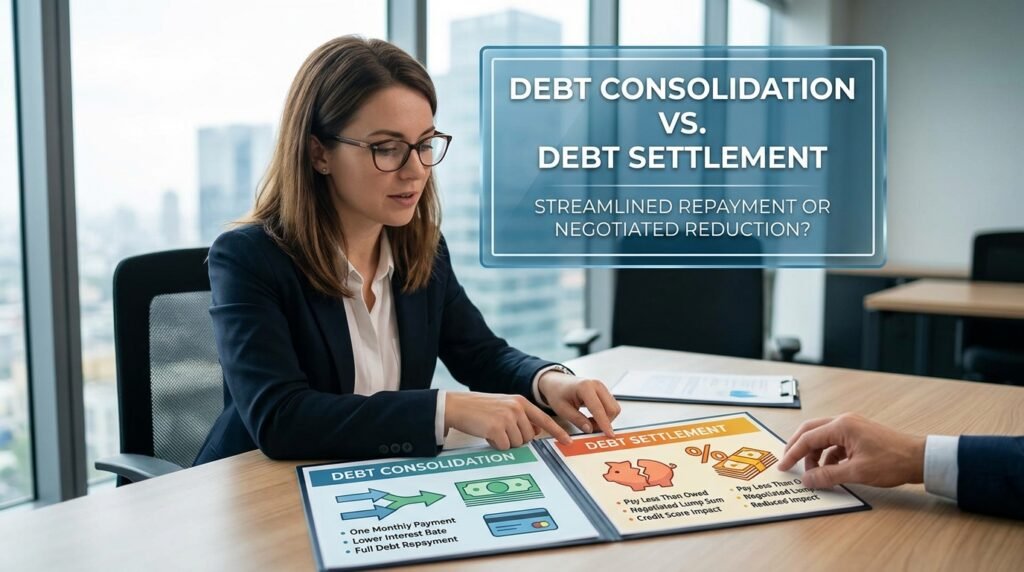
Managing multiple debts can become difficult, especially when you have different balances, interest rates, and payment due dates. Two terms you may come across when researching debt relief are debt consolidation and debt settlement.
Although both approaches are related to managing debt, they work in very different ways. Debt consolidation generally combines multiple debts into one new payment, while debt settlement involves negotiating with creditors to pay less than the full amount owed.
Understanding the difference between debt consolidation vs. debt settlement can help you understand the potential costs, risks, credit effects, and repayment requirements associated with each approach.
What Is Debt Consolidation?
Debt consolidation is the process of combining multiple debts into one account or payment. Instead of managing several separate debts, you may use a new financial product or program to consolidate eligible balances.
For example, someone with several credit card balances might use a debt consolidation loan to pay those accounts and then make one payment on the new loan.
Depending on the option used, debt consolidation may involve:
- A personal loan
- A balance transfer credit card
- A debt management plan
- Other financial products or programs
The goal is generally to simplify repayment and potentially reduce the cost of borrowing.
However, consolidation does not automatically reduce the amount of debt you owe. You still generally need to repay the full amount, along with applicable interest and fees.
What Is Debt Settlement?
Debt settlement is different from debt consolidation. It generally involves negotiating with creditors or debt collectors to settle a debt for less than the full amount owed.
For example, suppose you owe $10,000 on an eligible debt. A settlement agreement might allow you to resolve the debt by paying an agreed amount that is less than $10,000.
Debt settlement can be handled directly with creditors or through a debt settlement company.
However, settlement can involve significant risks. Creditors are not required to agree to a settlement, and the process may affect your credit history. Depending on the circumstances, forgiven debt may also have tax consequences.
Because of these factors, it is important to understand the terms before entering a debt settlement arrangement.
Debt Consolidation vs. Debt Settlement

The biggest difference between debt consolidation and debt settlement is what happens to the debt.
With debt consolidation, you generally combine multiple debts into a single repayment structure. The goal is to make repayment more manageable and potentially reduce borrowing costs.
With debt settlement, the goal is generally to negotiate a lower amount to resolve a debt.
Here is a simple comparison:
| Feature | Debt Consolidation | Debt Settlement |
| Main purpose | Combine multiple debts | Negotiate debt for less than owed |
| Debt amount | Generally still repaid in full | May be reduced if settlement is accepted |
| Payment structure | Usually one payment | Depends on settlement agreement |
| Credit impact | Can vary | Can negatively affect credit |
| Interest | May be lower depending on option | Depends on agreement and account status |
| Creditor approval | Depends on the consolidation product | Creditor must agree to settlement |
| Potential fees | Loan, transfer, or program fees may apply | Settlement company or other fees may apply |
The actual costs and effects depend on the specific product, creditor, and financial situation.
How Does Debt Consolidation Work?
Debt consolidation can work in several ways.
One common method is using a personal loan to pay off multiple high-interest debts. After the existing debts are paid, you make scheduled payments on the new loan.
Another method is using a balance transfer credit card. Eligible credit card balances can be moved to another card, potentially with a lower introductory APR.
For example, if you have three credit cards with different balances and interest rates, consolidation may allow you to manage the debt through one account instead of making several separate payments.
However, you should compare the interest rate, APR, fees, repayment period, and total repayment cost before choosing a consolidation option.
You can learn more about borrowing choices in our guide to personal loans vs. credit cards.
How Does Debt Settlement Work?
Debt settlement generally involves negotiating with a creditor or debt collector to resolve a debt for an amount that is less than the total balance.
If you work with a debt settlement company, the company may negotiate with creditors on your behalf. Some settlement programs involve setting aside money in a dedicated account while negotiations take place.
There is no guarantee that a creditor will accept a settlement offer.
Another important consideration is that debt settlement programs can involve stopping payments or delaying payments as part of the strategy. This can result in additional fees, interest, collection activity, and potential damage to your credit history.
Consumers should understand these risks before entering a settlement program.
Which Option Has Less Impact on Your Credit?
Debt consolidation and debt settlement can both affect your credit, but the impact depends on how the debt is handled.
Applying for a new loan or credit card can result in a hard inquiry. Opening a new account can also change your credit utilization and other factors in your credit profile.
If you use consolidation and continue making payments on time, the new account may become part of your credit history.
Debt settlement can have a more significant negative effect when payments are missed or accounts become delinquent during the settlement process.
Your individual credit impact depends on your existing accounts, payment history, balances, and how the new debt arrangement is managed.
For more information, read our guide on how personal loans affect your credit score.
Potential Benefits of Debt Consolidation
Debt consolidation may provide several practical benefits depending on your circumstances.
Simplified Payments
Combining multiple debts can reduce the number of monthly payments and due dates you need to manage.
Potentially Lower Interest Costs
If you qualify for a lower-interest consolidation option, you may reduce the amount of interest charged compared with some existing debts.
Predictable Repayment
Some consolidation loans have fixed interest rates and fixed repayment periods, which can make monthly payments easier to plan.
Organized Debt Management
Having one account instead of several debts can make it easier to track your progress.
However, these potential benefits depend on the specific consolidation product and its terms.
Potential Risks of Debt Consolidation
Debt consolidation is not automatically a solution to financial problems.
A consolidation loan may extend your repayment period. Even if the monthly payment is lower, you could pay more interest over the entire repayment period.
Fees can also increase the overall cost.
Another risk is accumulating new debt after consolidating existing balances. For example, if you use a loan to pay off credit cards and then continue making large purchases on those cards, your total debt could increase again.
Before consolidating, consider whether the new payment fits your budget and whether you can avoid taking on additional high-interest debt.
Potential Risks of Debt Settlement
Debt settlement also comes with important risks.
Credit Damage
Missing payments or allowing accounts to become delinquent can negatively affect your credit history.
No Guaranteed Settlement
Creditors do not have to accept settlement offers.
Additional Costs
Interest, late fees, collection costs, and settlement company fees may increase the amount you owe before a settlement is reached.
Tax Considerations
Depending on the circumstances and applicable tax rules, canceled or forgiven debt may have tax implications.
Collection Activity
While negotiations are taking place, creditors or debt collectors may continue collection efforts.
Because of these risks, consumers should carefully review any settlement program before agreeing to its terms.
Alternatives to Debt Consolidation and Settlement

Debt consolidation and debt settlement are not the only ways to address debt.
One alternative is contacting your creditors directly to ask whether they offer hardship programs, reduced interest rates, modified payment arrangements, or other assistance.
Another option is working with a nonprofit credit counseling organization. A credit counselor may review your finances and help you understand possible repayment strategies.
You may also choose to create a structured debt repayment plan yourself. Strategies such as prioritizing high-interest debt can help you organize payments while continuing to meet required minimum payments on other accounts.
The appropriate option depends on your debt amount, income, expenses, credit profile, and ability to make payments.
How to Compare Your Options
Before choosing between debt consolidation and debt settlement, look at the complete financial picture.
Start by listing each debt, including the balance, interest rate, minimum payment, and due date.
Next, calculate how much you can realistically afford to pay toward debt each month.
If you are considering consolidation, compare the new APR, fees, repayment period, monthly payment, and total repayment amount.
If you are considering settlement, understand how the process works, what fees may apply, whether payments will be missed, how creditors will be contacted, and what happens if negotiations fail.
Also consider the potential impact on your credit and whether you may face tax consequences.
If higher interest rates are making your debt more expensive, our guide on higher interest rates and your money provides additional information about how borrowing costs can affect personal finances.
Final Thoughts
Debt consolidation vs. debt settlement involves two different approaches to managing debt. Consolidation generally focuses on combining multiple debts into a simpler repayment structure, while settlement focuses on negotiating to resolve debt for less than the amount owed.
Each approach has different costs, requirements, and potential effects on your credit. Debt consolidation may involve a new loan, balance transfer, or other repayment structure, while debt settlement can involve negotiations, delinquent accounts, fees, and potential credit consequences.
Before choosing an option, review your debts, income, expenses, interest rates, fees, and repayment ability. Understanding the complete terms can help you compare the available approaches and choose a debt strategy that fits your financial circumstances.
FAQs About Debt Consolidation vs. Debt Settlement
What is the main difference between debt consolidation and debt settlement?
Debt consolidation generally combines multiple debts into one repayment structure, while debt settlement involves negotiating to resolve a debt for less than the full amount owed.
Does debt consolidation reduce the amount of debt I owe?
Usually, debt consolidation does not reduce the principal amount of debt. Instead, it may simplify payments or potentially reduce interest costs depending on the consolidation method.
Can debt settlement reduce my debt?
A successful settlement agreement may allow you to resolve a debt for less than the full amount owed. However, creditors are not required to accept settlement offers.
Does debt settlement hurt your credit?
Debt settlement can negatively affect your credit, particularly when accounts become delinquent or payments are missed during the process.
Does debt consolidation affect your credit score?
It can. Applying for a new loan or credit card may result in a hard inquiry, and opening a new account can change factors such as credit utilization and account age.
Is debt consolidation the same as a debt management plan?
No. Debt consolidation generally involves combining debts into one account or payment, while a debt management plan is typically arranged through a credit counseling organization and may involve negotiating payment terms with creditors.