
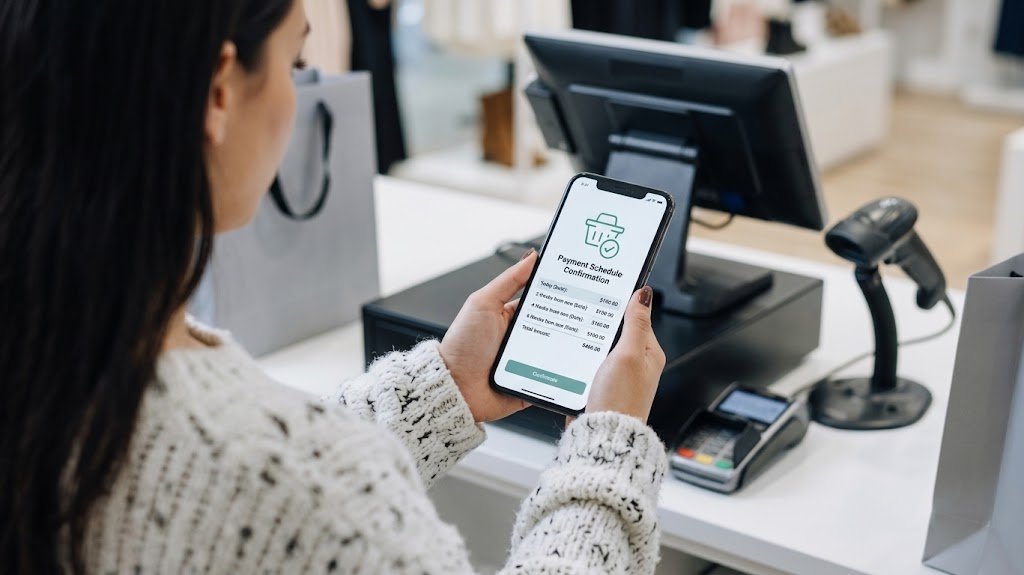
Does Buy Now, Pay Later Affect Your Credit Score? The Truth Nobody Explains
You’re at checkout, the total is $240, and a button offers four payments of $60 with no interest. You tap it in about ten seconds. Later, a question pops up: did that just help my credit, hurt it, or do nothing at all? The honest answer to the BNPL credit score question is “it depends,” and the reasons it depends have changed quite a bit recently.
This guide explains what is happening behind the scenes, which parts are settled and which are still shifting, and how to use pay-later plans without unpleasant surprises. It is general education, not personal financial advice.
BNPL Credit Score Basics: The Two-Part Answer
There are really two separate questions hiding inside one:
- Does the provider report your loan to a credit bureau? If it doesn’t, the loan usually can’t show up in your credit report.
- Does the score a lender checks actually use that data? Even if a loan is reported, it only matters if the scoring model counts it.
For years, both answers were mostly “no.” The CFPB explains in its guide to what a Buy Now, Pay Later loan is that BNPL typically lets you pay off a balance over four or fewer payments. It also notes that longer online installment loans are different, since they require hard credit inquiries and report your payment history to credit reporting companies. Now, reporting by some providers and new scoring models are starting to change the picture.
Which Providers Report to the Credit Bureaus?
There is no single industry standard yet, so your BNPL credit score exposure depends on the company and the product.
- Affirm began reporting its pay-over-time loans, including Pay in 4, to Experian on April 1, 2025, according to American Banker and Fortune. More recent coverage says Affirm reports to Experian and TransUnion.
- Klarna has reported some term-loan information, such as applications, on-time and overdue payments, and defaults, to TransUnion, according to American Banker. Recent consumer-finance coverage says Klarna and Afterpay have not sent their U.S. pay-in-4 data to the bureaus.
Because these practices change often, treat this as a snapshot. Check the current terms on your provider’s own disclosures, then pull your credit reports to see whether any pay-later accounts actually appear. The National Consumer Law Center notes the main bureaus currently offer free reports weekly through AnnualCreditReport.com.
What FICO’s New Scoring Models Change
On June 23, 2025, FICO announced FICO Score 10 BNPL and FICO Score 10 T BNPL, which it described as the first credit scores from a leading scoring provider to incorporate BNPL data. FICO said they would be offered side by side with existing FICO Score versions at no additional fee and were expected to be available in fall 2025.
One design detail matters for frequent users. Because pay-later loans are short and people often have several at once, FICO developed a method to aggregate multiple BNPL loans when calculating key score variables. In plain terms, five small pay-in-four plans should not automatically be treated like five separate big credit lines.
Early expectations for the BNPL credit score effect were modest. Secondary coverage of FICO’s testing says most users’ scores moved by about 10 points or less, and that on-time payers tended to hold steady or improve. Lenders adopt new models slowly, so the score a lender pulls may not be one of these versions. To see why different lenders see different numbers, this explainer on FICO vs. VantageScore differences is worth a read.
Soft Checks vs. Hard Inquiries
Many pay-in-four approvals use a soft credit check, which doesn’t affect your score and isn’t visible to other lenders. Klarna, for example, has said it only runs soft checks for its pay-in-four and pay-in-30-days options.
Larger or longer financing is different. The CFPB notes that these online installment loans require hard credit inquiries. A hard inquiry can cause a small, temporary dip, and it works much like applying for any personal loan. So when people ask whether pay-later plans hurt their credit, the type of check is often the first thing to look at. Read the fine print before you tap “confirm.”
Indirect Ways BNPL Can Affect Your Credit
Even if your provider never reports a dime, pay-later plans can still create credit trouble in less obvious ways.
- Overlapping plans strain your budget. The CFPB’s research on BNPL borrowers found that in 2022, 21.2% of consumers with a credit record financed at least one purchase with BNPL. These borrowers were also more likely than others to carry higher balances on other unsecured credit lines such as credit cards.
- Cash flow problems spill over. If four installments hit your bank account the same week as rent, you may pay a credit card late or overdraw an account, and those problems can reach your credit.
- Unpaid balances can escalate. Depending on the provider’s terms, serious delinquency may lead to collection activity, which can affect your credit.
- Lenders see the bigger picture. Even when loans don’t appear on a report, high monthly obligations can limit how much you can comfortably borrow.
The BNPL credit score is only one piece. Your budget is the other.
A Hypothetical Example
This is an illustration, not a real case. Imagine Jordan, who uses a pay-later plan to buy a $300 pair of headphones, a $180 jacket and a $120 gift in the same month. Each is split into four payments.
- If the provider doesn’t report, none of these plans appear on Jordan’s credit report, and on-time payments won’t build credit history.
- If one provider does report, on-time payments may show up as positive history, and a missed payment could be recorded as a negative, which is when the BNPL credit score effect becomes real.
- Either way, Jordan now has a dozen small payments due over six weeks, which is where most trouble starts.
The potential credit effect is one piece. The repayment schedule is the bigger practical risk.
Steps to Use BNPL Without Hurting Your Credit Score
If you use pay-later plans, a few habits can lower the odds of a problem:
- Find out if the provider reports. Check their help center or terms before you use it, and look at your own reports afterward.
- Confirm the credit check type. Ask whether the approval is a soft check or a hard inquiry.
- Limit active plans. Keep the number of open installments small enough to track easily.
- Put due dates on a calendar. Or consider automating your finances so payments come from an account with enough cash.
- Pause before you buy. A 24-hour rule for spending can filter out impulse purchases.
- Understand the fine print. Some longer BNPL loans charge interest, much like the catch in a 0% APR credit card offer.
- Dispute errors quickly. If a pay-later account on your report looks wrong, dispute it with the credit bureau and the company that supplied the information.
Finally, don’t assume pay-later plans are a reliable way to build history. If your goal is credit growth, options designed for that purpose are usually more predictable. This guide on how to build credit from scratch covers some of them.
Common Mistakes With Pay-Later Plans
- Assuming on-time payments always build credit. Many providers don’t report, so you may get no BNPL credit score benefit at all.
- Assuming pay-later plans can never hurt your credit. Reported late payments can.
- Stacking plans across several apps. It’s easy to lose track of what’s due and when.
- Ignoring the refund process. If you return an item, confirm the return is applied to your payment schedule and keep paying until it is.
- Forgetting the preapproval fine print. A “no impact” check on one product doesn’t mean every product works the same way.
Practical Takeaways
- Many pay-in-four plans don’t appear on credit reports, but some providers, including Affirm, do report.
- FICO announced BNPL-specific scoring models, but lenders may not use them right away, so your BNPL credit score may differ from lender to lender.
- Soft checks don’t affect your score; hard inquiries can cause a small temporary dip.
- Missed payments and overlapping plans are the most common path to real credit and budget damage.
- Check your credit reports to see what is actually being reported about you.
- Treat pay-later plans as a payment tool, not a credit-building strategy.
Final Thoughts: BNPL Credit Score Rules Are Still Settling
The BNPL credit score landscape is moving from “mostly invisible” toward “increasingly visible,” but unevenly. Some providers report, some don’t, some lenders use the newest models, and many don’t. The safest approach is to assume a pay-later plan could be seen by a lender someday, and to treat each installment like any other bill.
This article is for educational purposes only and is not financial, legal or credit advice. Reporting practices, scoring models and provider terms change frequently, so confirm current details with the provider and official sources before making decisions.