
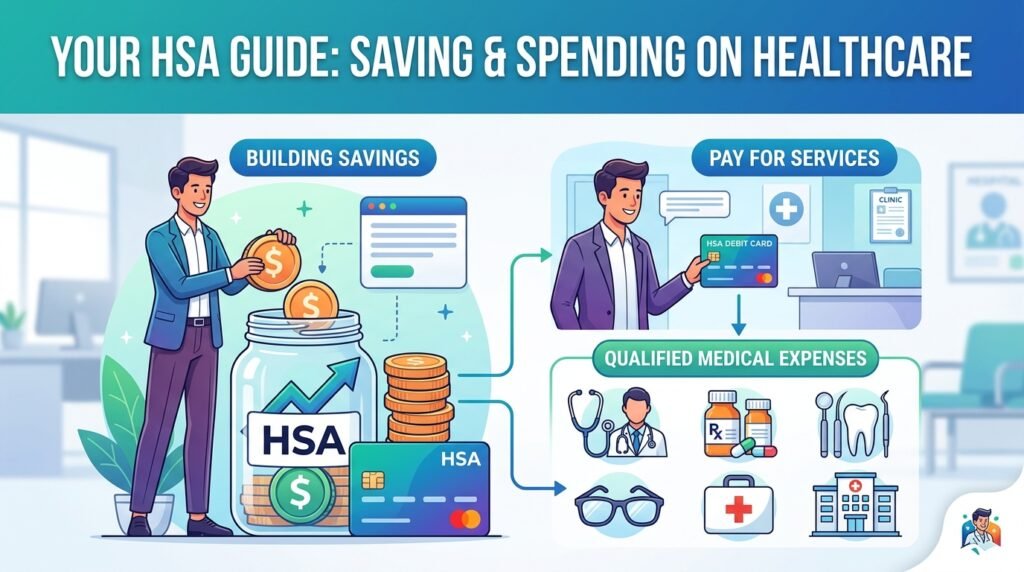
Healthcare costs can take up a significant portion of a household budget, especially when you need prescription medications, doctor visits, dental care, or unexpected medical treatment. For eligible Americans, a Health Savings Account (HSA) can provide a way to set aside money for qualified medical expenses while receiving certain tax advantages.
An HSA is not the same as a regular savings account or health insurance policy. It is a special tax-advantaged account designed to help eligible individuals save for healthcare expenses. Understanding how it works, who can contribute, and which expenses qualify can help you use it more effectively.
What Is a Health Savings Account (HSA)?
A Health Savings Account is a tax-advantaged savings account available to individuals who meet specific eligibility requirements, including enrollment in a qualifying high-deductible health plan (HDHP).
You can contribute money to your HSA, allow the balance to grow, and withdraw funds for qualified medical expenses. Contributions may receive favorable federal tax treatment, and eligible withdrawals for qualified expenses are generally tax-free.
Unlike many employer-sponsored healthcare benefits, an HSA belongs to you. If you change jobs, leave your employer, or switch health plans, the account generally remains yours.
You can open an HSA through an eligible bank, credit union, or other HSA provider. Some employers also offer HSAs as part of their benefits packages.
How Does a Health Savings Account Work?
An HSA works by allowing eligible individuals to save money for healthcare expenses while potentially reducing their tax burden.
The process generally involves three steps.
1. Contribute Money to Your Account
You or your employer can contribute money to your HSA, subject to annual contribution limits. Contributions made through an employer’s cafeteria plan may receive different payroll tax treatment from contributions you make independently.
The IRS establishes annual contribution limits, which can change from year to year. Your permitted contribution depends on factors such as your coverage type, age, and eligibility during the year.
2. Keep the Money for Future Healthcare Costs
You do not generally need to spend your HSA contributions immediately. Unused funds can roll over from one year to the next, allowing you to build a balance for future medical expenses.
This flexibility can be useful if you have relatively low healthcare costs in one year but expect larger expenses later.
3. Withdraw Money for Qualified Medical Expenses
You can use your HSA funds to pay for eligible healthcare costs. Qualified expenses may include certain doctor visits, prescription medications, dental treatment, vision care, and other medical expenses permitted under federal tax rules.
Keep receipts and records of your expenses. If you withdraw funds for nonqualified purposes, the withdrawal may be subject to income tax and an additional tax penalty, depending on your circumstances.
Who Is Eligible for an HSA?
Not everyone can contribute to a Health Savings Account. Generally, you must meet the following federal requirements:
- You must be covered by an HSA-qualified high-deductible health plan.
- You generally cannot have other disqualifying health coverage.
- You cannot be enrolled in Medicare.
- You cannot be claimed as another person’s tax dependent.
Certain exceptions and special circumstances may affect eligibility. For example, eligibility can change during the year if your insurance coverage changes.
Before opening an HSA or making contributions, review your health plan documents and the current IRS rules. A plan described as having a high deductible is not necessarily HSA-qualified.
What Medical Expenses Can You Pay for With an HSA?
HSA funds can cover many qualified medical expenses, although not every healthcare-related purchase qualifies.
Common examples include:
Doctor Visits and Medical Treatment
You can generally use HSA funds for eligible physician visits, specialist appointments, diagnostic tests, and certain medical procedures.
Prescription Medications
Many prescribed medications qualify, along with certain other eligible medical products and treatments.
Dental and Vision Care
Qualified expenses can include eligible dental treatment, eye examinations, prescription glasses, contact lenses, and other permitted vision expenses.
Medical Equipment and Supplies
Certain medical equipment, supplies, and products used to diagnose, treat, or manage a medical condition may qualify.
Mental Healthcare
Eligible mental health treatment and certain related services may qualify under federal tax rules.
The exact eligibility of an expense depends on the applicable IRS rules. Cosmetic procedures, general wellness purchases, and ordinary personal expenses may not qualify unless they meet specific requirements.
If you are uncertain about a purchase, check the current IRS guidance or ask your HSA provider or tax professional before using the funds.
What Are the Tax Benefits of an HSA?
HSAs are often described as offering three potential tax advantages.
Tax Advantages on Contributions
Eligible contributions may be deductible from federal income tax or excluded from taxable income when made through an employer’s qualifying arrangement. The specific treatment depends on how the contribution is made.
Tax-Deferred Growth
Interest and investment earnings within an HSA generally accumulate without current federal income tax while they remain in the account.
Some providers offer only cash savings options, while others allow eligible account holders to invest part of their balance. Investment options vary, and investments can lose value.
If you are comparing places to hold cash, our guide to high-yield savings accounts versus regular savings accounts explains how savings account interest rates, fees, and accessibility can differ.
Tax-Free Withdrawals for Qualified Expenses
Withdrawals used for qualified medical expenses are generally exempt from federal income tax.
This combination can make an HSA useful for managing both current medical bills and future healthcare costs.
HSA vs. Flexible Spending Account (FSA)

An HSA and a Flexible Spending Account can both help eligible workers pay for healthcare expenses, but they operate differently.
An HSA is generally owned by the individual, and unused funds usually roll over from year to year. An FSA is typically offered through an employer, and its funds are governed by plan rules. Many FSAs have a use-it-or-lose-it structure, although certain plans allow limited carryovers or grace periods.
An HSA also requires qualifying health coverage, while an FSA generally follows different eligibility rules.
The right option depends on your employer’s benefits, insurance coverage, expected medical expenses, and financial circumstances.
How Can You Use an HSA More Effectively?
A few practical habits can help you get more value from your account.
Estimate Your Healthcare Expenses
Review your typical annual expenses, including prescriptions, dental visits, and routine medical appointments. This can help you plan contributions within the applicable limits.
Keep Records and Receipts
Maintain documentation showing that withdrawals were used for qualified medical expenses. Good records can make tax reporting easier and help support your treatment of HSA withdrawals.
Understand Your Account Fees
Compare account maintenance fees, investment fees, minimum balance requirements, and available investment options before selecting an HSA provider.
Build a Separate Emergency Fund
An HSA is intended for qualified healthcare expenses, so it should not replace savings for general emergencies such as car repairs or temporary income loss.
A separate emergency savings account can help you prepare for unexpected nonmedical expenses without relying on credit cards or withdrawing HSA funds for nonqualified purposes.
Consider Future Healthcare Costs
If you can comfortably cover current medical expenses with other funds, you may choose to leave some HSA funds invested or saved for future qualified medical expenses. However, investment decisions should reflect your risk tolerance, time horizon, and need for accessible cash.
Understanding how compound interest grows savings can also help explain how money may accumulate over time, although HSA returns depend on the account’s interest rate or investment performance.
Common HSA Mistakes to Avoid
One common mistake is assuming that every health-related purchase qualifies. Always verify expenses before withdrawing money.
Another mistake is contributing more than the permitted annual limit. Excess contributions may create tax complications, so track contributions made by both you and your employer.
Finally, avoid treating an HSA like an unrestricted checking account. Nonqualified withdrawals can trigger taxes and penalties, so keep your account records organized.
Final Thoughts
A Health Savings Account can help eligible Americans prepare for medical expenses while benefiting from favorable federal tax treatment. Contributions, tax-deferred growth, and tax-free withdrawals for qualified expenses can make an HSA a useful part of a broader financial plan.
Before opening an account, confirm that your health plan qualifies, understand the current contribution limits, and review the rules for eligible expenses. With careful planning and good recordkeeping, an HSA can help you manage healthcare costs today while preparing for future medical needs.