
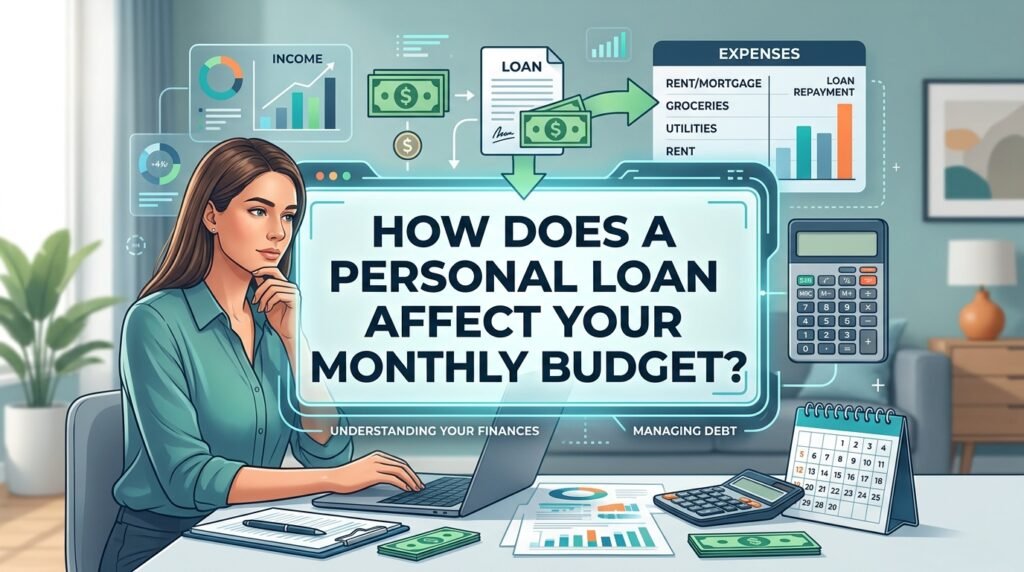
A personal loan can give you access to money for a major expense, debt consolidation, home improvement, emergency costs, or another financial need. However, taking on a personal loan also creates a new monthly financial obligation.
The loan payment becomes part of your regular expenses and can affect how much money you have available for housing, food, transportation, savings, entertainment, and other financial goals.
Before borrowing, it is important to understand how the monthly payment fits into your existing budget. A loan may look affordable based on its monthly payment, but the payment should be considered alongside your other debts and everyday expenses.
What Is a Personal Loan Monthly Payment?
A personal loan monthly payment is the amount you are scheduled to pay the lender each month until the loan is repaid.
For a typical fixed-rate personal loan, the payment usually includes both principal and interest. The amount depends on several factors, including:
- Loan amount
- Interest rate
- Annual percentage rate (APR)
- Repayment term
- Applicable fees
- Lender requirements
For example, a $10,000 loan may have a different monthly payment depending on whether you repay it over three years or five years.
A longer repayment term may reduce the monthly payment because the balance is spread over more months. However, keeping the loan for longer can increase the total interest you pay.
You can learn more about how payments are calculated in our guide to personal loan monthly payments.
How Does a Personal Loan Change Your Monthly Budget?
When you take out a personal loan, the required payment becomes another recurring expense.
Suppose your monthly take-home income is $4,000 and your existing expenses total $3,200. You currently have $800 available for savings, additional debt payments, and flexible spending.
If you add a $400 personal loan payment, your remaining amount falls to $400.
That means the loan does not simply add a $400 expense. It also reduces the amount of money available for other financial priorities.
This is why borrowers should look at their entire monthly budget before accepting a loan.
Which Expenses Should You Consider Before Borrowing?
A personal loan payment should be evaluated alongside all your regular expenses.
These may include:
- Rent or mortgage
- Utilities
- Groceries
- Transportation
- Car payments
- Insurance
- Credit card payments
- Student loan payments
- Childcare
- Medical expenses
- Subscriptions
- Savings
- Emergency expenses
- Entertainment
Some expenses are fixed, while others change from month to month.
A good budget should account for both. If your income varies, it can be especially important to leave room for months when your earnings are lower.
Our CoreFoxes also provides additional personal finance and borrowing resources that can help you understand different aspects of managing debt and money.
Does a Personal Loan Affect Your Savings?
Yes. A new loan payment can affect how much you are able to save each month.
For example, imagine you currently save $500 each month. If you add a $300 personal loan payment without changing your income or other expenses, you may only have $200 available for savings.
This can slow progress toward goals such as:
- Building an emergency fund
- Saving for a home
- Retirement contributions
- Paying for education
- Planning a major purchase
- Preparing for unexpected expenses
This does not mean taking a personal loan automatically prevents you from saving. The impact depends on your income, existing expenses, loan payment, and overall financial situation.
The important point is to include the loan payment in your budget before borrowing rather than trying to find room for it afterward.
How Does Loan Term Affect Your Budget?
The loan term can have a major effect on your monthly budget.
A shorter loan term generally means fewer monthly payments and potentially less total interest, but the required monthly payment may be higher.
A longer loan term generally spreads repayment across more months, which can reduce the monthly payment. However, you may pay more interest over the full life of the loan.
For example, imagine you borrow the same amount at the same interest rate.
With a three-year term, your monthly payment may be relatively high but the debt is repaid sooner.
With a five-year term, your monthly payment may be lower, but you could pay interest for two additional years.
When building a budget, consider both the monthly affordability and the total repayment cost.
Should You Focus Only on the Monthly Payment?
No.
A low monthly payment does not necessarily mean that a personal loan is inexpensive.
A lender could offer a lower monthly payment by extending the repayment period. While this can make the payment easier to fit into your monthly budget, it may increase the amount of interest you pay.
For this reason, compare:
- Monthly payment
- Interest rate
- APR
- Loan term
- Origination fees
- Total repayment amount
- Prepayment conditions
- Late payment fees
Understanding the complete borrowing cost can help you avoid choosing a loan based only on the size of the monthly payment.
Our guide on the true cost of a personal loan explains why borrowers should consider interest, fees, loan terms, and the amount of money they actually receive.
Can a Personal Loan Make Your Budget Too Tight?

Yes. A personal loan can become difficult to manage if the monthly payment leaves too little money for essential expenses and financial goals.
For example, suppose you earn $3,500 per month after taxes.
Your regular expenses may include:
- Housing: $1,200
- Food: $450
- Transportation: $350
- Utilities: $250
- Insurance: $200
- Existing debt: $400
That leaves $650 before adding a new loan payment.
If the new personal loan requires $500 per month, only $150 would remain for savings, unexpected expenses, and discretionary spending.
The payment may technically be possible, but the budget could have very little flexibility.
This is why affordability should be measured against your complete financial situation rather than income alone.
How Can You Make Room for a Personal Loan Payment?
If you decide that a personal loan is necessary, review your budget before taking it.
You may be able to create additional room by:
Reducing Unnecessary Spending
Review subscriptions, dining out, entertainment, shopping, and other flexible expenses.
Small reductions across several categories can sometimes create meaningful monthly savings.
Borrowing Less
If you do not need the full amount offered by a lender, consider borrowing only what is necessary.
A smaller loan can generally mean a smaller monthly payment and lower total interest.
Comparing Loan Offers
Different lenders may offer different interest rates, fees, and repayment terms.
Comparing multiple offers can help you understand how different loan structures would affect your budget.
Adjusting the Repayment Term
A longer term may reduce the required monthly payment, while a shorter term may increase it.
Before choosing a term, compare the monthly payment with the total amount you will repay.
What Happens If You Already Have Other Debt?
Existing debt is particularly important when considering a personal loan.
If you already have credit card payments, auto loans, student loans, or other obligations, a new personal loan adds another required payment.
A new loan can also affect your debt-to-income ratio because the monthly payment becomes part of your debt obligations.
If the loan is being used for debt consolidation, the situation may be different because the new loan could replace other debt payments. However, you should compare the new payment and total borrowing costs carefully.
Can a Personal Loan Affect Your Financial Goals?
It can.
A new monthly payment may reduce the money available for other goals such as saving, investing, paying off existing debt, or building an emergency fund.
For example, someone who wants to save $600 per month may need to reduce that target after taking on a $300 loan payment.
This does not necessarily make the loan a bad choice. It simply means the borrower should understand the trade-off.
A loan should fit into your broader financial plan rather than being considered separately from your other goals.
How Can You Prepare Your Budget Before Taking a Personal Loan?
Before applying for a personal loan, create a realistic monthly budget.
Start with your take-home income and subtract essential expenses, existing debt payments, savings, and other regular costs.
Then add the estimated personal loan payment.
Ask yourself:
- Will I still have enough money for essential expenses?
- Can I continue saving?
- Do I have enough room for unexpected costs?
- Will the payment remain manageable if my expenses increase?
- Am I borrowing more than I actually need?
- What is the total amount I will repay?
If the payment leaves almost no flexibility, reconsider the loan amount, repayment term, or whether borrowing is necessary.
Final Thoughts
A personal loan can have a significant effect on your monthly budget because the payment becomes a recurring financial obligation.
The impact depends on the loan amount, interest rate, repayment term, existing debts, income, and everyday expenses.
Before borrowing, calculate the expected monthly payment and compare it with your current budget. Do not focus only on whether you can technically make the payment. Consider whether you will still have enough money for essential expenses, savings, emergencies, and other financial goals.
A personal loan can be easier to manage when the payment fits comfortably within your overall financial plan. Taking time to understand the monthly and total costs before borrowing can help you make a more informed decision.
Frequently Asked Questions
Does a personal loan affect your monthly budget?
Yes. A personal loan adds a recurring monthly payment, which reduces the amount of money available for other expenses, savings, and financial goals.
How much of my income should go toward a personal loan?
There is no single amount that works for every borrower. Consider your income, existing debt, essential expenses, savings needs, and the stability of your finances before deciding what payment is manageable.
Does a longer loan term lower the monthly payment?
Generally, yes. A longer repayment term spreads the balance across more payments. However, it can increase the total interest paid over the life of the loan.
Should I reduce my savings to afford a personal loan?
A new loan may require adjustments to your savings plan, but you should avoid creating a budget with no room for emergencies. Consider the full effect of the payment before borrowing.
Can I make extra payments on a personal loan?
Many personal loans allow additional payments, but the terms vary by lender. Check your loan agreement for rules regarding extra payments and potential prepayment fees.
What should I check before taking a personal loan?
Review the loan amount, interest rate, APR, monthly payment, repayment term, fees, total repayment amount, and prepayment terms. Most importantly, make sure the payment fits realistically into your monthly budget.