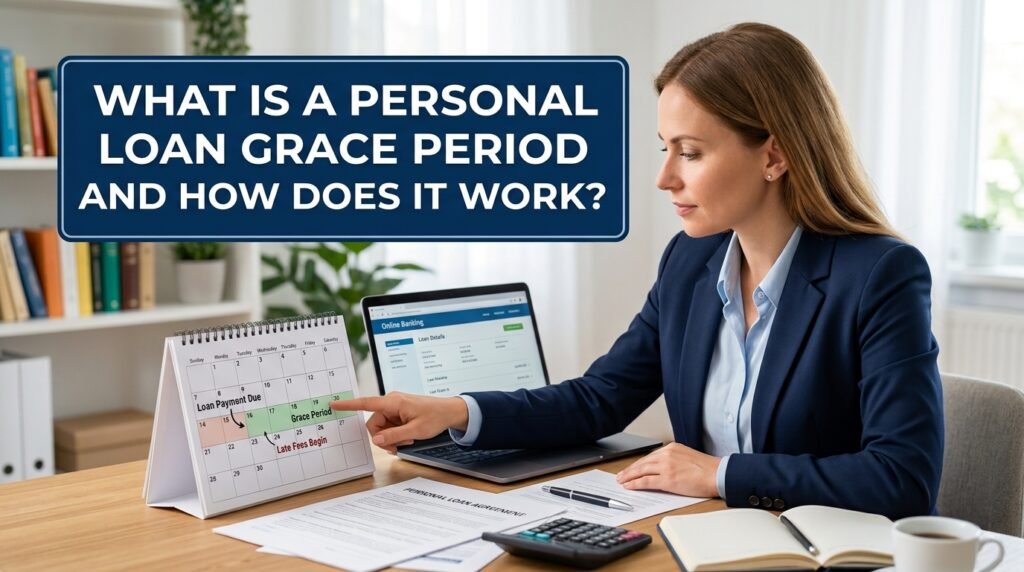
A personal loan grace period is a period of time after a scheduled payment due date during which a lender may allow a borrower to make the payment without certain late-payment consequences. However, grace periods are not universal, and the exact rules depend on the lender, loan agreement, and applicable laws.
Some borrowers assume that a grace period means they can always make their payment a few days late without consequences. That is not necessarily true. A lender may have specific rules about when a payment is considered late, when a late fee can be charged, and when a missed payment may be reported.
Understanding how a personal loan grace period works can help you avoid unnecessary fees and manage your repayment schedule more effectively.
What Is a Personal Loan Grace Period?
A personal loan grace period is a specified period after the scheduled payment due date during which certain late-payment consequences may not apply.
For example, suppose your personal loan payment is due on the 15th of each month. If your lender provides a grace period, you may have additional time to make the payment under the terms of your loan.
However, the existence and length of a grace period depend on the loan agreement.
A grace period should not be treated as an automatic extension of your payment due date. You should always check your loan documents or contact your lender to determine exactly what applies to your account.
How Does a Personal Loan Grace Period Work?
The process generally starts with your regular payment due date.
If you make the required payment on or before the due date, the payment is considered on time under the normal repayment schedule.
If you miss the due date, a lender that offers a grace period may allow you to make the payment within the specified period without applying certain charges.
For example, a lender might allow a short period after the due date before charging a late fee. Another lender may have different rules.
The important point is that a grace period does not necessarily mean that interest stops accumulating or that the payment is completely ignored during this period.
Your loan agreement determines how the grace period works.
Is a Grace Period the Same as a Late Payment?
Not always.
A payment can be past its scheduled due date while still falling within a lender’s applicable grace period for certain purposes.
For example, a lender may not charge a late fee until a specific number of days have passed. However, the account’s status and credit reporting can follow different rules.
This is why borrowers should not assume that a grace period automatically protects them from every consequence of a late payment.
If you have already missed a payment, reviewing your account and contacting your lender can help you understand your specific situation. Our guide on What Happens If You Miss a Personal Loan Payment? explains potential late fees, credit consequences, collections, and steps borrowers can take after missing a payment.
How Long Is a Personal Loan Grace Period?
There is no single grace period that applies to every personal loan.
The length can vary by lender and loan agreement. Some loans may provide a short period before a late fee applies, while others may have different policies.
Your loan agreement should explain:
- Payment due date
- Late-payment rules
- Late fees
- Grace-period terms, if applicable
- When a payment is considered delinquent
- Credit reporting practices
- Default conditions
If the information is unclear, contact your lender before assuming you have extra time to pay.
Does Interest Accumulate During a Grace Period?
A grace period does not necessarily mean that interest stops accumulating.
Personal loans generally calculate interest according to the terms of the loan. The effect of making a payment after the scheduled due date depends on the specific loan structure and lender policies.
For this reason, you should not assume that waiting until the end of a grace period is financially identical to making your payment on time.
Even when a late fee does not apply, delaying a payment may affect how your account is handled.
Check your loan agreement or ask the lender how payments made during the grace period are treated.
Can a Grace Period Prevent a Late Fee?
In some cases, yes.
If the loan agreement provides a grace period before a late fee is charged, making the payment within that period may prevent the fee from being applied.
However, this depends entirely on the lender’s terms.
For example, one lender may provide a specific number of days before charging a late fee, while another lender may have a different policy.
Never rely on a general rule you found online. Your own loan agreement is the most relevant source for determining whether a grace period applies.
Does a Grace Period Protect Your Credit Score?
A grace period and credit reporting are separate issues.
A lender may have a policy that delays a late fee, while credit reporting can be governed by different procedures and applicable requirements.
A payment that is only slightly late may not necessarily be reported as a serious delinquency, but borrowers should not assume that every grace period guarantees protection from credit consequences.
Your payment history is an important part of your credit profile. Consistently paying on time is therefore preferable to relying on a grace period.
If you want to understand how personal loans can affect your overall credit profile, review your account history and monitor your credit reports regularly.
What Happens If You Miss the Grace Period?
If you do not make the required payment within the applicable grace period, the lender may treat the payment as late according to the loan agreement.
Potential consequences may include:
- A late fee
- Additional account charges
- Increased collection activity
- Negative credit reporting when applicable
- A higher risk of delinquency
- More serious consequences if payments continue to be missed
The longer an account remains unpaid, the more serious the situation can become.
This is why borrowers should act quickly instead of waiting for multiple payment deadlines to pass.
What Should You Do If You Cannot Make a Payment?

If you know you will have difficulty making your personal loan payment, contact your lender as soon as possible.
Explain your situation and ask whether any payment assistance or hardship options are available.
Depending on the lender, possible options may include:
- Changing the payment date
- Temporary payment arrangements
- Hardship assistance
- Payment extensions
- Alternative repayment arrangements
Not every lender offers these options, and some may increase the total cost of the loan.
Before accepting any arrangement, ask whether interest continues to accumulate, whether fees apply, and whether the repayment term will change.
Can a Grace Period Help With Personal Loan Affordability?
A grace period can provide limited flexibility when a payment is temporarily delayed, but it should not be used as a long-term affordability strategy.
Before taking a personal loan, calculate whether you can comfortably handle the monthly payment alongside your existing expenses and debts.
Your monthly payment depends on factors such as:
- Loan amount
- Interest rate
- APR
- Repayment term
- Fees
- Existing debt obligations
Our guide on What Is a Personal Loan Monthly Payment and How Is It Calculated? explains how these factors influence your required monthly payment.
A loan that fits comfortably into your budget is less likely to create payment problems.
How Can You Avoid Relying on a Grace Period?
The easiest way to avoid problems is to make your payments on time.
Consider setting up automatic payments through your bank or lender. You can also create reminders several days before each due date.
Other useful habits include:
- Keeping enough money available for upcoming payments
- Checking your loan account regularly
- Tracking all debt payment dates
- Maintaining an emergency savings cushion
- Reviewing your budget each month
- Contacting your lender before a payment is missed
If you receive income on a regular schedule, you can also organize your budget around your loan’s payment date.
Can You Pay Off a Personal Loan Early?
A grace period is not related to early repayment, but understanding your loan’s repayment rules can help you manage the debt more effectively.
If your financial situation allows, making additional payments may reduce your outstanding balance faster. Depending on the loan terms, this could potentially reduce future interest costs.
Before making extra payments, check whether the lender applies additional payments directly toward principal and whether any prepayment restrictions or fees apply.
Our guide on How to Pay Off a Personal Loan Faster and Save on Interest explains strategies such as extra payments, biweekly payments, refinancing, and managing additional income.
Common Mistakes About Personal Loan Grace Periods
Assuming Every Loan Has a Grace Period
Not every personal loan provides a grace period. Always check your specific loan agreement.
Treating the Grace Period as Free Extra Time
A grace period may prevent certain fees, but it does not necessarily stop interest or eliminate other account consequences.
Waiting Until the Last Moment
Even if you have a grace period, delaying payments can increase the risk of forgetting or missing the extended deadline.
Ignoring the Lender
If you cannot make a payment, contacting the lender early can help you understand your options.
Final Thoughts
A personal loan grace period is a lender-specific period that may provide additional time to make a payment before certain late-payment consequences apply. However, the exact rules vary, and a grace period should not be assumed to protect you from every fee, interest charge, or credit consequence.
Always review your loan agreement to understand the payment due date, late fees, grace-period rules, and delinquency policies.
Most importantly, try to make personal loan payments on time rather than relying on a grace period. If you know you may have difficulty making a payment, contact your lender early and ask about available options.
Understanding your loan terms and keeping your monthly payment within your budget can help you avoid unnecessary financial problems.
Frequently Asked Questions
Do all personal loans have a grace period?
No. Grace-period policies vary by lender and loan agreement. Some personal loans may provide a period before certain late-payment consequences apply, while others may not.
Does a personal loan grace period stop interest?
Not necessarily. Interest treatment depends on the terms of the loan. A grace period does not automatically mean that interest stops accumulating.
Can a grace period prevent a late fee?
It may, if the loan agreement provides a grace period before the late fee applies. Check your lender’s specific terms.
Does missing a personal loan payment hurt your credit?
A missed payment can potentially affect your credit if it becomes delinquent and is reported. The timing and reporting practices depend on the lender and applicable rules.
What should I do if I cannot make my personal loan payment?
Contact your lender as soon as possible. Ask whether hardship assistance, a payment arrangement, or another option is available, and understand any additional costs before accepting it.